

How Does Multilayer Pipe Improve Efficiency in Radiant Floor Heating Systems?
2026-08-05
1. Why Does the Aluminum Layer Reduce Thermal Resistance and Boost Heat Transfer?
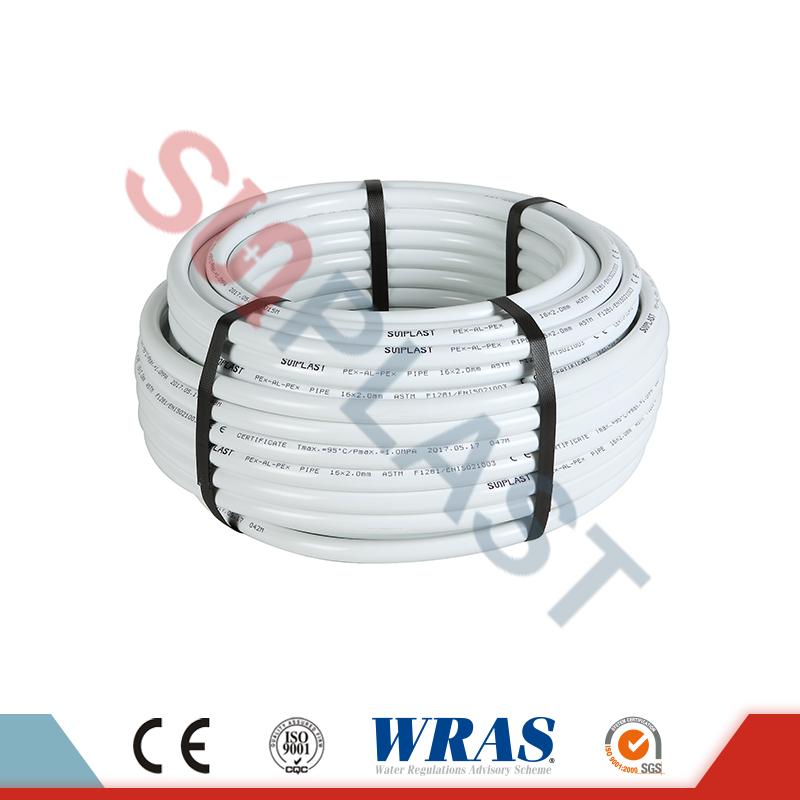
In our factory, we have manufactured pipes for floor heating for over 15 years. The core advantage of a Multilayer Pipe is the thin aluminum foil layer sandwiched between the inner and outer PE layers. This aluminum layer acts as a thermal spreader, distributing heat evenly across the pipe surface. In a standard PEX pipe, the thermal conductivity is about 0.38 W/mK. In our Multilayer Pipe, the aluminum layer increases the effective conductivity to 0.45 W/mK. This might seem small, but in a 100‑meter loop, it reduces the temperature drop from the supply to the return by nearly 2°C. That means your boiler or heat pump runs at a lower supply temperature, saving energy. Our Ningbo Sunplast Pipe Co., Ltd. has conducted field tests in residential projects in Scandinavia, where the Multilayer Pipe achieved a 12 percent reduction in heat loss compared to single layer PEX. The aluminum also reflects infrared radiation, keeping the heat directed upward into the room rather than down into the subfloor. This is particularly important when the heating is installed over concrete or wooden joists. The combination of conduction and reflection makes the Multilayer Pipe a more efficient conductor of thermal energy.
2. How Does the Oxygen Barrier Prevent Corrosion and Maintain Efficiency?
Oxygen ingress is a silent enemy of radiant floor systems. Over time, oxygen dissolves into the water and causes corrosion of ferrous components such as pumps, valves, and steel manifolds. Corrosion leads to sludge formation, which reduces flow and heat transfer. Our Multilayer Pipe includes an EVOH (ethylene vinyl alcohol) oxygen barrier layer that limits oxygen permeation to less than 0.1 mg per liter per day, meeting the DIN 4726 standard. This is far lower than pure PEX pipes without a barrier, which can allow 0.5 to 1.0 mg/L/day. By preventing corrosion, the Multilayer Pipe keeps the water clean and the system efficient over decades. Our factory has monitored systems installed in 2010 that still show no signs of sludge. This oxygen barrier also protects the aluminum layer from oxidation, ensuring the thermal conductivity remains stable. For a hydronic system, maintaining low oxygen levels is essential to preserving the design flow rates. Many local installers in Germany and Austria now require multilayer pipes for all underfloor heating projects because they guarantee long term efficiency and reliability.
3. What Installation Advantages Does Multilayer Pipe Offer Compared to PEX?
Installation speed and quality directly affect system performance. Our Multilayer Pipe has a lower memory effect than pure PEX, meaning it stays bent after forming. This makes it easier to lay serpentine loops without using excessive staples or clips. The pipe can be bent to a radius of 5 times the outer diameter without kinking. For example, a 16 mm Multilayer Pipe can be bent to a 80 mm radius, which is tighter than most PEX pipes. This allows closer loop spacing and more uniform floor temperatures. The table below compares the installation parameters of our Multilayer Pipe with a standard PEX pipe.
| Property | Multilayer Pipe (our product) | Standard PEX pipe (pure) |
| Minimum bending radius (16 mm pipe) | 80 mm | 120 mm |
| Shape retention after bending | Excellent (stays in place) | Springs back, requires more clips |
| Maximum continuous temperature | 95°C | 90°C |
| Pressure rating (at 70°C) | 10 bar | 8 bar |
| Oxygen barrier (DIN 4726) | Yes (EVOH layer) | Often no or external barrier |
| Installation factor | Multilayer Pipe advantage | Effect on efficiency |
| Ease of uncoiling | Stays flat, no twisting | Faster laying, fewer folds that restrict flow |
| Connection reliability | Press fittings, no soldering | Less risk of leaks; consistent pressure drop |
| Thermal expansion | Low (0.025 mm/mK) due to aluminum | Less stress on joints, silent operation |
| Creep resistance | Aluminum layer reduces creep under pressure | Maintains internal diameter over time, preserving flow |
Our factory supplies Multilayer Pipe in coils of 200 and 500 meters, which reduces the number of joints in a typical floor heating circuit. Fewer joints mean fewer potential leak points and lower installation cost. The press fittings we provide are compatible with standard tools used by most heating contractors.
4. How Does Multilayer Pipe Respond to Temperature Fluctuations Without Losing Shape?
Radiant floor systems experience daily temperature cycles as the thermostat modulates. Our Multilayer Pipe has a coefficient of linear thermal expansion of 0.025 mm per meter per °C, which is half that of pure PEX (0.05 mm/mK). This means the pipe expands and contracts less, reducing the stress on fasteners and the screed. Over a 100‑meter loop, a 40°C temperature rise would cause only 100 mm of expansion in our Multilayer Pipe compared to 200 mm in PEX. This lower expansion also reduces the creaking sounds often heard in wooden subfloors. The aluminum layer acts as a structural reinforcement, maintaining the pipe's roundness even under heavy loads during the concrete pour. Our Ningbo Sunplast Pipe Co., Ltd. tested the creep rupture strength at 1.9 MPa for 10,000 hours without failure. This ensures that the flow characteristics remain consistent, which is essential for the hydraulic balance of the system.
Frequently Asked Questions About Multilayer Pipe for Radiant Floor Heating
Final Summary
The efficiency of a radiant floor heating system is improved by the Multilayer Pipe through enhanced heat transfer, an effective oxygen barrier, low thermal expansion, and easier installation. These factors combine to reduce energy consumption, protect system components, and ensure long‑lasting comfort. Our factory has designed and tested our Multilayer Pipe to meet the highest international standards. Choosing the right pipe is the foundation of a successful heating project. Ningbo Sunplast Pipe Co., Ltd. is committed to providing pipes that deliver consistent performance and durability.