

What Are the Critical Differences Between Standard and Hard Chrome-Coated Shedding Arms?
2026-03-10
In high-speed weaving environments, component durability and motion accuracy directly influence loom stability and fabric consistency. One component that often receives close attention from maintenance teams and loom engineers is the Shedding Arm. In many weaving plants across Europe, India, and Southeast Asia, technicians regularly evaluate whether a standard structure or a chrome-treated configuration better supports long production cycles.
Our engineering team has worked closely with mills that run rapier looms, air jet looms, and water jet machines. In these environments, the difference between standard steel surfaces and chrome-treated surfaces becomes clear after extended operation hours. Many loom technicians describe this difference in practical terms such as smoother motion, lower friction at pivot points, and reduced wear on linkage systems.
From a mechanical perspective, the main function of the Shedding Arm is to transfer motion from the shedding mechanism to the harness frame system. This movement must remain synchronized with the loom crankshaft and cam assembly. When the arm surface experiences excessive wear, vibration and alignment drift can occur, eventually influencing warp tension and fabric quality.
Many mills working with high-density fabrics such as denim, industrial textiles, or technical fabrics tend to favor chrome-treated components because they withstand friction and contamination better. Our factory has supplied both standard and surface-hardened versions for a wide range of loom models used in international weaving mills.
Manufacturers such as Changshu Changxin Textile Equipment Co., Ltd. have observed that textile factories operating in humid or dusty environments particularly benefit from corrosion-resistant surfaces. These operating conditions often accelerate wear on untreated metal surfaces. As a result, more weaving plants are shifting toward chrome-coated mechanical parts for critical shedding components.
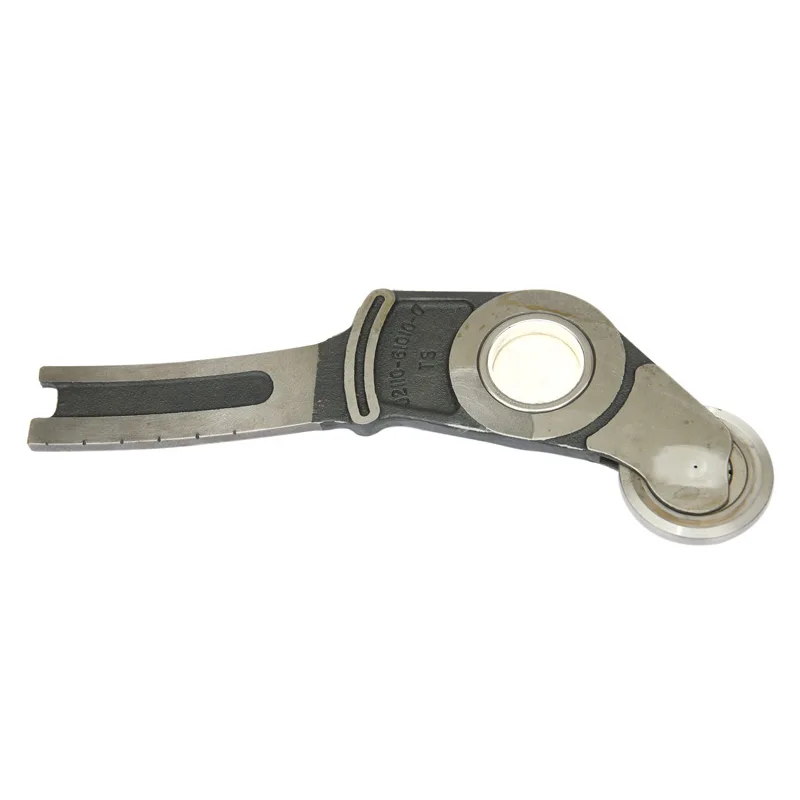
What Structural Characteristics Distinguish Standard and Hard Chrome-Coated Shedding Arms?
The structural foundation of both types usually begins with high-strength alloy steel. The difference lies in the final surface engineering. Standard units rely on precision machining and heat treatment to provide baseline durability, while chrome-coated versions undergo electroplating that creates an extremely hard surface layer.
Hard chrome plating improves resistance to abrasion, chemical exposure, and mechanical fatigue. In weaving mills where machines run continuously for multiple shifts, this surface layer reduces direct metal-to-metal contact and helps maintain smoother oscillation within the shedding mechanism.
The following table outlines typical structural distinctions observed by loom maintenance teams.
| Feature | Standard Construction | Hard Chrome-Coated Construction |
| Base Material | Alloy structural steel | Alloy structural steel |
| Surface Treatment | Precision machining and polishing | Industrial hard chrome plating |
| Surface Hardness | Moderate hardness after heat treatment | Significantly higher hardness level |
| Wear Resistance | Suitable for moderate weaving speed | Excellent for high-speed weaving lines |
| Corrosion Protection | Basic oil protection | Strong resistance to humidity and chemical exposure |
Because the chrome layer reduces friction and surface damage, many weaving plants report longer service intervals before maintenance adjustments become necessary. Our engineers frequently recommend chrome-treated solutions for mills running continuous production schedules.
How Do Material Strength and Surface Hardness Influence Loom Performance?
The operational reliability of a Shedding Arm largely depends on its resistance to deformation and abrasion. During loom operation, the arm experiences repeated oscillating loads transmitted through cam followers, link rods, and harness frames. Over time, microscopic wear can accumulate on untreated metal surfaces.
Chrome plating introduces a dense protective layer that significantly increases surface hardness. This improvement minimizes scratches and friction marks created during constant mechanical contact. In weaving mills producing high-value fabrics, maintaining dimensional accuracy is critical to avoid warp irregularities.
Our factory applies strict dimensional control during machining and surface finishing. Every component is inspected for alignment tolerance before shipment. This ensures that motion transmission remains stable when installed on modern weaving equipment.
The following table summarizes typical engineering parameters used in many industrial textile components supplied by Changshu Changxin Textile Equipment Co., Ltd.
| Technical Parameter | Standard Version | Hard Chrome Version |
| Material Grade | High-strength alloy steel | High-strength alloy steel |
| Heat Treatment | Quenching and tempering | Quenching and tempering |
| Surface Hardness | Approx. HRC 40 to 45 | Approx. HRC 60 after plating |
| Surface Finish | Fine mechanical polishing | Mirror-level chrome finish |
| Dimensional Tolerance | Strict industrial tolerance | Strict industrial tolerance |
Our production department continues to refine machining procedures so that each Shedding Arm maintains consistent geometry and long-term mechanical stability under demanding weaving conditions.
Why Do High-Speed Looms Benefit from Hard Chrome-Coated Shedding Arms?
Modern weaving mills are constantly increasing machine speed to improve productivity. As loom RPM rises, mechanical components experience higher friction and more frequent motion cycles. Under these conditions, untreated metal surfaces may develop wear marks more quickly.
A chrome-coated Shedding Arm helps maintain smoother contact with connecting parts and pivot points. Reduced friction leads to more stable motion transfer between the shedding mechanism and harness frames. This stability becomes particularly important for fabrics requiring precise warp separation.
Our factory has supplied chrome-coated solutions to textile mills operating rapier looms that run continuously for long production shifts. Operators report fewer maintenance interruptions and longer service intervals when surface-treated components are installed.
Changshu Changxin Textile Equipment Co., Ltd. continues to work closely with weaving factories to optimize surface treatments and machining accuracy. By combining advanced electroplating techniques with strict quality inspection, our engineering team supports textile manufacturers seeking reliable mechanical performance.
How Should Textile Engineers Select the Right Shedding Arm for Their Loom System?
When choosing a Shedding Arm, textile engineers typically evaluate several practical factors including loom speed, production environment, fabric type, and maintenance cycle. Standard versions often perform well in moderate-speed weaving lines where mechanical stress is relatively low.
For mills operating high-speed looms or producing technical fabrics, chrome-treated options provide additional reliability. The hardened surface layer improves resistance to friction and contamination from lubricants or dust inside weaving workshops.
Our engineering support team frequently assists overseas weaving plants in selecting suitable components based on loom model and production requirements. Through consistent manufacturing standards and careful material selection, our factory ensures that every supplied part supports stable loom performance.
FAQ
Q1: What operational advantage does a chrome-coated surface provide in weaving machinery?
A chrome-coated surface significantly increases hardness and reduces friction between moving mechanical components. In weaving machinery that operates continuously at high speed, this surface protection helps prevent premature wear, maintains accurate motion transmission, and extends the service life of the mechanical system.
Q2: Why do textile mills replace standard shedding components with chrome-coated versions?
Many textile mills upgrade to chrome-coated components when production speed increases or when fabric quality requirements become stricter. The improved surface durability reduces maintenance frequency and supports stable warp separation during long operating cycles.
Q3: How can maintenance teams identify when a shedding component needs replacement?
Maintenance engineers typically look for signs such as surface scratches, abnormal vibration, inconsistent harness motion, or increasing noise during loom operation. Regular inspection allows technicians to replace worn parts before they affect weaving accuracy or machine efficiency.
Reliable weaving performance depends on durable mechanical components and consistent engineering standards. Changxin Textile continues to supply high-quality textile machinery parts to international weaving mills, combining precision manufacturing with strict quality control. If your factory is evaluating component upgrades for improved loom stability and longer service life, our technical team is ready to provide detailed specifications and professional support for your next project.