

What is The Difference Between a Hydraulic Pump And a Hydraulic Motor?
2025-12-30
In fluid power systems, hydraulic pumps and hydraulic motors are often discussed together, yet their functions are fundamentally different. Understanding these differences is critical for engineers, maintenance teams, and equipment buyers who need reliable power transmission. In our factory, we frequently explain how each component behaves under load, pressure, and continuous operation. At Saifu Vietnam Company Limited, system matching and performance stability are central to how we design and supply hydraulic solutions for industrial and mobile equipment.
How Does a Hydraulic Pump Work in a Typical Hydraulic System?
A hydraulic pump converts mechanical energy into hydraulic energy by moving fluid from the reservoir into the system. It creates flow rather than pressure, while pressure develops as resistance builds within the circuit. Our engineering team often emphasizes that pumps are selected primarily based on flow rate, operating speed, and system pressure limits. In our factory, careful attention is paid to volumetric efficiency and internal leakage, as these directly influence system responsiveness and energy consumption.
At Saifu Vietnam Company Limited, common pump types include gear pumps, vane pumps, and piston pumps. Each design has its own performance profile. Gear pumps are valued for simplicity and durability, vane pumps provide smoother flow, and piston pumps offer high efficiency under high pressure. Our experience shows that correct pump selection ensures stable fluid delivery to downstream components without unnecessary heat generation.
How Does a Hydraulic Motor Convert Hydraulic Energy into Motion?
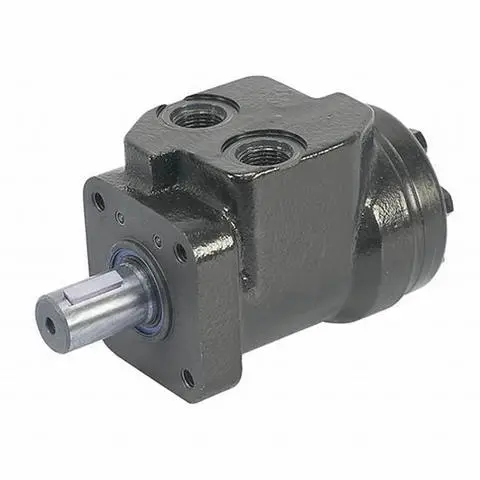
A hydraulic motor performs the opposite function of a pump. It converts hydraulic energy back into mechanical motion, producing torque and rotational movement. The motor is typically selected based on required torque, operating speed, and load characteristics. In our factory, engineers evaluate how pressure and flow interact to produce consistent output under varying conditions.
Saifu Vietnam Company Limited supplies hydraulic drive solutions for applications such as conveyors, winches, mixers, and construction machinery. The Motor must withstand pressure fluctuations while delivering stable torque. Our design approach focuses on efficiency, internal balance, and smooth operation, which helps extend service life in demanding environments.
What Structural Differences Separate Pumps from Motors?
Although pumps and motors may appear similar externally, their internal design reflects their distinct roles. Pumps are optimized to draw fluid from a low-pressure inlet and discharge it at higher pressure. Motors are designed to accept pressurized fluid and convert that energy into rotation. In our factory, structural tolerances, sealing arrangements, and bearing configurations are adjusted according to the intended function.
At Saifu, design validation includes load testing to ensure each unit performs correctly within its operating range. The Motor is built to handle continuous torque output, while pumps are engineered for stable flow generation. These differences affect not only performance but also maintenance requirements and expected lifespan.
How Do Performance Parameters Compare Between Pumps and Motors?
Performance comparison requires looking at parameters such as displacement, efficiency, speed range, and pressure rating. Pumps are typically rated by flow output at a given speed, while motors are rated by torque output at a given pressure. Our engineering documentation highlights these distinctions to help users avoid mismatched components.
The table below outlines key performance parameters used in industrial hydraulic systems.
| Parameter | Hydraulic Pump | Hydraulic Motor | Practical Consideration |
| Primary Function | Generate flow | Generate torque | Defines system energy direction |
| Main Rating | Flow rate | Torque output | Used for system sizing |
| Efficiency Focus | Volumetric efficiency | Mechanical efficiency | Affects heat and energy loss |
How Are Selection Criteria Different for Pumps and Motors?
Selecting the correct component depends on system goals. When choosing a pump, engineers focus on flow demand, pressure range, and drive speed. For a Motor, torque requirement, rotational speed, and load variation are more critical. In our factory, system analysis always starts with understanding the operating duty cycle.
Saifu Vietnam Company Limited supports customers by reviewing application data and recommending compatible components. Our selection process considers not only nominal ratings but also real operating conditions such as temperature, contamination levels, and expected service intervals. This approach reduces downtime and improves long-term reliability.
What Are Typical Industrial Applications for Pumps and Motors?
Hydraulic pumps are commonly used in power units that supply pressurized fluid to multiple actuators. Hydraulic motors are found in drive systems where controlled rotation is required. In our factory, both components are tested under simulated field conditions to ensure they perform as expected.
The following table compares common application scenarios.
| Application | Hydraulic Pump Role | Hydraulic Motor Role | System Benefit |
| Construction equipment | Provide system flow | Drive tracks or winches | Reliable power transmission |
| Industrial automation | Maintain pressure supply | Operate conveyors | Precise speed control |
| Agricultural machinery | Support multiple circuits | Drive rotating tools | Flexible power delivery |
What is The Difference Between a Hydraulic Pump And a Hydraulic Motor? FAQ
Q1: Can a hydraulic pump be used as a motor?
Some pump designs can operate as motors under specific conditions, but efficiency and durability may be reduced. Purpose-built motors are designed to handle continuous torque and load variation more effectively.
Q2: Why does torque matter more for a motor than for a pump?
Torque determines the ability to move or rotate a load. While pumps focus on delivering flow, motors must convert pressure into mechanical force, making torque a key performance indicator.
Q3: How does system pressure affect pump and motor performance?
Higher pressure increases load on both components. Pumps must maintain stable flow under pressure, while motors convert that pressure into torque. Proper pressure management ensures efficiency and prevents premature wear.
Conclusion
The difference between a hydraulic pump and a hydraulic motor lies in how each component handles energy conversion within a fluid power system. Pumps generate flow, while motors convert that flow into usable motion. Understanding these distinctions helps engineers design efficient, reliable systems. At Saifu Vietnam Company Limited, our technical team supports customers through component selection, system matching, and performance optimization. If you are planning a new hydraulic system or upgrading existing equipment, contact our team today to discuss the right solution for your application.