

Why Are DC Motors Commonly Used in Conveyor and Handling Systems?
2026-02-28
How Do DC Drive Systems Improve Control in Conveyor and Material Handling Lines?
In modern conveyor lines, distribution centers, packaging facilities, and bulk handling plants across North America and Europe, precise speed regulation and smooth torque delivery are critical. DC Motors are widely selected because they provide accurate variable speed control, strong starting torque, and stable performance under fluctuating loads. These features are essential in pallet conveyors, belt-driven systems, roller tracks, automated storage retrieval systems, and warehouse sortation lines.
Unlike conventional fixed-speed AC setups, a DC Motor allows operators to adjust RPM through simple voltage variation or integrated drive controllers. This makes it ideal for indexing conveyors, accumulation systems, and start-stop operations commonly found in fulfillment centers. In heavy-duty handling applications, consistent torque at low speed ensures stable product movement without jerking, reducing mechanical stress on gearboxes and couplings.
At Saifu Vietnam Company Limited, our engineering team focuses on delivering drive solutions tailored for industrial conveying environments. Our factory designs compact, high-efficiency DC Motor configurations suitable for continuous-duty operation in dusty workshops, high-humidity facilities, and temperature-variable production lines.
Why Is Torque Stability So Important in Handling Equipment?
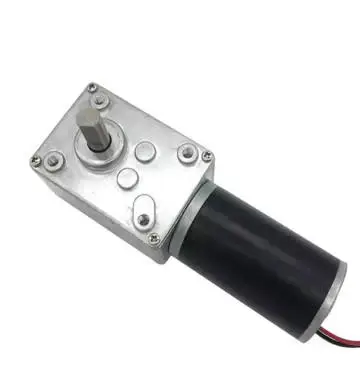
Handling systems often deal with variable loads such as cartons, bulk materials, steel components, or agricultural products. Sudden load changes can cause speed fluctuations, belt slippage, or system overload. DC Motors provide high starting torque and linear torque-speed characteristics, making them highly dependable in applications such as inclined conveyors, bucket elevators, and automated transfer stations.
Stable torque delivery minimizes shock loads during start-up and braking cycles. This reduces wear on drive chains, sprockets, and shafts while improving overall system lifespan. In packaging lines where synchronization between multiple drive zones is required, accurate torque modulation supports consistent throughput and prevents product jams.
Our factory applies copper-wound armatures, precision-balanced rotors, and heavy-duty bearings to ensure reliable torque performance under full load conditions. At Saifu, we test each unit under simulated conveying loads to verify durability and thermal stability before shipment.
What Technical Specifications Matter Most When Selecting Conveyor Drive Units?
Industrial buyers typically evaluate voltage range, rated power, torque output, insulation class, enclosure protection, and duty cycle rating. Below is a reference specification overview commonly requested in conveyor and material handling projects.
| Rated Voltage | 12V, 24V, 48V, 90V, 180V, 220V DC |
| Power Output Range | 100W to 5kW |
| Rated Torque | 0.5 Nm to 120 Nm |
| Speed Range | 300 to 3000 RPM adjustable |
| Duty Cycle | S1 continuous, S3 intermittent |
| Insulation Class | Class F or Class H |
| Protection Rating | IP54, IP55 optional IP65 |
| Cooling Method | Fan cooled or forced ventilation |
These parameters directly influence system integration. For example, IP55 protection is often required in food processing plants where washdown procedures are frequent. Insulation class H is preferred in high-temperature manufacturing environments.
Our engineering team customizes shaft dimensions, flange mounting standards, and gearbox compatibility according to ANSI and IEC requirements. Saifu Vietnam Company Limited supports OEM and retrofit projects where compatibility with existing conveyor frames and drive assemblies is critical.
How Do Energy Efficiency and Maintenance Costs Affect Long-Term ROI?
Energy consumption remains a major concern for logistics operators and manufacturing plants. DC Motors are known for high efficiency across variable speed ranges, especially when paired with modern drive controllers. Efficient power conversion reduces heat generation and minimizes energy waste during partial load operation.
Lower operating temperatures extend bearing life and insulation integrity. In distribution hubs operating 24 hours a day, reliability directly impacts uptime and labor cost. Our factory designs brush assemblies with optimized wear characteristics, reducing maintenance intervals and lowering spare part inventory requirements.
Below is a comparative overview of typical operational benefits in conveyor systems.
| Feature | Operational Benefit |
| High Starting Torque | Smooth load acceleration and reduced belt stress |
| Variable Speed Control | Improved throughput flexibility |
| Compact Design | Space saving installation in tight conveyor frames |
| Thermal Stability | Longer continuous operation capability |
| Simple Control Circuit | Lower integration cost |
Our factory also offers customized shaft extensions, electromagnetic braking options, and encoder feedback integration for automated sorting systems. These enhancements ensure precise position control in advanced material handling lines.
Why Do Industrial Buyers Prefer Customized DC Solutions for Handling Systems?
Standard drive units may not always match specific conveyor layouts. Industrial integrators often require customized mounting brackets, special shaft lengths, corrosion-resistant coatings, or reinforced housings for heavy-duty use. DC Motors are adaptable to such requirements because of their straightforward control structure and flexible configuration options.
In cold storage warehouses, low-temperature grease and sealed bearings are essential. In cement or mining facilities, dust protection and reinforced enclosures become priorities. Our factory collaborates with system integrators to provide tailored solutions that match real operating environments.
At Saifu Vietnam Company Limited, our production process includes load testing, vibration analysis, and insulation resistance verification. Our commitment to consistent quality control ensures that our products meet international industrial standards and deliver dependable field performance.
Frequently Asked Questions
Q1: Why are DC Motors better than AC alternatives in variable speed conveyor systems?
DC Motors provide linear speed control through voltage adjustment, enabling smoother acceleration and deceleration. This reduces mechanical shock, improves product handling stability, and enhances synchronization between multiple conveyor zones.
Q2: How do I determine the correct torque rating for my handling application?
Torque selection depends on load weight, conveyor incline angle, belt friction coefficient, and required acceleration time. Engineers calculate total load torque and include a safety factor of 20 to 30 percent to ensure stable long-term operation.
Q3: What maintenance practices extend service life in industrial conveying environments?
Routine inspection of brushes, bearings, and ventilation paths is essential. Operators should monitor operating temperature, ensure proper alignment with gear reducers, and keep enclosures free from dust accumulation to maintain optimal performance.
DC Motors continue to dominate conveyor and material handling applications because of their precise speed control, strong torque performance, adaptability, and cost efficiency. From warehouse automation to heavy industrial transport lines, these systems deliver dependable motion control under demanding operating conditions. If you are planning to upgrade or design a new conveyor line, contact our team at Saifu Vietnam Company Limited to discuss technical specifications and receive a customized quotation from our factory today.