

Compression Fittings vs Fusion Fittings: What Should You Choose for HDPE Systems?
2026-05-06
In modern pipeline engineering, the reliability of a system often depends less on the pipe itself and more on the connection points. HDPE systems are widely used in municipal water supply, irrigation networks, mining operations, and gas distribution. Each of these sectors places different demands on sealing performance, installation time, and long term durability.
Choosing between compression and fusion methods directly affects leakage risk, installation efficiency, and lifecycle cost. In our field experience, improper joint selection leads to the majority of failures rather than raw material defects. That is why engineers pay close attention to connection technology when sourcing HDPE Pipe Fittings.
Ningbo Sunplast Pipe Co., Ltd. works with contractors, distributors, and project engineers across multiple markets, supporting both connection systems with consistent production standards. Our factory focuses on dimensional accuracy, pressure rating compliance, and reliable sealing behavior in demanding environments.
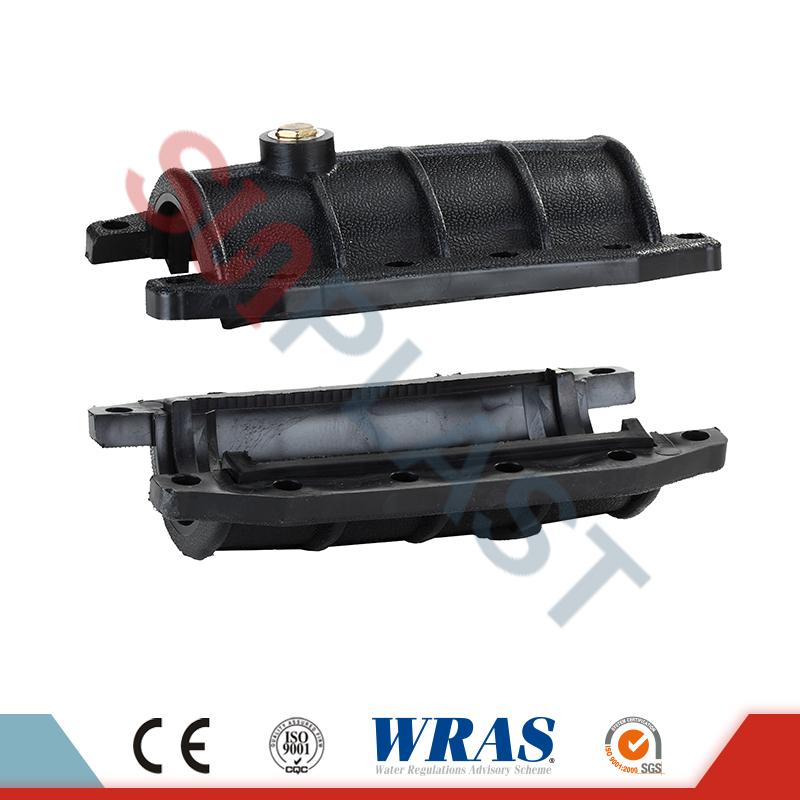
What Are the Key Differences Between Compression and Fusion Fittings in Real Applications?
Compression fittings rely on mechanical sealing using an internal grip ring, sealing ring, and nut. They are widely used in smaller diameter systems and installations where quick assembly without specialized equipment is required. Fusion fittings, including butt fusion and electrofusion types, create a homogeneous joint by melting the pipe and fitting together.
In practice, compression systems are often chosen for irrigation lines, temporary installations, and repair work. Fusion systems are preferred for high pressure pipelines, underground networks, and long term infrastructure projects. Both options are available within our HDPE Pipe Fittings range, allowing flexibility based on project conditions.
Our engineering team evaluates installation environment, pipe diameter, pressure class, and workforce skill level before recommending a suitable connection solution. This approach helps reduce installation errors and ensures stable system performance over time.
| Feature | Compression Fittings | Fusion Fittings |
| Installation Method | Mechanical tightening | Heat fusion process |
| Equipment Required | Basic tools | Fusion machine |
| Leak Risk | Moderate if improperly tightened | Very low when properly fused |
| Installation Speed | Fast | Slower due to setup |
| Application Range | Small to medium systems | All sizes including large pipelines |
How Do Technical Parameters Influence Performance in Different Conditions?
When selecting fittings for HDPE systems, technical specifications must align with system pressure, temperature range, and fluid characteristics. Compression fittings depend heavily on sealing ring quality and tolerance control, while fusion fittings rely on proper heating temperature and alignment.
A well manufactured HDPE Pipe Fittings product should meet international standards for pressure rating and material consistency. Our factory produces fittings with strict control over raw material grading, ensuring compatibility with PE80 and PE100 pipes.
Ningbo Sunplast Pipe Co., Ltd. supports projects requiring customized dimensions and pressure classes, helping clients meet both local regulatory requirements and project specifications.
| Parameter | Typical Range |
| Material Grade | PE80 PE100 |
| Pressure Rating | PN6 PN10 PN16 |
| Diameter Range | 20 mm to 800 mm |
| Temperature Range | -20°C to 60°C |
| Connection Type | Compression Butt Fusion Electrofusion |
| Standards | ISO EN ASTM compliant |
Which Option Is More Cost Effective for Long Term Use?
Cost evaluation should not be limited to initial purchase price. Compression fittings may appear more economical upfront, especially for small projects or quick repairs. However, in large scale or high pressure systems, fusion joints often provide better long term value due to reduced maintenance and lower failure rates.
Our project data shows that contractors working on municipal infrastructure often shift toward fusion methods despite higher installation complexity. This is because lifecycle cost becomes the primary consideration. For smaller agricultural systems, compression based HDPE Pipe Fittings remain a practical and efficient solution.
Our factory supports both product lines, ensuring stable supply for clients who need mixed connection systems within a single project. This flexibility allows engineers to optimize cost without compromising system integrity.
What Questions Do Engineers Ask When Choosing Between These Two Systems?
Q1: Compression Fittings vs Fusion Fittings: What Should You Choose for HDPE Systems?
A1: The choice depends on application conditions. Compression fittings are suitable for smaller diameter pipes, quick installation, and maintenance work. Fusion fittings are better for high pressure, buried pipelines, and long term infrastructure where leak prevention is critical.
Q2: Are fusion joints stronger than compression connections?
A2: Yes. Fusion joints create a continuous material connection, making them as strong as or stronger than the pipe itself. Compression fittings rely on mechanical sealing, which may weaken over time if not properly installed.
Q3: Can compression fittings be reused in HDPE systems?
A3: In some cases, compression fittings can be reused if components are not damaged. However, sealing rings and grip elements should always be inspected carefully to ensure reliable performance after reinstallation.
How Can You Ensure Reliable Supply and Consistent Quality for Your Projects?
Reliable sourcing plays a critical role in project success. Inconsistent material quality or poor dimensional control can lead to installation issues and system failure. That is why many buyers prioritize suppliers with proven manufacturing capability and quality assurance processes.
Sunplast has developed a stable production system covering raw material selection, molding, machining, and final inspection. Our team works closely with clients to ensure each batch of HDPE Pipe Fittings meets technical and commercial requirements.
If you are planning a pipeline project or reviewing your current supply chain, we can support you with technical guidance and product recommendations. Contact us today to discuss your requirements and receive a tailored solution based on your application.