

Cork Rubber Sheet vs Rubber Sheet: Which Sealing Material Performs Better?
2026-04-28
In industrial maintenance, plant engineering, and OEM production, selecting the correct sealing sheet directly affects leakage control, equipment uptime, and service cost. Buyers in power generation, compressors, pumps, gearboxes, and pipe systems often compare standard rubber sheet with Cork Rubber Sheet because both materials are widely available, easy to fabricate, and suitable for gasket conversion.
The real difference appears under compression load, flange irregularity, vibration exposure, and oil contact. Standard rubber sheet may deliver strong flexibility and chemical resistance depending on polymer grade, while Cork Rubber Sheet combines elastomer binders with cork granules to provide resilience, recovery, and micro-surface conformity. Our technical team regularly helps users match the right grade to working media, torque level, and maintenance cycle.
Ningbo Kaxite Sealing Materials Co., Ltd. supplies engineered sealing materials for industrial users seeking stable quality, dimensional consistency, and reliable lead times. Our factory focuses on production control from raw material blending to final sheet inspection.
How Does Material Structure Change Real Sealing Performance?
Rubber sheet is normally produced from NBR, EPDM, SBR, Neoprene, Silicone, or other compounds. Performance depends heavily on polymer selection, filler ratio, hardness, and curing process. It is often chosen where users need broad elasticity, weather resistance, or fluid compatibility.
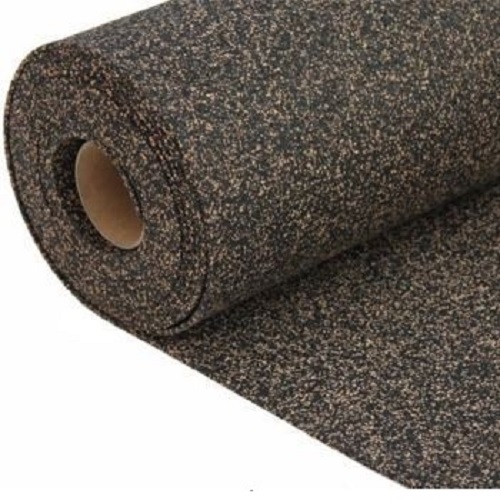
Cork Rubber Sheet uses selected cork particles bonded with synthetic rubber. This composite structure creates millions of micro-cells that compress evenly and recover after bolt load is released. In many gearbox covers, transformer housings, inspection plates, and low bolt-load flanges, this structure can compensate for minor surface defects better than ordinary sheet materials.
Our production lines control density, thickness tolerance, tensile balance, and compression recovery. That matters when customers cut gaskets in volume and require every piece to seal consistently.
| Property | Cork Rubber Composite | General Rubber Sheet |
| Surface Conformability | Excellent on uneven flanges | Moderate to good |
| Compression Recovery | High | Depends on compound |
| Vibration Damping | Strong | Moderate |
| Oil Resistance | Good with NBR binder | Depends on grade |
| Cutting into Gaskets | Easy and clean | Easy |
Which Operating Conditions Usually Favor Each Option?
For static sealing under moderate pressure, especially covers and housings exposed to oil mist or lubricants, Cork Rubber Sheet is frequently preferred because it maintains load retention while reducing seepage risk. It is common in automotive service parts, compressors, reducers, diesel systems, and transformer accessories.
For outdoor exposure, aggressive weathering, steam splash, or specific chemical contact, a dedicated rubber compound may be the better engineering route. EPDM can perform well in water and weather environments, while Neoprene may be selected for balanced mechanical resistance.
Our engineers recommend checking five variables before purchase: medium type, operating temperature, flange finish, bolt load, and maintenance interval. Our factory can also convert rolls or sheets into custom strips and die-cut parts for assembly lines.
| Typical Application | Recommended Material | Main Reason |
| Gearbox cover gasket | Cork Rubber Sheet | Oil sealing and recovery |
| Pump room weather seal | EPDM Rubber Sheet | Water and ozone resistance |
| Compressor inspection plate | Cork Rubber Sheet | Vibration damping |
| General workshop pad | SBR Rubber Sheet | Economical use |
| Fuel contact enclosure | NBR Rubber Sheet | Hydrocarbon resistance |
What Product Parameters Should Serious Buyers Review Before Ordering?
Industrial purchasing teams should move beyond price per sheet and review measurable data. Thickness range commonly starts from 0.8 mm and extends to 25 mm depending on grade. Density affects bolt load response and gasket recovery. Hardness typically falls between 55 and 80 Shore A equivalent depending on formulation.
Tensile strength, elongation, compression set, fluid swell, and service temperature all influence lifecycle cost. Our standard products are available in sheet sizes such as 1000 x 1000 mm, 1500 x 1500 mm, and roll formats for converter use. Our factory also supports custom thickness tolerance for OEM programs.
Ningbo Kaxite Sealing Materials Co., Ltd. maintains incoming raw material checks, batch traceability, and dimensional verification. Our customers value consistent calendering quality because it reduces scrap during gasket cutting and improves assembly efficiency.
Can Smart Buyers Reduce Leakage Risk with Better Material Selection?
Yes. Leakage is often caused by mismatch rather than poor installation. If the flange is thin, stamped, or slightly uneven, Cork Rubber Sheet often provides better micro-sealing than a harder plain sheet. If the environment involves UV, hot water, or outdoor exposure, an engineered rubber grade may outperform composite material.
Our recommendation is to evaluate total cost of ownership: gasket life, maintenance downtime, labor hours, and fluid loss. A lower-cost sheet that fails early is rarely the cheapest option in real operations. Ningbo Kaxite Sealing Materials Co., Ltd. works with distributors, repair workshops, and OEM users who need dependable supply and technical support.
FAQ: What Do Buyers Usually Ask Before Choosing?
Q1: Is Cork Rubber Sheet suitable for oil sealing applications?
A1: Yes. Grades bonded with nitrile rubber are widely used for lubricating oil, transmission oil, and light fuel contact. Proper grade selection and correct bolt torque are important for best results.
Q2: Does ordinary rubber sheet last longer than composite sealing sheet?
A2: Not always. Service life depends on media, heat, compression load, and movement. In static oil-sealing covers, composite material may last longer. In weather-exposed outdoor service, EPDM may be stronger.
Q3: What thickness is most common for gasket fabrication?
A3: Many maintenance users select 1.5 mm, 3 mm, or 5 mm. Thin grades suit precision covers, while thicker grades help compensate for rougher flange surfaces.
Why Does the Right Choice Depend on Real Working Conditions?
There is no universal winner between rubber sheet and Cork Rubber Sheet. The better option depends on temperature, fluid type, flange condition, bolt load, and service expectations. Where oil resistance, recovery, and vibration control matter, composite grades are often the stronger choice. Where weathering or specialized chemical resistance is critical, selected rubber compounds may lead.
Our team can review drawings, application data, and quantity plans to recommend a practical grade for your project. Contact us today for samples, technical guidance, or a competitive quotation from our factory.