

Flange Bolting vs. Welding: Which Provides Better Reliability?
2025-12-08
Choosing between flange bolting and welding is a critical decision for industrial piping systems. The method selected affects long-term reliability, maintenance costs, and operational safety. In our factory, we work with customers to evaluate both approaches using precise engineering data. Our team at Wenzhou Longan Flange Co., Ltd. frequently analyzes system pressure, thermal cycles, and mechanical stress to determine the most suitable connection method. When users select our flange components, they are choosing performance and durability that meet industry standards.
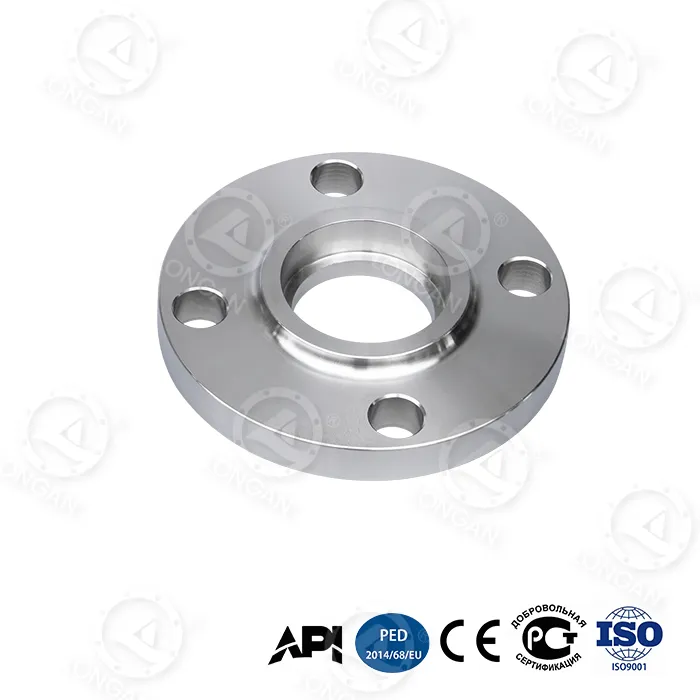
How Does Flange Bolting Ensure Leak-Free Connections?
Flange bolting offers a mechanical approach to connect piping components. The reliability of a bolted connection depends on bolt material, torque application, gasket selection, and flange alignment. Our engineers ensure that Flange surfaces are machined accurately and that bolt preload matches operating conditions. Bolted connections also allow easy disassembly for maintenance, which is a major advantage in systems requiring periodic inspection.
We provide Flanges designed to accommodate various bolt sizes and pressure ratings. Our factory performs rigorous torque and tension tests to confirm that the assembly can withstand high-pressure fluid flow without deformation or leakage. Using bolted Flanges from Wenzhou Longan Flange Co., Ltd. allows operators to achieve repeatable reliability across multiple maintenance cycles.
Why Welding Provides Structural Strength in Piping Systems?
Welding creates a permanent joint between piping components, eliminating the need for gaskets or bolts. Our welding partners focus on selecting compatible materials and employing proper welding techniques to minimize stress concentrations. Welded Flanges are often preferred in high-pressure, high-temperature applications where mechanical disassembly is not required. At our factory, we supply Flanges that are designed to withstand welding heat and resist distortion.
The quality of a weld is determined by penetration depth, bead consistency, and post-weld heat treatment. When properly executed, welding provides excellent fatigue resistance and uniform load distribution. Our engineers often compare bolted and welded Flanges by examining stress simulations and real operational feedback to determine which solution optimizes long-term reliability.
What Are the Key Parameters Affecting Flange Bolting Reliability?
Several factors influence the performance of bolted Flanges. Bolt size, material grade, tightening torque, gasket type, and flange face finish all contribute to the joint's overall integrity. Our factory evaluates these parameters carefully to ensure each Flange assembly meets safety and pressure requirements. By controlling these variables, we help customers achieve consistent sealing performance with minimal maintenance.
| Parameter | Specification Range | Impact on Reliability | Notes |
| Bolt Material | Grade 8.8 to 12.9 | Higher strength bolts reduce loosening under vibration | Critical for high-pressure systems |
| Tightening Torque | 50–300 Nm | Proper torque ensures uniform gasket compression | Depends on flange size and pressure rating |
| Gasket Type | Spiral wound, PTFE, rubber | Sealing effectiveness under temperature and pressure | Select based on fluid and operating conditions |
| Flange Face Finish | Ra 1.6–3.2 μm | Smoother finish enhances sealing | Important for high-pressure or critical pipelines |
How Do Welding Techniques Influence Long-Term Performance?
The reliability of welded Flanges depends on the welding process, material compatibility, and post-weld treatment. Our factory ensures that Flanges supplied for welding applications are designed to minimize distortion and residual stress. We often recommend butt welding or socket welding based on pipe thickness and operational conditions.
During welding, controlling heat input and performing proper post-weld inspections such as radiography or ultrasonic testing ensures that the joint maintains structural integrity. Wenzhou Longan Flange Co., Ltd. provides Flanges compatible with these quality control procedures. Our engineers frequently simulate thermal and mechanical loads to compare bolted and welded connections for specific applications.
| Welding Parameter | Recommended Range | Effect on Reliability | Notes |
| Heat Input | 0.5–1.2 kJ/mm | Proper heat prevents distortion and cracking | Depends on material and thickness |
| Post-Weld Heat Treatment | 200–650°C | Relieves residual stress | Essential for carbon steel Flanges |
| Welding Technique | Butt, Socket, Fillet | Uniform load distribution and joint strength | Select based on pipe size and system pressure |
FAQ: Flange Bolting vs. Welding: Which Provides Better Reliability?
When should I choose bolting over welding for Flanges?
Bolting is preferable when future disassembly, maintenance, or inspection is needed. Systems requiring periodic gasket replacement benefit from bolted connections. Proper torque control and material selection ensure long-term reliability.
Does welding always provide a stronger joint than bolting?
Not always. Welding provides continuous structural strength, but its reliability depends on welding quality, heat management, and material compatibility. Bolted joints with proper design can achieve comparable performance in many pressure ranges.
What operational factors determine the choice between bolting and welding?
System pressure, temperature fluctuations, vibration, and maintenance frequency all influence the choice. Our engineers evaluate these factors alongside flange specifications to recommend the optimal solution for specific applications.
Conclusion
The decision between flange bolting and welding is guided by operational requirements, maintenance expectations, and safety considerations. Bolted Flanges offer flexibility and ease of maintenance, while welded connections provide permanent structural integrity. Our factory works closely with customers to supply Flanges designed for both methods, ensuring that each connection meets stringent reliability standards. Wenzhou Longan Flange Co., Ltd. delivers engineering support, high-quality components, and technical guidance to optimize system performance. If you are planning a new piping system or evaluating connection methods, contact our team today to receive professional recommendations and Flange solutions tailored to your needs.