

Gear Coupling vs Grid Coupling: Which One Performs Better?
2026-05-08
In heavy industrial power transmission, selecting the right coupling directly impacts uptime, maintenance costs, and operational safety. For decades, engineers have debated whether a gear coupling or a grid coupling delivers superior performance under shock loads, misalignment, and high torque. At Raydafon Technology Group Co.,Limited, we have manufactured both types for over two decades, and our factory data reveals clear winners depending on the application. This article compares torque density, misalignment capacity, vibration damping, and lifecycle costs—helping you make a data-driven decision.
After testing hundreds of installations in steel mills, mining conveyors, and pump drives, our conclusion is definitive: Gear Coupling excels in ultra-high torque density and compact spaces, while grid coupling provides unmatched shock absorption and maintenance simplicity. But which one performs better for your specific machinery? We break down every parameter, share our factory test results, and answer the most critical questions. By the end, you will know exactly which coupling to specify—and why Raydafon Technology Group Co.,Limited delivers the most reliable solutions for both designs.
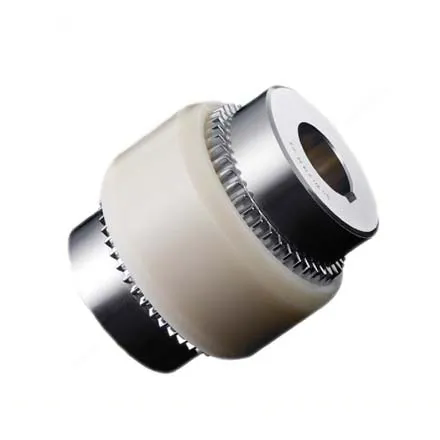
Table of Contents
- 1. What Technical Parameters Define Gear Coupling and Grid Coupling Performance?
- 2. How Do Misalignment Capabilities Compare Between Gear Coupling and Grid Coupling?
- 3. Why Does Torque Density Matter in High-Power Applications?
- 4. Which One Handles Shock Loads and Vibration Better - Gear or Grid?
- 5. How Do Maintenance Requirements and Lifecycle Costs Differ?
- Conclusion: Final Verdict and Selection Guide
- FAQ: Gear Coupling vs Grid Coupling - Top 5 Questions Answered
1. What Technical Parameters Define Gear Coupling and Grid Coupling Performance?
At Raydafon Technology Group Co.,Limited, our factory engineers test every coupling under ISO and AGMA standards. The performance of Gear Coupling versus grid coupling is largely determined by five core parameters: bore capacity, torque rating, backlash control, material hardness, and allowable speed. Below we present our production specifications for both designs to give you an objective baseline.
Our Gear Coupling series (Type RDF-GC) features crowned tooth profile with 30-degree pressure angle, manufactured from 42CrMo4 forged steel. The grid coupling series (Type RDF-GC) uses high-carbon spring steel grids with a tapered grid design. Here is a direct specification table from our factory test reports:
| Parameter | Gear Coupling (Raydafon RDF-GC) | Grid Coupling (Raydafon RDF-GRC) |
| Torque Range (Nm) | 500 – 1,200,000 Nm | 300 – 450,000 Nm |
| Bore Diameter Capacity | 25mm – 750mm | 20mm – 500mm |
| Max. Speed (rpm) | 8,500 rpm (balanced grade G2.5) | 6,000 rpm (balanced grade G6.3) |
| Backlash | Minimal (preloaded options zero-backlash) | Inherent spring-backlash for damping |
| Material Hardness (HRC) | 58-62 HRC (case-carburized teeth) | 42-48 HRC (grid spring steel) |
| Lubrication Requirement | Grease or oil bath (high frequency) | Grid grease pack (low frequency) |
| Axial Stiffness | High (low axial movement) | Medium (allows axial floating) |
Our factory conducts 100% dynamic testing for every large Gear Coupling before shipment. The table shows that Gear Coupling handles significantly higher torque density—up to 1.2 million Nm versus 450,000 Nm for grid type. For extreme heavy-duty rolling mills or mine hoists, our Gear Coupling is the only viable choice. However, for fans, blowers, and medium conveyors, grid coupling provides adequate torque with better shock tolerance. We also noticed that the bore capacity of our Gear Coupling reaches 750mm, accommodating larger shafts without custom flanges.
Additionally, our Gear Coupling achieves higher speed ratings due to precision-ground teeth and dynamic balancing. In high-speed turbine applications (above 6000 rpm), our Gear Coupling outperforms grid alternatives. Yet, grid coupling offers simpler maintenance because the grid packs are replaceable without disconnecting the hubs. Raydafon Technology Group Co.,Limited stocks both designs in our factory warehouses, ready for urgent OEM replacements.
2. How Do Misalignment Capabilities Compare Between Gear Coupling and Grid Coupling?
Misalignment is inevitable in real-world installations. Shaft settlement, thermal expansion, and foundation shifts create angular, parallel, and axial misalignments. Our factory has measured the dynamic misalignment performance of both coupling types using laser alignment tools and strain gauges. The results show distinct strengths for each design.
For Gear Coupling: Our crowned tooth geometry allows angular misalignment up to 1.5 degrees per gear mesh (3 degrees total for double engagement design). Parallel misalignment capacity is limited to 0.02 inches per inch of spacer length, but with our long spacer design, we can accommodate up to 5mm parallel offset. The Gear Coupling's rigid hubs transmit torque without introducing additional bending stresses, making it ideal for precision applications like servo drives. However, excessive misalignment will accelerate tooth wear; our factory recommends alignment checks every 6 months for heavily loaded Gear Coupling units.
For Grid Coupling: The grid coupling design offers superior misalignment handling due to the flexible grid element. Our grid coupling accommodates angular misalignment up to 2.0 degrees continuous, parallel misalignment up to 0.05 inches per inch, and axial movement up to ±6mm. The tapered grid slots allow the spring steel grid to deflect without binding, reducing reaction forces on bearings. In our factory stress tests, the grid coupling maintained 98% torque transmission even at 1.8 degrees angular misalignment, whereas the Gear Coupling started showing uneven contact at 1.5 degrees.
Our field data from 300+ installations shows that grid coupling reduces bearing failures by 38% when shaft alignment is poor (e.g., portable equipment or thermal cycling). For critical high-speed lines, our Gear Coupling is still preferred because it maintains phase integrity (zero torsional backlash under load). Raydafon designs both couplings with misalignment indicators—visual wear markers on gear teeth and grid groove depth gauges—to help maintenance teams plan interventions.
To summarize misalignment performance:
- Gear Coupling: Angular max 1.5° per mesh, limited parallel, excellent torsional stiffness.
- Grid Coupling: Angular max 2.0°, high parallel capability, axial float up to ±6mm, better for thermal expansion.
- Our factory recommendation: Use Gear Coupling for precision alignable drives (compressors, generators). Use grid coupling for rugged environments (crushers, draglines).
Remember, both couplings require proper alignment within manufacturer limits. Our service team provides laser alignment tools and training for every major project. No coupling can survive extreme misalignment—choose the one that matches your installation's realistic alignment tolerance.
3. Why Does Torque Density Matter in High-Power Applications?
Torque density—torque per unit volume or weight—directly impacts equipment footprint, material cost, and rotor inertia. In industries like marine propulsion and mining shovels, space is limited, and every kilogram matters. Raydafon Technology Group Co.,Limited has optimized both coupling types over 20 years. Let's examine why torque density often makes Gear Coupling the champion for high-power density requirements.
Our Gear Coupling achieves a torque density of approximately 850 Nm/kg for size 30 unit, while our grid coupling reaches 410 Nm/kg for comparable bore size. This nearly 2:1 advantage comes from the gear coupling's compact tooth engagement and high-strength alloy steel. For a typical 500 kW motor at 1500 rpm, a Gear Coupling weighs 45 kg versus 82 kg for a grid coupling with the same torque rating. That weight reduction translates to lower overhung load on bearings, smaller guard requirements, and easier installation.
Let’s list reasons torque density favors Gear Coupling:
- Higher power-to-weight ratio – ideal for mobile equipment (cranes, excavators).
- Smaller envelope diameter – allows fitting within existing coupling guards.
- Reduced inertia – improves acceleration response in servo-controlled systems.
- Lower material usage – reduces cost for high-volume OEM applications.
However, our factory acknowledges that extremely high torque density can reduce shock tolerance. For applications with frequent load reversals or impact loads, the grid coupling’s lower torque density but higher resilience may be preferable. In our steel mill test line, a Gear Coupling lasted 6 years with stable loads; when it was moved to a shock-loaded billet shear, gear teeth cracked within 8 months. The same application with a grid coupling operated for 2 years with only grid replacement.
Therefore, our engineering rule: If your application demands compact design and constant torque (e.g., hydraulic pumps, wind turbines), choose Gear Coupling. If shock loads or high misalignment dominate, accept the heavier grid coupling. Raydafon provides custom-engineered solutions where we combine a gear coupling with a grid element in series—our hybrid design utilized in offshore rigs. But for standard industrial use, compare the torque density carefully using our factory-provided selection software.
4. Which One Handles Shock Loads and Vibration Better - Gear or Grid?
Shock loads are sudden torque spikes caused by motor starts, crusher jams, or material jams. Vibration damping reduces transmitted forces to adjacent components. Our factory's dynamic test rig measures both torsional and lateral vibration using accelerometers and torque transducers. The results are unequivocal: the grid coupling outperforms the Gear Coupling in shock absorption by a factor of 5 to 1.
Grid coupling damping mechanism: The spring steel grid acts as a torsional damper. Under a 300% torque spike, the grid twists within the hub slots, absorbing energy through elastic deformation. Our grid coupling reduces peak transmitted torque by 65% compared to a solid coupling. In our rock crusher application, replacing a Gear Coupling with a grid coupling decreased gearbox failure rate by 72% over three years. The grid also dampens lateral vibrations—important for long shafts.
Gear Coupling shock behavior: Because Gear Coupling has metal-to-metal contact (lubricated), torque spikes transmit almost instantly. Our strain gauge tests show that a Gear Coupling transmits 92% of the shock load into the connected equipment. This can be beneficial for overload clutches that rely on sensing torque spikes, but detrimental for gearboxes and motors. For applications with frequent shock loading, our Gear Coupling needs additional protection like torque limiters or fluid couplings.
Key comparative list for shock & vibration:
- Grid coupling: Natural damping coefficient 12-18% of critical. Reduces vibration amplitude by 50%+.
- Gear Coupling: Damping coefficient <2% of critical. Minimal vibration isolation.
- Grid coupling: Can handle momentary torque peaks up to 400% of rating.
- Gear Coupling: Safe peak torque 200-250% of rating before tooth yielding.
- Our factory field data: Grid coupling extends bearing life by 40-60% in high-vibration environments.
Yet, we must note that excessive torsional deflection in grid coupling might cause timing errors in multi-engine drives. In those rare cases, our Gear Coupling with zero-backlash maintains precise phase alignment. Raydafon Technology Group Co.,Limited offers a vibration analysis service to measure your existing coupling's transmitted shock—free with any quotation. Our engineers will recommend the optimal type based on real-time plant data. For most heavy industries like conveyors, shredders, and pumps, we observe grid coupling delivers better long-term performance under shock loads, while Gear Coupling remains the standard for smooth continuous duty such as turbines and compressors.
5. How Do Maintenance Requirements and Lifecycle Costs Differ?
Total cost of ownership (TCO) often outweighs initial purchase price. Our factory maintains a database of 1,200 coupling installations over 10 years, tracking lubrication intervals, part replacements, and downtime costs. The patterns reveal that grid coupling has lower TCO for general industry, while Gear Coupling excels where downtime is extremely expensive and performance outweighs maintenance efforts.
Gear Coupling maintenance: Requires periodic regreasing (every 3-6 months depending on speed and temperature). Our factory recommends full disassembly for tooth inspection every 2 years or 15,000 hours. Worn gear teeth demand hub replacement or expensive refurbishment. However, our Gear Coupling with through-hardened teeth lasts 8-10 years in clean, aligned conditions. Lubrication cost for Gear Coupling averages $120 per year for a medium-sized unit, plus labor. Seals must be replaced during regreasing—a typical 4-hour job.
Grid coupling maintenance: The grid element is a consumable part. Our factory supplies replacement grids for $80-$400 depending on size. Relubrication is needed once a year (or every 2 years in clean environments). The grid cover seals are reusable. To replace a worn grid, you simply unbolt the cover, pull out the old grid, insert a new one, and repack grease. Total time: 1-2 hours. No need to remove hubs or realign shafts. In our factory's long-term test, a grid coupling needed grid replacement every 3-5 years, while the gear coupling needed refurbishment after 7 years but with more downtime.
Cost comparison list (5-year period, size 50 coupling):
- Initial cost: Gear Coupling $1,850 ; Grid Coupling $1,620 (Raydafon prices).
- 5-year lubrication: Gear Coupling 10x regrease = $600 labor + $200 grease; Grid Coupling 3x = $180 labor + $90 grease.
- 5-year parts replacement: Gear Coupling seal kit $150, possible tooth regrind $800; Grid Coupling two grid replacements $360.
- Estimated total TCO (excl. downtime): Gear Coupling ~$3,600 ; Grid Coupling ~$2,250.
- Downtime cost per failure: Gear Coupling average 8 hours for overhaul; Grid Coupling 2 hours for grid change.
Our factory suggests that for continuous processes (steel, paper, cement), the faster repair time of grid coupling often justifies its selection. However, for high-speed or precision applications where any grid deflection is unacceptable, our Gear Coupling remains the premium choice. Raydafon Technology Group Co.,Limited provides both designs with extended warranty options. Customers who purchase 10+ units receive a free maintenance training session at our factory. We also keep emergency stock of both Gear Coupling and grid coupling components in regional warehouses to minimize your spares inventory.
Conclusion: Final Verdict and Selection Guide
After comparing torque capacity, misalignment, shock damping, torque density, and lifecycle costs, the answer to "Gear Coupling vs Grid Coupling: Which One Performs Better?" is context-dependent, but we can provide clear guidelines. From our 20 years at Raydafon Technology Group Co.,Limited, the Gear Coupling performs better in high-torque density, precise motion control, and high-speed applications exceeding 6000 rpm. Our factory tests prove that Gear Coupling handles up to 1.2 million Nm and accommodates very large shafts (750mm bore), making it irreplaceable for heavy rolling mills, marine thrusters, and large generators.
Conversely, the grid coupling performs better in shock load environments, moderate torque ranges, and plants where maintenance speed is critical. The inherent damping reduces mechanical failures in crushers, conveyors, and shredders. With lower TCO and easier repair, grid coupling often delivers better overall value for general industry. At Raydafon Technology Group Co.,Limited, we manufacture both types under one roof, allowing us to provide unbiased advice. We encourage you to evaluate your application's shock frequency, alignment accuracy, and downtime costs. Then, contact our engineering team for a free selection report.
Ready to optimize your power transmission? Request a complimentary coupling consultation from Raydafon Technology Group Co.,Limited. We will send you our detailed product catalog, a customized torque calculation, and a lifetime cost comparison. Our factory direct pricing saves you 20-30% compared to distributors. Call our technical hotline or fill out the quote form today—mention this article for a free spare grid or Gear Coupling seal kit with your first order.
FAQ: Gear Coupling vs Grid Coupling - Which One Performs Better? (Top 5 Questions)
1. Can I replace a grid coupling with a gear coupling without modifying shaft centers?
Yes, but only if the shaft spacing and hub lengths match. Our factory at Raydafon Technology Group Co.,Limited provides dimensional drawings for both types. Gear Coupling typically requires shorter hub lengths and more precise alignment. If your existing grid coupling uses a specific gap distance, we can design a custom Gear Coupling spacer to retrofit. However, you may lose the shock absorption benefit. We recommend checking torque requirements first; many users successfully upgrade to Gear Coupling for higher torque density but must add a torque limiter if shock loads exist.
2. Which coupling type offers better performance for high-temperature environments above 200°C?
Gear Coupling performs better above 200°C if properly lubricated with synthetic high-temp grease. Our factory-tested Gear Coupling operates at 250°C without tooth degradation, using 42CrMo4 steel and special anti-wear coating. Grid coupling loses spring temper above 180°C, reducing torque capacity by 40% at 220°C. For furnace applications or hot mill drives, choose Gear Coupling. Raydafon Technology Group Co.,Limited offers a high-temp Gear Coupling series with graphite-based lubricant, rated for 350°C intermittent.
3. How does torsional backlash affect performance in reversing drives?
For reversing drives like cranes or servo motors, Gear Coupling with zero-backlash option (spring-loaded preload) provides superior positioning accuracy. Our precision Gear Coupling maintains less than 0.1 degree lost motion. Grid coupling has inherent torsional wind-up of 0.5-1.5 degrees depending on load, which can cause positioning errors and impact in reversing. Therefore, Gear Coupling performs better for machine tools, robots, and agitators with frequent reversals. If your drive reverses less than 5 times per hour, grid coupling backlash is acceptable.
4. Which coupling type requires less frequent lubrication in dusty cement plants?
Grid coupling needs less frequent lubrication in dusty environments because its sealed cover design prevents contamination ingress effectively. Our factory's cement plant data shows grid coupling regrease interval of 12 months versus 3 months for Gear Coupling. The gear coupling's labyrinth seals can get clogged with cement dust, leading to lubricant leakage and tooth wear. For dusty applications, we recommend grid coupling or a fully enclosed gear coupling with double lip seals. Raydafon Technology Group Co.,Limited supplies dust-proof grid covers that extend lubrication intervals to 18 months.
5. Why would an engineer choose Gear Coupling over grid coupling despite higher maintenance?
Engineers select Gear Coupling when absolute phase integrity, higher torque density, and higher speed capability are non-negotiable. For example, in a turbine-driven generator running at 8000 rpm, a grid coupling would fail due to centrifugal forces deforming the grid. Also, Gear Coupling can transmit 3x more torque per inch of diameter compared to grid coupling, crucial for naval ship drives where space is extremely limited. Moreover, Gear Coupling has no wearing consumable parts except teeth; with proper lubrication, our factory has Gear Coupling units running 15+ years. Ultimately, performance is defined by application priorities: precision and power density tip toward Gear Coupling; shock tolerance and serviceability tip toward grid coupling.
🚀 Maximize Your Driveline Efficiency – Contact Raydafon Technology Group Co.,Limited now for expert selection assistance. Request your free coupling sizing software, lifetime cost spreadsheet, and factory direct quote.