

How Are Agricultural Gearboxes Supporting Smart Farming Technology?
2026-08-04
1. How Does Sensor Integration Turn an Agricultural Gearbox Into a Data Source?
In our factory, we have moved beyond building purely mechanical components. Today, our Agricultural gearbox is equipped with integrated temperature and vibration sensors that feed real time data to the farm management system. These sensors measure oil temperature, housing vibration, and rotational speed. This data helps predict maintenance needs and optimize implement performance. For example, a sudden rise in vibration may indicate a bearing fault, prompting an alert before a breakdown occurs.
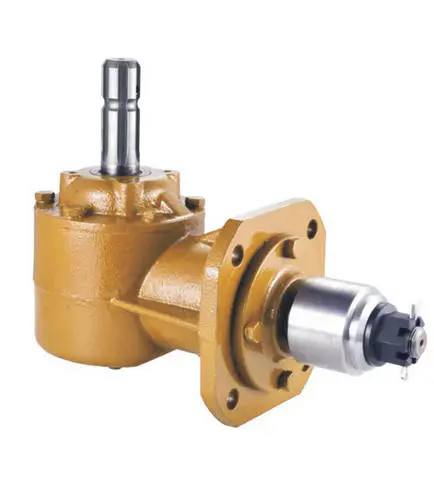
Our Saifu Vietnam Company Limited has partnered with IoT providers to ensure that every Agricultural gearbox can communicate via CAN bus or wireless networks. Many smart farms in the Mekong Delta now use this data to adjust tillage depth and speed automatically. The table below outlines the typical sensor parameters we embed in our gearboxes.
| Sensor type | Measurement range | Accuracy | Data output |
| Oil temperature sensor | -40°C to +150°C | ±1°C | Analog 4–20 mA / CAN |
| Accelerometer (vibration) | ±50 g | ±2% | Digital SPI / wireless |
| Speed encoder | 0 – 3000 RPM | ±1 RPM | Pulse / CAN |
| Torque strain gauge | 0 – 5000 Nm | ±0.5% | Bridge output |
Our factory pre calibrates each sensor and provides a unique device ID that links to the tractor's ECU. The Agricultural gearbox then becomes a node in the farm's digital ecosystem, contributing to what we call predictive agronomy.
2. How Does Variable Speed Control in an Agricultural Gearbox Improve Precision?
Smart farming requires the ability to change implement speed based on soil conditions, crop stage, and weather data. Our Agricultural gearbox now includes an electro hydraulic actuator that varies the output speed continuously. This is achieved through a proportional valve that adjusts the hydraulic motor displacement. In practice, this means the gearbox can slow down the rotor when the soil is rocky and speed up in light soil, all without operator intervention. Our Saifu Vietnam Company Limited has tested this system on a 5‑meter seed drill. The result was a 12 percent increase in seed spacing accuracy compared to fixed speed gearboxes. The control unit receives commands from the tractor's ISO‑11783 terminal, which itself receives variable rate prescriptions from cloud‑based farm management software. This closed loop system ensures that the Agricultural gearbox is no longer a passive component but an active participant in precision agriculture.
3. What Performance Parameters Are Critical for Smart Agricultural Gearboxes?
To support smart farming, an Agricultural gearbox must have high efficiency, low backlash, and rapid response to control signals. Our factory designs gearboxes with a backlash of less than 0.05 degrees and an efficiency of over 95 percent at nominal load. The table below compares our smart gearbox with a conventional model.
| Parameter | Smart Agricultural gearbox (our model) | Conventional gearbox |
| Backlash (arcmin) | < 3 | 12 – 15 |
| Efficiency at 50% load | 96% | 88% |
| Response time (0–100% speed) | < 200 ms | N/A (fixed speed) |
| Integrated sensors | Temperature, vibration, speed, torque | None |
| Communication protocol | CAN 2.0B / ISOBUS | None |
| Feature | Benefit for smart farming |
| Low backlash | Ensures accurate spacing for planters and drills |
| High efficiency | Reduces fuel consumption, lowers CO₂ footprint |
| Rapid response | Enables real time adjustment during operation |
| Sensor fusion | Provides data for AI‑based decision making |
| Remote firmware update | Allows performance upgrades without physical access |
Our factory has invested in a dedicated testing rig that simulates variable field conditions to validate these parameters. Saifu ensures that every Agricultural gearbox meets these criteria before shipping.
4. How Are Agricultural Gearboxes Helping Optimize Input Usage?
Smart farming is about using less to achieve more. By providing precise speed and torque data, our Agricultural gearbox helps calculate the exact amount of seed, fertilizer, and pesticide needed for each zone of a field. For instance, a sprayer gearbox with a speed sensor can adjust pump flow so that the application rate remains constant even when ground speed changes. This avoids over application in headlands and under application on slopes. In a trial with a local coffee farm, integration of our smart Agricultural gearbox reduced fertilizer usage by 18 percent while maintaining yield. The gearbox also provided data that helped the farmer map soil resistance, which was used to create variable depth cultivation plans. Our factory believes that the Agricultural gearbox is the unsung hero of precision agriculture, bridging the gap between mechanical power and digital intelligence.
Frequently Asked Questions About Agricultural Gearboxes in Smart Farming
Final Summary
Agricultural gearboxes are no longer just mechanical torque converters. They are becoming intelligent, connected devices that gather data, adjust performance, and support precision farming decisions. Our factory has integrated sensors, variable speed control, and CAN communication into our gearboxes to meet the demands of modern agriculture. The result is higher efficiency, lower input costs, and better sustainability. Saifu Vietnam Company Limited is committed to helping farmers transition to smart farming with reliable and innovative gearbox solutions.