

How Are Agricultural Gearboxes Used in Rotary Tillers and Soil Equipment?
2026-07-13
1. Why Is the Agricultural Gearbox the Heart of Rotary Tiller Power Transmission?
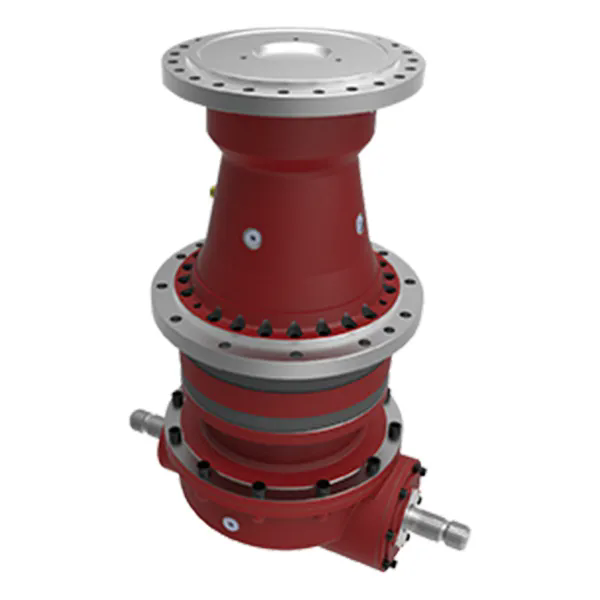
In our factory, we have designed and manufactured Agricultural Gearbox units for over 18 years, supplying to OEMs across Europe, North America, and Southeast Asia. The primary role of an Agricultural Gearbox in a rotary tiller is to convert the high speed, low torque input from the tractor PTO into low speed, high torque output needed to turn the tines. A typical tractor PTO runs at 540 or 1000 RPM, but the tiller blades need to rotate at around 200 to 300 RPM for effective soil pulverization. Our Agricultural Gearbox uses spiral bevel gears and helical gear stages to achieve this reduction efficiently. The gearbox also changes the axis of rotation by 90 degrees, directing the power downward to the rotor shaft. Many local farmers in the American Midwest and the Pampas region of Argentina have relied on our Agricultural Gearbox to handle heavy clay and rocky soils. Without a robust gearbox, the tiller would stall or suffer catastrophic gear tooth breakage. Our Raydafon Technology Group Co.,Limited ensures that every gearbox housing is made from nodular cast iron, which absorbs shock loads and dampens vibration. The gearbox also acts as a central mounting point for the tiller frame, distributing the weight evenly across the implement.
2. How Does Gear Ratio Selection Affect Soil Preparation Performance?
The gear ratio inside the Agricultural Gearbox determines the rotor speed and, consequently, the soil fragmentation quality. Our factory offers a range of ratios, typically from 2.5:1 to 4.5:1, depending on the tiller width and tractor horsepower. A lower ratio (e.g., 2.5:1) produces higher rotor speeds, which is ideal for fine seedbed preparation in sandy loam. A higher ratio (e.g., 4.5:1) provides more torque at lower speeds, suitable for breaking virgin ground or working in wet, sticky clay. We have observed that many farmers in the UK use a 3.2:1 ratio as a versatile choice for their general crop rotation. The selection also depends on the tractor PTO speed; if you have a 1000 RPM PTO, you might choose a different ratio than for a 540 RPM system. Our Agricultural Gearbox is designed with interchangeable gear sets, so you can change the ratio without replacing the entire unit. This flexibility is a key feature appreciated by contractors who work on diverse soil types. The table below shows our standard ratio offerings and their recommended applications.
| Gear ratio (input:output) | Output rotor speed (PTO 540 RPM) | Recommended soil type | Tiller width range |
| 2.5 : 1 | 216 RPM | Sandy loam, light soil, secondary tillage | 1.5 – 2.5 m |
| 3.2 : 1 | 169 RPM | Medium loam, general purpose | 2.0 – 3.0 m |
| 3.8 : 1 | 142 RPM | Clay soil, heavy ground, primary tillage | 2.5 – 3.5 m |
| 4.5 : 1 | 120 RPM | Very heavy clay, stony ground, deep tillage | 3.0 – 4.0 m |
Our factory also provides a custom ratio service for specialized applications, such as vineyard tillers or inter row cultivators.
3. What Technical Parameters Define the Durability of an Agricultural Gearbox in Soil Equipment?
Durability in harsh agricultural environments depends on material quality, heat treatment, and sealing. Our Agricultural Gearbox uses case hardened gears with a surface hardness of 58 to 62 HRC and a core hardness of 30 to 35 HRC. This provides a tough core with a wear resistant surface. The gear teeth are ground to a DIN 6 quality finish, ensuring quiet operation and minimal friction loss. The housing is sealed with double lip oil seals and O rings to prevent dust and moisture ingress, which is critical when working in muddy fields. The table below lists the key specifications we test in our factory for every gearbox batch.
| Parameter | Our Agricultural Gearbox (RT series) | Industry standard requirement |
| Max input torque (continuous) | 850 Nm (for RT-320 model) | ≥ 600 Nm for similar size |
| Max input speed | 1200 RPM | 1000 RPM typical |
| Gear material | 20CrMnTi alloy steel | Carbon steel or lower alloy |
| Heat treatment | Carburizing + quenching + tempering | Induction hardening only |
| Oil capacity | 2.8 liters (EP 90 gear oil) | 2.0 – 3.0 liters |
| Service life (tested on dynamometer) | 8,000 hours at rated load | 5,000 hours |
Our Raydafon also performs a 100 percent oil leak test under vacuum and a noise test below 85 dB at full load. This level of quality assurance ensures that our Agricultural Gearbox can withstand the rigors of daily fieldwork.
4. How Does the Agricultural Gearbox Integrate With Different Tractor Power Take Off Systems?
Compatibility with various tractor models is essential. Our Agricultural Gearbox is designed with a standard 1 3/8 inch 6 spline or 1 3/4 inch 20 spline input shaft, compatible with most tractor PTO systems. We also offer optional input shafts for European and Asian tractor specifications. The gearbox mounting flange uses a universal bolt pattern that fits the majority of rotary tiller frames. For tractors with a 540/1000 dual speed PTO, we provide a gearbox with a two speed input option, allowing the operator to select the appropriate rotor speed without changing gear sets. Our factory has also developed a hydraulic PTO interface for high horsepower tractors, which provides smooth engagement and reduces shock loading. Many local dealers in France and Germany have praised the ease of installation, as our Agricultural Gearbox comes with pre aligned dowel pins and color coded wiring for the optional speed sensor. This integration capability reduces downtime during seasonal equipment changeovers.
Frequently Asked Questions About Agricultural Gearboxes in Rotary Tillers
Final Summary
The Agricultural Gearbox is the critical component that transforms tractor power into effective soil preparation. Our factory has engineered a range of gearboxes that offer high torque capacity, multiple ratio options, and exceptional durability. Whether you are working with light sandy soils or heavy clay, our gearboxes provide the reliability and performance needed for modern agriculture. The technical specifications, from gear material to sealing design, are validated through rigorous testing to ensure long service life. Raydafon Technology Group Co.,Limited is committed to supporting your farming operation with quality products and expert advice.