
How Are High-Temperature Hydraulic Cylinders Supporting Steel Plants?
2026-04-15
Why Do Steel Plants Demand Extreme-Condition Hydraulic Solutions?
In modern steel production environments, equipment is exposed to continuous thermal stress, abrasive particles, and high mechanical loads. From continuous casting lines to rolling mills, the reliability of motion control systems directly impacts production uptime and safety compliance. This is where a high-performance Hydraulic Cylinder becomes a mission-critical component.
In our experience working closely with steel manufacturers, our engineering teams have observed that temperature fluctuations above 200°C can quickly degrade standard sealing systems and lead to oil leakage or pressure loss. Our factory has therefore focused on designing robust systems capable of maintaining stable operation even under prolonged thermal exposure.
Raydafon Technology Group Co.,Limited has consistently invested in material upgrades and thermal-resistant sealing technologies to ensure long-term reliability. Our approach emphasizes not only durability but also operational precision, which is essential in high-speed rolling applications.
How Do High-Temperature Hydraulic Cylinders Maintain Stability Under Heat Stress?
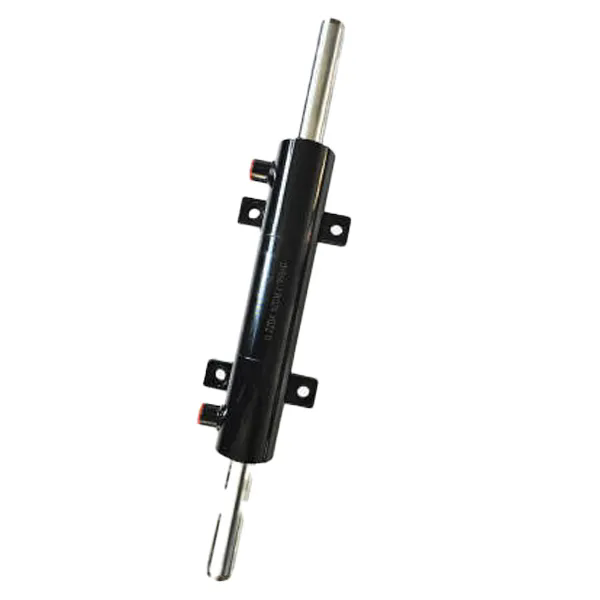
The key challenge in steel plants is maintaining consistent force output while minimizing thermal deformation. A properly engineered Hydraulic Cylinder incorporates heat-resistant alloys, advanced coatings, and optimized internal tolerances to ensure dimensional stability.
Our factory uses specially treated piston rods with enhanced surface hardness to reduce wear caused by scale and debris. Additionally, our sealing systems are designed with high-temperature elastomers that maintain elasticity even under extreme heat cycles. This ensures that our systems continue to perform reliably without frequent maintenance interruptions.
From blast furnace operations to billet handling systems, our designs prioritize thermal expansion compensation. This allows our components to maintain alignment and prevent internal scoring, which is a common failure mode in standard cylinders.
| Parameter | Specification Range |
| Operating Temperature | -20°C to 250°C |
| Maximum Pressure | 16 MPa to 35 MPa |
| Bore Diameter | 50 mm to 400 mm |
| Stroke Length | Up to 6000 mm |
| Rod Coating | Chrome Plated or Ceramic Coated |
What Design Features Improve Performance in Steel Mill Applications?
Steel plant applications require more than just heat resistance. They demand precision, load stability, and resistance to shock loads. A well-designed Hydraulic Cylinder integrates reinforced end caps, heavy-duty mounting options, and optimized fluid channels to handle these conditions.
Our engineering team has refined internal flow paths to reduce pressure drops, ensuring smoother actuation during high-speed operations. Our factory also applies anti-corrosion treatments that extend service life in humid and chemically aggressive environments.
Raydafon Technology Group Co.,Limited focuses on modular designs that allow easy integration into existing steel plant systems. This reduces downtime during installation and simplifies maintenance procedures. Our solutions are widely used in rolling stands, slab pushers, and furnace charging systems.
| Application Area | Performance Requirement |
| Rolling Mill | High load capacity and precise positioning |
| Continuous Casting | Thermal resistance and smooth operation |
| Furnace Handling | Heat insulation and durability |
| Material Transfer | Shock resistance and long stroke capability |
How Does Proper Selection Reduce Downtime and Maintenance Costs?
Choosing the right Hydraulic Cylinder for steel plant operations significantly reduces unplanned downtime. Improper selection often leads to seal failure, rod bending, or internal leakage, all of which disrupt production schedules.
Our factory recommends evaluating factors such as operating temperature, load cycles, and environmental exposure before selecting a system. Our technical team works closely with clients to ensure that each configuration matches real-world working conditions.
By implementing optimized sealing systems and high-strength materials, our solutions reduce maintenance frequency and extend service intervals. This not only improves operational efficiency but also lowers total cost of ownership over time.
Raydafon has supported multiple steel plants in upgrading legacy systems, helping them achieve higher reliability and improved energy efficiency across their hydraulic systems.
Why Are Custom Hydraulic Cylinders Becoming the Industry Standard?
Standardized solutions often fail to meet the specific requirements of steel manufacturing processes. Customized Hydraulic Cylinder solutions are increasingly preferred because they address unique operational challenges such as space constraints, extreme loads, and integration with automation systems.
Our factory offers tailored engineering services, including custom stroke lengths, mounting configurations, and sealing solutions. Our design philosophy focuses on aligning product performance with actual plant conditions rather than theoretical specifications.
Our team ensures that each unit is tested under simulated working conditions before delivery. This guarantees consistent performance and minimizes the risk of early failure in demanding environments.
FAQ
What makes high-temperature hydraulic cylinders different from standard cylinders?
High-temperature hydraulic cylinders are specifically engineered with heat-resistant seals, specialized alloys, and enhanced coatings that allow them to operate reliably in environments exceeding 200°C, whereas standard cylinders typically fail under prolonged thermal exposure due to seal degradation and material expansion.
How do hydraulic cylinders improve efficiency in steel plants?
Hydraulic cylinders provide precise force control and stable motion, which is essential for processes like rolling, lifting, and positioning. Their reliability ensures continuous operation, reduces downtime, and improves overall production efficiency in high-demand industrial environments.
What factors should be considered when selecting a hydraulic cylinder for steel applications?
Key factors include operating temperature range, pressure requirements, load capacity, stroke length, and environmental conditions such as dust and corrosion. Proper selection ensures long service life, reduced maintenance, and optimal system performance.
Conclusion: How Can the Right Solution Enhance Steel Plant Performance?
High-temperature hydraulic solutions play a critical role in ensuring safe and efficient steel production. From improving operational stability to reducing maintenance costs, the right Hydraulic Cylinder directly contributes to overall plant productivity. Our factory continues to refine its designs to meet evolving industry demands, combining durability with precision engineering.
If you are looking to upgrade your hydraulic systems or need a customized solution for demanding steel plant environments, our technical team is ready to support your project with reliable and proven solutions. Contact us today to discuss your requirements and receive a tailored recommendation.