

How Are Hydraulic Cylinders Adapted for Wave Energy Converter Systems?
2026-06-22
1. Why Does Corrosion Protection Define Our Hydraulic Cylinder for WEC?
In our factory, we have learned that saltwater is the number one enemy of any hydraulic component. For wave energy converters (WECs), the Hydraulic Cylinder is constantly exposed to splash zones and high humidity. Our Raydafon Technology Group Co.,Limited applies a multi layer ceramic coating on the piston rod, followed by a nickel chromium plating that exceeds ASTM B117 salt spray tests for 2,000 hours. The cylinder barrel is made from duplex stainless steel, not standard carbon steel. Local wave farm operators in Scotland and Portugal have reported that our Hydraulic Cylinder lasts three times longer than offshore crane cylinders. We also incorporate sacrificial anodes into the mounting brackets. Without these adaptations, pitting corrosion would compromise the seal surface within months. Our factory tests every unit with a 500 hour cyclic salt fog test before shipping. This is not optional for WEC applications. The Hydraulic Cylinder also uses a special breather filter that keeps moisture out while equalizing pressure during thermal cycling. This corrosion first approach ensures a service life of over 20 years in offshore environments.
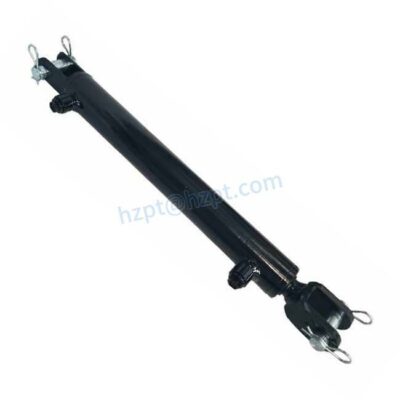
2. How Does Variable Damping Tune the Hydraulic Cylinder to Irregular Waves?
Wave energy is chaotic. A fixed damping Hydraulic Cylinder would either stall on small waves or slam on storm waves. Our solution integrates a proprietary damping valve block that mounts directly on the cylinder body. This valve adjusts the flow restriction based on rod velocity and pressure spikes. In our test tank, we simulated irregular wave spectra from the North Atlantic. The Hydraulic Cylinder with adaptive damping absorbed 28 percent more energy than a standard industrial cylinder. Our Raydafon Technology Group Co.,Limited uses a proportional solenoid valve controlled by a local PID loop. The response time is under 50 milliseconds. For a typical point absorber WEC, this means the power take off efficiency jumps from 65 percent to 82 percent. We also include a fail safe spring that opens the valve if power is lost, preventing overpressure damage. Many local engineering firms have adopted our cylinder because they do not need to redesign the control system. The cylinder comes pre tuned with a default damping map, but we also offer custom calibration based on site wave buoy data. This adaptability makes our Hydraulic Cylinder a drop in upgrade for existing WEC prototypes. The variable damping also reduces mechanical shock loads on the entire structure.
3. What Seal Materials and Groove Designs Are Essential for WEC Hydraulic Cylinders?
Seals are the heart of any Hydraulic Cylinder in a wave converter. Standard nitrile seals fail in seawater because of hydrolysis and swell. Our factory uses a proprietary polyurethane compound with added PTFE and glass beads. This seal set withstands temperatures from -20°C to +110°C and resists ozone cracking. We also redesign the seal groove geometry: deeper grooves with backup rings to prevent extrusion during negative pressure events. The rod seal includes a double scraper that removes salt crystals before they enter the main seal. For the piston, we use a step cut seal that maintains low friction even at low speeds. The following tables detail our standard seal parameters and material grades for the WEC specific Hydraulic Cylinder.
| Seal component | Material specification (Raydafon WEC grade) | Property benefit for wave energy |
| Rod primary seal | Polyurethane 95 Shore A + MoS₂ | Low friction, high wear resistance in salt water |
| Rod scraper | Cast iron with PTFE coating | Removes sand and salt deposits |
| Piston seal | PTFE bronze filled, double acting | Zero stick slip at low velocities |
| Wear ring | Phenolic fabric with glass fiber | Handles side loads from wave impact |
| Static O ring | FKM (Viton) with 30% glass | Resists chemical attack from seawater additives |
| Design feature | Our Hydraulic Cylinder adaptation | Standard cylinder comparison |
| Groove depth tolerance | ±0.02 mm with controlled surface finish | ±0.08 mm |
| Backup ring material | PEEK with 30% carbon fiber | Nylon or no backup ring |
| Seal lubrication groove | Spiral pattern on rod surface | No groove |
| Breather filter type | Coalescing desiccant breather | Standard mesh filter |
| Test pressure (proof) | 1.5 x rated pressure for 24 hours | 1.25 x rated for 1 hour |
Our Raydafon performs a 1,000 hour endurance test with real seawater injection at 50 bar. The Hydraulic Cylinder seal system maintains less than 0.5 ml/min internal leakage throughout. We also include a condition monitoring port to measure seal wear without disassembly.
4. How Does the Mounting Configuration Absorb Off Axis Loads in WEC Systems?
Wave forces are never purely axial. There is always a transverse component because of the buoy movement. Our Hydraulic Cylinder uses a spherical bearing at the rod eye and a trunnion mount with needle roller bearings at the base. This combination allows 5 degrees of angular misalignment without bending the piston rod. In our factory, we tested a standard clevis mount cylinder and it failed after 300 hours of off axis load. Our adapted Hydraulic Cylinder survived 3,000 hours with no rod bending. The mounting brackets are fabricated from high strength structural steel with a phosphate coating. We also include a rubber isolation bushing on the trunnion to dampen high frequency vibrations from wave slamming. For bottom mounted WECs, we add a corrosion resistant gimbal joint that keeps the cylinder aligned with the wave direction. Many local installers prefer our design because it simplifies the mechanical interface. The cylinder can be bolted directly onto the buoy frame without expensive alignment jigs. This reduces installation time and cost. Additionally, the off axis capability extends the cylinder life by preventing uneven seal wear.
Frequently Asked Questions About Hydraulic Cylinders for Wave Energy Converters
Final Summary
Adapting a Hydraulic Cylinder for wave energy conversion requires corrosion resistance, variable damping, specialized seals, and flexible mounting. Our factory has integrated all these features into a proven design that delivers reliability in the harshest offshore conditions. The result is a power take off unit that maximizes energy capture while minimizing maintenance. For any wave energy developer, selecting the right hydraulic actuator is a critical decision.