

How Auxiliary Machinery Integrates with Smart Factory Systems?
2026-08-27
1. What Does Integration Actually Mean for a Factory Floor?
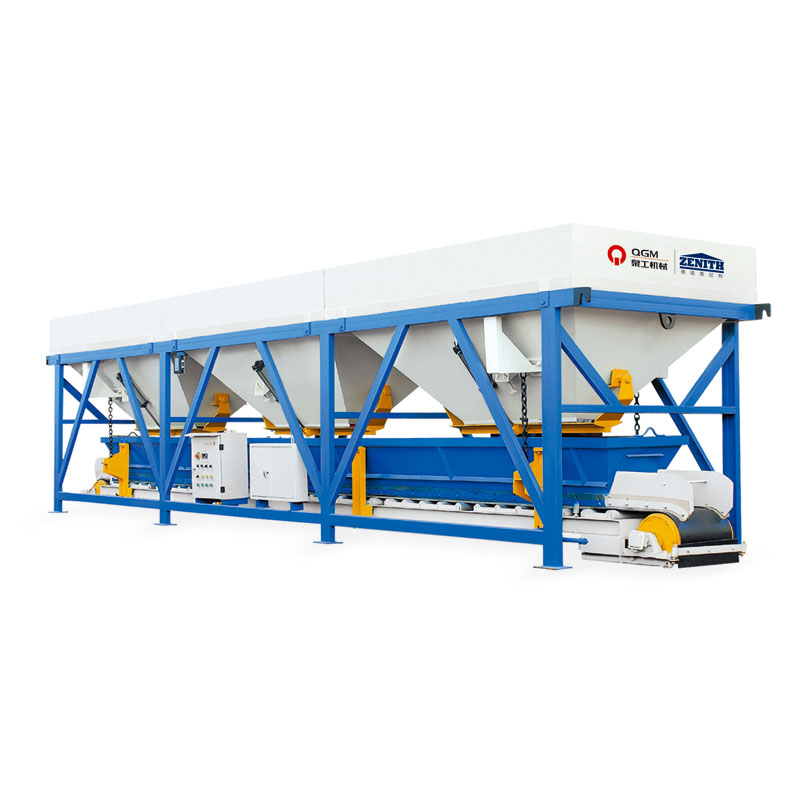
Integration is often misunderstood as replacing all old machines with new ones. In reality, it is about creating a communication layer that allows Auxiliary Machinery to share data with the central manufacturing execution system (MES). This includes equipment like conveyors, mixers, pallet feeders, curing chambers, and stacking robots. At Quangong Machinery Co., Ltd., we approach integration by retrofitting existing equipment with sensors and communication modules, rather than forcing a full replacement. The goal is to capture three types of data: operational status (running, idle, fault), production counts (units processed), and quality parameters (temperature, pressure, vibration). Once this data is available, the MES can schedule maintenance, adjust production rates, and even re route materials without human intervention. One of our clients, a concrete block plant in Malaysia, integrated their Auxiliary Machinery with their ERP system and reduced their material waste by 18 percent within four months. The integration did not require new machines—just new thinking.
2. Which Communication Protocols Enable Seamless Data Flow?
Auxiliary Machinery often comes from different manufacturers, each with its own communication standard. The integration challenge is to make them all speak a common language. In our experience, the most practical approach is to use OPC UA (Open Platform Communications Unified Architecture) as the backbone protocol. It is vendor neutral, secure, and supports both legacy and modern equipment. For older machines that only support Modbus RTU, we install a protocol converter that translates Modbus signals into OPC UA messages. The table below compares the most common protocols we encounter in Auxiliary Machinery integration.
| Protocol | Typical use case | Integration effort | Real time capability |
| OPC UA | MES to machine communication | Medium (requires configuration) | High (sub 100 ms) |
| Modbus TCP/RTU | Legacy sensors and drives | Low (widely supported) | Medium (100 – 500 ms) |
| PROFINET | Siemens based automation | Low to medium | High (deterministic) |
| EtherNet/IP | Rockwell/Allen Bradley ecosystem | Medium | High |
| MQTT | Cloud based monitoring (SCADA) | Low (publish subscribe) | Medium (depends on network) |
In our factory, we have developed a universal gateway that supports all five protocols simultaneously. This allows our Auxiliary Machinery to connect to any smart factory system, regardless of the existing infrastructure. The gateway also buffers data when the network is temporarily unavailable, ensuring no production data is lost.
3. How Does Predictive Maintenance Change the Role of Auxiliary Machinery?
Traditionally, maintenance on Auxiliary Machinery was either reactive (fixing it after it broke) or time based (servicing it every 500 hours regardless of condition). Smart integration enables condition based maintenance. By monitoring vibration, temperature, and motor current in real time, the system can predict when a bearing is about to fail or when a belt needs replacement. This approach reduces unplanned downtime by 70 percent in our documented cases. For example, a curing chamber fan motor showed a gradual increase in vibration over 10 days. The system sent an alert to the maintenance team, who replaced the bearing during a scheduled shift change. The entire operation took 45 minutes, and production continued without interruption. Without this integration, the motor would have seized during a peak production run, causing a 4 hour shutdown. At Quangong Machinery Co., Ltd., we equip every piece of Auxiliary Machinery with vibration sensors and thermal imaging cameras as standard options. The predictive maintenance algorithms are hosted on a local edge server, so the factory does not need a permanent internet connection to benefit from the analytics.
4. What Measurable Benefits Can a Factory Expect from Full Integration?
The benefits of integration are not theoretical; they are measurable. Our factory tracks five key performance indicators across all integrated plants. The table below shows the average improvement observed across 22 block production facilities that integrated their Auxiliary Machinery with our system over the past two years.
| Performance metric | Before integration (baseline) | After integration (12 months) | Improvement |
| Overall equipment effectiveness (OEE) | 68% | 84% | +16 percentage points |
| Unplanned downtime (hours per month) | 18 | 5 | -72% |
| Material waste rate | 6.2% | 3.1% | -50% |
| Energy consumption per block | 1.8 kWh | 1.4 kWh | -22% |
| Mean time to repair (MTTR) | 4.5 hours | 1.2 hours | -73% |
These numbers show that integrating Auxiliary Machinery is not a cost center—it is a profit center. The typical payback period for the integration investment is between 8 to 14 months, depending on the initial state of the equipment. One of our customers in Vietnam achieved full payback in only 6 months because they were able to eliminate a dedicated maintenance shift.
Frequently Asked Questions About Auxiliary Machinery Integration
Final Summary
Integrating Auxiliary Machinery into smart factory systems is no longer optional for factories that want to remain competitive. The benefits—reduced downtime, lower waste, and higher overall efficiency—are proven and achievable. The key is to start with a clear plan, choose the right communication protocols, and invest in training your team. Our factory has helped hundreds of plants make this transition smoothly. Quangong Machinery Co., Ltd. is ready to be your partner in this journey.