
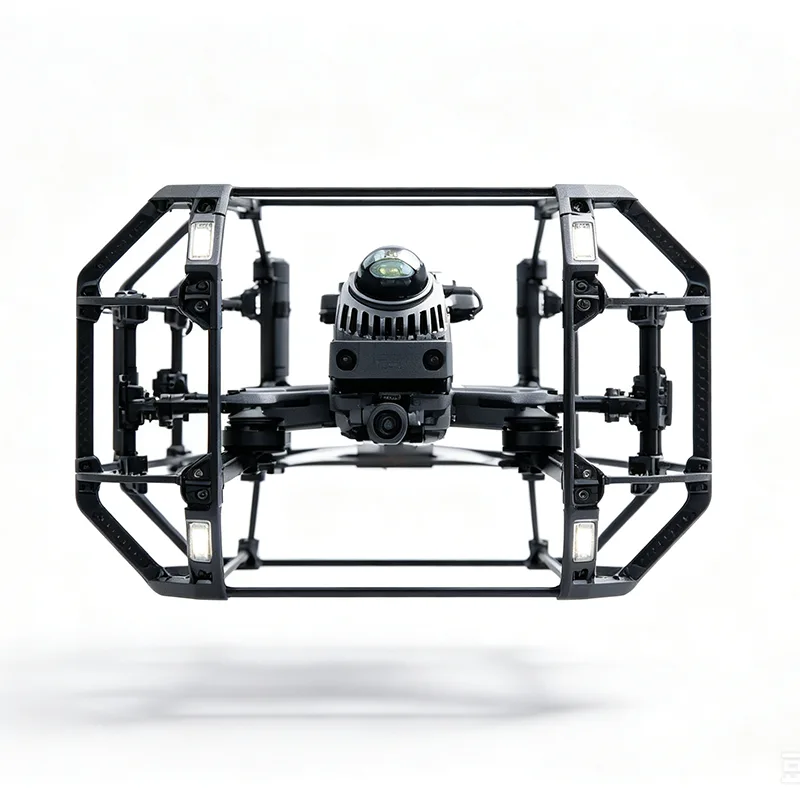
Inspecting confined and hazardous environments has always presented significant challenges for industrial operators. Narrow pipelines, storage tanks, tunnels, underground facilities, and complex industrial structures often contain obstacles, limited visibility, and restricted access. Traditional inspection methods may require workers to enter dangerous spaces, increasing safety risks, labor costs, and inspection time. A Collision-Tolerant Drone for Confined-Space Inspection offers a more flexible approach by combining compact mobility, protective structures, and advanced flight control technology to perform inspections in challenging environments.
For industrial users, the value of this technology goes beyond simply accessing hard-to-reach locations. It helps improve inspection coverage, reduce human exposure to hazardous conditions, and provide visual information for maintenance decisions. Xuzhou Yihang Intelligent Technology Co., Ltd. focuses on intelligent drone technology and practical UAV solutions, supporting the growing demand for more efficient and adaptable aerial inspection equipment.
Why Is Confined-Space Inspection So Challenging?
Confined environments create several technical difficulties for conventional drones and manual inspection teams. Limited flight space makes maneuvering difficult, while walls, pipes, beams, and other obstacles increase the possibility of accidental collisions. Poor lighting and complicated internal structures can also affect inspection accuracy.
- Restricted maneuvering space: Narrow passages and irregular structures require precise flight control and compact equipment.
- Collision risks: Contact with walls, ceilings, or industrial equipment may damage conventional drone components.
- Safety concerns: Manual inspection may expose workers to confined-space hazards and difficult working conditions.
- Limited visibility: Dark or obstructed environments require suitable cameras and lighting systems.
- High inspection costs: Traditional access equipment and manual procedures can increase labor requirements and operational downtime.
These challenges explain why industrial operators increasingly consider specialized UAV solutions for internal inspections.
What Makes a Collision-Tolerant Drone Different?
A Collision-Tolerant Drone for Confined-Space Inspection is designed to operate in environments where accidental contact with surrounding structures may occur. Unlike conventional aerial platforms that generally require sufficient clearance from obstacles, collision-tolerant designs prioritize physical protection, flight stability, and maneuverability.
Protective Structures for Safer Navigation
Protective cages, guarded propellers, or reinforced external structures can help reduce the impact of accidental contact. These designs provide an additional layer of protection for both the drone and surrounding infrastructure. Depending on the specific model, protective structures may also support controlled movement near walls and ceilings.
Precise Flight Control and Stability
Stable flight performance is essential when operating inside narrow or complicated spaces. Responsive control systems, attitude stabilization, and suitable obstacle-awareness technologies help pilots maintain better control when navigating confined environments. These capabilities are particularly important when inspecting pipelines, industrial tanks, and structural interiors.
Compact Design and Flexible Mobility
A compact drone can access locations that are difficult for larger aerial platforms to reach. Its lightweight construction and flexible maneuverability make it suitable for inspection tasks involving narrow openings, complicated layouts, and restricted access points.
Which Inspection Applications Benefit Most?
Collision-tolerant UAV technology has practical value across multiple industrial sectors. Its ability to navigate challenging spaces makes it a useful tool for inspection, monitoring, and preliminary condition assessment.
| Application | Inspection Requirements | Potential Benefits |
|---|---|---|
| Industrial Tanks | Internal visual inspection and structural observation | Reduced need for manual entry |
| Underground Tunnels | Monitoring walls, ceilings, and internal conditions | Improved access to restricted areas |
| Complex Pipelines | Visual checks of accessible internal sections | Flexible inspection of narrow spaces |
| Industrial Facilities | Checking equipment, structures, and difficult-to-reach areas | More efficient visual data collection |
| Construction Projects | Inspecting enclosed structures and structural interiors | Reduced reliance on access platforms |
Actual application suitability depends on the drone's dimensions, protection level, communication range, lighting configuration, and environmental operating limits.
How Does This Technology Improve Inspection Results?
The effectiveness of a collision-tolerant drone can be evaluated through several operational improvements.
1. Improved Personnel Safety
Remote aerial inspection allows operators to examine many difficult-to-access locations without immediately sending workers into potentially hazardous spaces. This can reduce exposure to confined-space risks, although drones should complement rather than replace required safety procedures and professional inspections.
2. Better Visual Inspection Coverage
Equipped with suitable imaging systems and lighting, drones can capture visual information from different angles. Operators can observe structural surfaces, identify visible damage, and document areas that may require further examination.
3. Reduced Inspection Time and Costs
Compared with inspection procedures involving scaffolding, specialized access equipment, or extensive manual work, UAV deployment may simplify preliminary inspection tasks. Faster access and remote data collection can also help reduce operational interruptions.
4. More Convenient Inspection Documentation
Recorded images and videos provide useful references for maintenance teams. Comparing inspection records over time can help operators monitor visible changes, organize maintenance priorities, and make more informed decisions.
What Should Buyers Consider When Selecting a Confined-Space Drone?
Choosing the right equipment requires evaluating both technical performance and actual project requirements. Buyers should consider the following factors before making a purchasing decision:
- Collision protection: Evaluate the protective structure and its suitability for the intended inspection environment.
- Drone dimensions: Confirm that the aircraft can pass through access openings and maneuver within the target space.
- Camera performance: Consider image resolution, viewing angles, and recording capabilities.
- Lighting capability: Check whether the lighting system can provide sufficient visibility in dark environments.
- Flight endurance: Assess battery performance and operational time based on inspection requirements.
- Communication reliability: Understand signal limitations in enclosed or underground environments.
- Maintenance and support: Consider spare parts availability, technical assistance, and after-sales service.
Why Choose Xuzhou Yihang Intelligent Technology Co., Ltd.?
As industrial inspection requirements continue to evolve, selecting a capable technology partner is just as important as choosing the right equipment. Xuzhou Yihang Intelligent Technology Co., Ltd. is committed to intelligent drone technology and UAV application solutions, with a focus on addressing practical requirements across different operating environments.
By emphasizing application-oriented development, equipment adaptability, and technological innovation, the company aims to support customers seeking more flexible aerial solutions. For industrial buyers, project contractors, and professional inspection service providers, understanding equipment capabilities and matching them with specific operating conditions is essential to achieving reliable results.
When evaluating a Collision-Tolerant Drone for Confined-Space Inspection, customers can consider their inspection environment, required imaging functions, access limitations, and operational objectives to identify a suitable solution. Working with an experienced UAV technology provider can also help simplify equipment selection and project planning.
Conclusion: Making Industrial Inspections Safer and Smarter
Collision-tolerant drone technology is creating new possibilities for inspecting confined and difficult-to-access environments. Through protective structures, compact designs, stable flight control, and visual data collection, these UAV solutions can improve inspection flexibility while reducing the need for direct human access to certain hazardous areas.
For businesses looking to modernize industrial inspection processes, investing in an appropriate Collision-Tolerant Drone for Confined-Space Inspection can be a valuable step toward safer operations and more efficient maintenance management. Xuzhou Yihang Intelligent Technology Co., Ltd. welcomes opportunities to explore UAV technology solutions with global customers.
Looking for an intelligent drone solution for your inspection projects? Contact us today to discuss your application requirements and discover suitable UAV solutions for your business.