

How Can An Air Compressor be Made Quieter or Reduce Noise Output?
2025-12-02
Over the years, our factory has worked with various industries and noticed one consistent request: improving the acoustic behavior of air compressors without sacrificing output, durability, or cost efficiency. This article explores the primary engineering factors that influence sound levels, the product characteristics we manufacture, and the practical steps users can take to achieve a quieter setup.
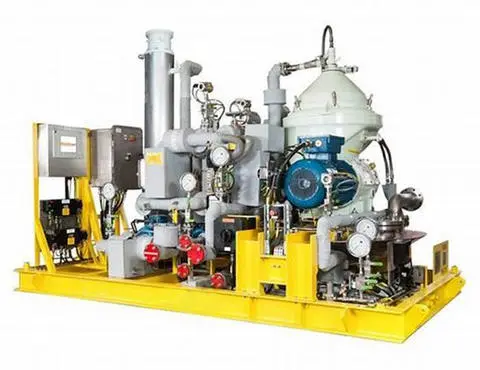
Understanding Why Compressors Produce Noise
Any attempt to reduce sound must begin with understanding how a compressor generates it. Reciprocating assemblies, air intake turbulence, vibration transfer to the floor, and airflow pulsation are all major contributors to unwanted acoustic energy. Inside our facility, we evaluate each of these variables when developing new models because different applications require different noise-control strategies. Machinery used in a laboratory environment has entirely different expectations compared to equipment running inside a metal workshop. Saifu Vietnam Company Limited follows an engineering workflow that allows us to measure, analyze, and improve these variables with repeatable accuracy.
The Role of Internal Components in Noise Generation
The internal mechanics of Air Compressors vary widely. A single stage unit has different acoustic behavior compared to a rotary screw system, and the design philosophy of each affects long term performance. Our team pays significant attention to piston mass, cylinder finish, bearing quality, and vibration symmetry because each of these can amplify noise if not precisely controlled. At our factory, parts are balanced to minimize resonance frequencies that naturally arise during load cycles. By refining these mechanical interactions, we reduce noise at its origin rather than relying solely on external dampening accessories.
Product Parameters That Influence Acoustic Performance
The parameters below represent the characteristics we provide for industrial users aiming to reduce operational noise. These specifications are measured under controlled test conditions to ensure consistency and predictable on-site performance.
| Model Type | Rotary Screw / Piston |
| Rated Power Range | 3 kW to 75 kW |
| Noise Output Level | 58 dB(A) to 78 dB(A) |
| Air Delivery Volume | 0.4 to 13.5 cubic meters per minute |
| Cooling Method | Air Cooled / Water Cooled |
| Mounting Style | Fixed Base or Anti Vibration Base |
External Measures That Reduce Sound Output
Many workshop owners assume that noisy Air Compressors must be replaced, but often, external adjustments provide significant reductions without modifying the internal assembly. Our long term field studies show that intake silencers, flexible connectors, isolation pads, and acoustic cabinets all contribute meaningfully to reducing decibel levels. Saifu Vietnam Company Limited recommends combining at least two of these methods for environments requiring extended operating hours or compliance with local noise regulations.
Why Airflow Management Matters
Airflow turbulence may be underestimated by many users, yet it is a frequent cause of high frequency noise. When a compressor pulls in large volumes of air, narrow intake openings or sharp bends in ductwork increase turbulence. Our engineering evaluations show that smooth intake design, larger filter housings, and low restriction media all reduce the sound signature. Because Air Compressors rely on clean, uninterrupted airflow, improving this pathway enhances efficiency and noise control simultaneously. Many of our clients report measurable differences when switching to a more streamlined intake system.
Second Parameter Table Supporting Engineering Selection
To help buyers choose a configuration that aligns with their noise reduction goals, we provide an additional set of parameters commonly used to predict real world performance.
| Vibration Level | Low, Medium, High |
| Rated Duty Cycle | 50 percent to 100 percent |
| Oil Lubrication Type | Oil Free / Oil Injected |
| Recommended Isolation Method | Rubber Feet / Full Isolation Base |
| Acoustic Housing Option | Optional Cabinet |
Installing an Acoustic Enclosure
An acoustic enclosure is often the most effective solution for users who cannot modify the compressor itself. Our engineering team has observed reductions of up to fifteen decibels when a properly vented cabinet is installed. These housings must include adequate cooling airflow to protect motor components and must be sized for the output class of the machine. When Saifu Vietnam Company Limited provides these designs, we ensure clearance allowances, solid panel thickness, and dampening material density are selected to support long term durability while maintaining stable temperature conditions.
FAQ Section
How Can An Air Compressor be Made Quieter or Reduce Noise Output?
Noise can be reduced by improving internal balance, adding intake silencers, installing vibration isolation pads, or placing the unit inside an acoustic cabinet. Each method targets a different noise source and works best when combined.
Which Components Have the Greatest Impact on Sound Levels?
Internal moving components such as pistons, bearings, and valve assemblies create most of the noise. When these parts are balanced and manufactured with high precision, sound output decreases significantly.
Does Routine Maintenance Help Reduce Long Term Noise?
Yes. When belts, filters, and bearings wear out, mechanical friction rises and airflow becomes restricted, increasing noise. Regular maintenance restores optimal performance and keeps acoustic levels stable.
Conclusion and Call to Action
A quieter compressor is not the result of a single adjustment but a combination of mechanical design, airflow improvements, vibration control, and disciplined maintenance routines. With practical upgrades and careful product selection, users can operate air compressors with significantly reduced noise while preserving output performance. If you are planning a new installation, upgrading existing equipment, or need guidance for a specific project, our team is ready to help. Contact our factory today to explore solutions that align with your noise reduction goals and operational requirements.