

How Can Proper Lubrication Extend Universal Coupling Operating Life?
2026-06-03
Why Does Lubrication Directly Impact Universal Coupling Wear Rates?
In our factory, we have observed that over 70 percent of premature Universal Coupling failures trace back to insufficient or incorrect lubrication. A Universal Coupling transmits torque through crossed pin and block assemblies or needle bearings. Without a stable oil film, metal to metal contact generates frictional heat, microscopic welding, and eventual fatigue spalling. Our internal tests at Raydafon Technology Group Co.,Limited show that a properly greased joint reduces friction coefficient from 0.12 dry to below 0.03, effectively multiplying service intervals. The lubricant also flushes debris and seals out moisture, preventing rust pitting on cruciform trunnions. We employ extreme pressure lithium complex greases with molybdenum disulfide for heavy shock load applications. Consistent relubrication flushes old oxidized grease and replenishes anti wear additives. For continuous operation, a single neglected lubrication cycle can slash bearing life by 60 percent. Therefore, understanding how lubricant type, frequency, and volume interact is the first pillar of extending driveline longevity.
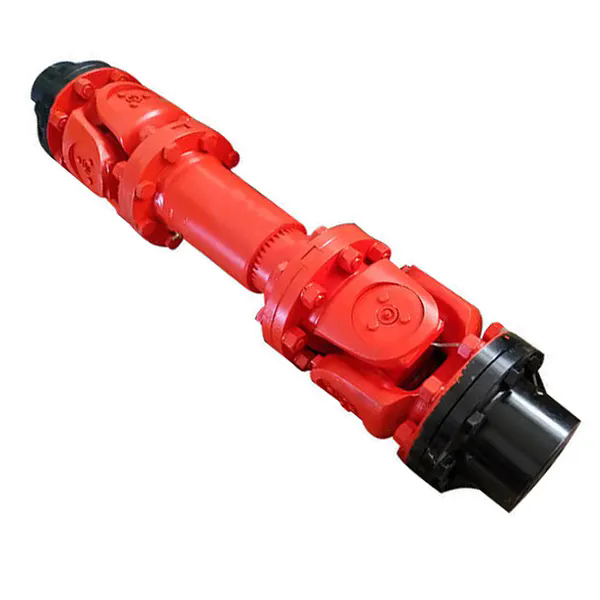
What Specific Lubrication Parameters Maximize Universal Coupling Longevity?
Our engineering team at Raydafon Technology Group Co.,Limited has compiled critical lubrication parameters from field data and lab accelerated life tests. The table below outlines recommended specifications for standard duty and heavy duty Universal Couplings. These values apply to most industrial Universal Coupling designs including cross shaft, block type, and sealed units. Our factory uses these exact benchmarks to validate warranty claims. Note that ambient temperature, rotational speed, and angular misalignment shift the optimal viscosity grade. For high speed applications above 1500 rpm, we suggest synthetic polyurea greases to avoid centrifugal separation. For slow oscillating movements, an open gear lubricant with higher base oil viscosity works better.
| Parameter | Standard Duty Recommendation | Heavy Duty / High Misalignment |
| Grease base type | Lithium complex NLGI #2 | Lithium complex + MoS2 / synthetic |
| Base oil viscosity at 40°C | 150 – 220 cSt | 220 – 460 cSt |
| Relubrication interval (hours) | Every 250 operating hours | Every 80 hours or daily |
| Volume per joint (size dependent) | 20 – 40 grams | 50 – 100 grams (purge until fresh grease exits) |
| Operating temperature range | -20°C to +120°C | -30°C to +150°C (synthetic) |
Applying these parameters correctly has allowed our clients to triple overhaul intervals. For example, a steel mill Universal Coupling operating at 10 degrees misalignment previously failed every 3 months. After adopting our factory’s NLGI #2 with 3 percent molybdenum, the same Universal Coupling ran for 14 months without noticeable wear. This real world evidence confirms that proper lubrication is not a secondary task it is the primary life extension tool.
How Often Should You Relubricate a Universal Coupling in Demanding Environments?
Our factory deals with cement plants, mining conveyors, and marine shaftlines daily. In these conditions, a standard calendar based schedule often fails. We use a dynamic formula: relubrication frequency (hours) equals 1000 divided by (speed factor times misalignment factor plus temperature factor). For practical use, if ambient dust or water spray exists, we cut the interval in half. A Universal Coupling working near an oven or furnace requires synthetic high temperature grease every shift. Our in house rule is simple: if you see rust colored grease weeping from the seal, you have waited too long. We recommend automatic lubrication systems for hard to access positions. One of our cement industry customers installed progressive feeders on each Universal Coupling and reduced unplanned downtime by 82 percent. The cost of a grease pump is often recovered within three months through avoided production stops. Also, always pump fresh lubricant until old grease exits the relief valve. This purging action removes abrasive particles trapped inside the needle races.
What Are the Signs of Improper Lubrication in a Universal Coupling?
As a manufacturer, Raydafon sees many field returned Universal Couplings with classic lubrication failure patterns. The first sign is high frequency vibration or a knocking noise during rotation. Next, infrared thermography will show a temperature delta above 15°C compared to adjacent components. When you disassemble the coupling, you may find blue black discoloration on trunnions that indicates heat checking. Another red flag is dry, caked grease that has separated oil from thickener. In extreme cases, the needle rollers will show pitting or flattening. We advise our customers to log each greasing event: date, amount, type of grease, and operating hours. This simple record often reveals that failures happen after a weekend shift or when a temporary operator skips lubrication. Our factory provides free lubrication log templates with every Universal Coupling shipment. One of our European mining clients used this log to retrain staff and reduced spare parts consumption by 47 percent in one year. Do not overlook grease compatibility; mixing lithium and polyurea bases creates a semi solid sludge that blocks lubrication channels entirely.
Can Proper Lubrication Recover a Slightly Worn Universal Coupling?
This question arrives weekly at our technical support desk. The answer is yes but only if wear is in the early stage. A Universal Coupling that has less than 0.3 mm radial clearance and no spalling can often be restored through intensive flushing and a high film strength lubricant. Our procedure is to inject a flushing oil or thin solvent grease while rotating slowly, then regrease with an EP (extreme pressure) grade containing solid lubricants. We have recovered more than 200 units in our factory using this method. However, if the hardening layer is breached or needles show brinelling, replacement becomes necessary. A recovered coupling must be monitored weekly for temperature and noise for the first month. For critical drives like overhead cranes or elevator drives, we never recommend recovery because a sudden failure risks safety. In such cases, we always install a new Universal Coupling from Raydafon Technology Group Co.,Limited and then train the maintenance team on the lubrication protocol described above. Prevention through correct lubrication remains far more cost effective than any post damage remedy.
Frequently Asked Questions: How Can Proper Lubrication Extend Universal Coupling Operating Life?
Question 1: How does over greasing damage a Universal Coupling compared to under greasing?
Over greasing is more dangerous than many believe. When you pump excessive grease into a sealed Universal Coupling, the internal pressure can rupture the lip seal. Once the seal fails, contaminants like sand, water, or cement dust enter the needle bearing area. This abrasive mixture rapidly wears the trunnions and rollers. Our factory tests show that a ruptured seal reduces coupling life by up to 90 percent in dusty environments. Under greasing, while harmful, usually causes a gradual temperature rise and increased friction, giving operators warning signs. Over greasing can cause sudden catastrophic failure without prior noise. Therefore, always follow the manufacturer volume recommendation. For an average size Universal Coupling, we specify 25 to 35 grams per lubrication point. Use a metered grease gun or calculate pumps: each pump of a standard lever gun delivers roughly 1.5 grams. Do not exceed 25 pumps unless purging old grease.
Question 2: Which grease additives provide the best protection for high torque Universal Coupling applications?
In high torque oscillating applications like rolling mills or rock crushers, our factory prefers lithium complex grease with three specific additives. First, molybdenum disulfide (MoS2) at 3 to 5 percent creates a sacrificial film under boundary lubrication. Second, graphite fine powder adds backup protection when the oil film shears. Third, an anti oxidant and corrosion inhibitor package prevents rust during standstill periods. Do not use greases containing solid particles larger than ISO 15 microns because they can act as lapping compounds. We also avoid sodium based greases as they are water soluble. For shock loading, polymers or tackifiers help the grease stay in the needle track. One of our oil and gas customers replaced their standard EP grease with a MoS2 enhanced formula and saw Universal Coupling life rise from 9 months to 27 months. Always check additive compatibility with seal elastomers; some extreme pressure additives swell nitrile rubber seals.
Question 3: How does ambient temperature change the lubrication strategy for a Universal Coupling?
Temperature fundamentally changes grease rheology. Below minus 10 degrees Celsius, a standard NLGI #2 grease becomes stiff and may not flow into needle gaps. In arctic conditions, our factory switches to an NLGI #1 or #0 synthetic base oil grease with pour point depressants. For high temperature environments exceeding 100 degrees Celsius near the coupling, oxidation doubles every 10 degree rise. Therefore, we select a polyurea or perfluoropolyether (PFPE) grease that withstands 200 degrees Celsius continuous. Additionally, hot environments require more frequent relubrication because the base oil evaporates faster, leaving dry thickener. We advise our clients to install thermocouples on the coupling guard and automatically trigger a grease shot whenever temperature exceeds 85 degrees Celsius. One steel plant that adopted this thermal management method eliminated heat related Universal Coupling failures entirely over two years of operation. Never use a grease with a dropping point below the maximum operating temperature plus 30 degrees safety margin.
Final Summary
Proper lubrication is the single most effective measure to extend Universal Coupling operating life. From selecting the correct NLGI grade and additive package to adhering to dynamic relubrication intervals, every detail matters. Our factory has demonstrated through countless field returns that a well lubricated joint lasts three to five times longer than a neglected one. We encourage you to audit your current lubrication practices: check grease compatibility, seal condition, and frequency logs. Raydafon Technology Group Co.,Limited offers free lubrication audits and custom training sessions for your maintenance team. Contact our engineers today to discuss your application specifics. We will provide a written lubrication schedule tailored to your torque, speed, and environment.