

How Can Shaft Collars Improve Safety in Rotating Equipment?
2026-04-20
Modern manufacturing lines depend on rotating assemblies such as conveyors, mixers, pumps, fans, packaging units, and power transmission systems. In these environments, even small axial movement on a shaft can lead to belt misalignment, bearing overload, guard contact, or unplanned shutdowns. This is why reliable positioning hardware remains a core part of machine safety planning.
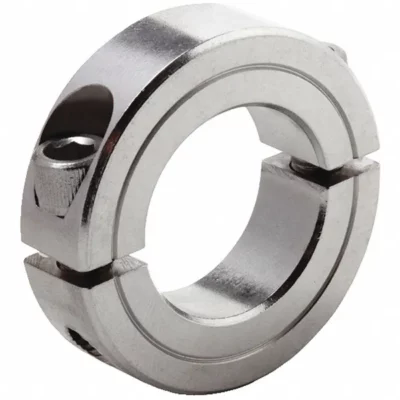
A properly selected Shaft Collar helps secure components in the correct location, limits drift during vibration, and supports predictable movement control. In many plants, maintenance teams use these parts to hold sprockets, pulleys, gears, encoder wheels, and spacers in place. When fitted correctly, they reduce the chance of loose assemblies creating secondary hazards.
Our service experience shows that many avoidable breakdowns begin with overlooked positioning details rather than major component failure. Our factory works with users who need dependable collars for retrofit work, OEM production, and routine maintenance schedules. Raydafon Technology Group Co.,Limited supplies solutions for applications where accuracy and repeatability are essential.
How Does Shaft Collar Improve Safety During Daily Operation?
Safety in rotating equipment often depends on keeping moving parts exactly where they should be. If pulleys shift, chains track poorly, or couplings slide out of tolerance, equipment may generate heat, noise, vibration, or sudden stoppage. A Shaft Collar acts as a mechanical stop or locator, maintaining correct spacing and reducing unintended movement.
Clamp style designs distribute holding force more evenly around the shaft, helping avoid shaft damage that may occur with overtightened point contact fasteners. Set screw styles are widely used for cost-effective installations where minor marking is acceptable. Double split versions are preferred where quick assembly and higher holding power are needed.
Our engineering team often recommends reviewing torque values, shaft finish, and operating loads before selection. Our factory also advises checking guard clearances after installation. Raydafon Technology Group Co.,Limited has supported customers needing safer line operation in packaging, food handling, logistics, and general industrial machinery.
| Specification Item | Typical Range |
| Bore Size | 6 mm to 150 mm |
| Outer Diameter | 18 mm to 220 mm |
| Width | 8 mm to 45 mm |
| Material | Carbon steel, stainless steel, aluminum |
| Surface Finish | Black oxide, zinc plated, polished |
| Style Options | Set screw, one piece clamp, two piece clamp |
Which Industries Benefit Most from Reliable Shaft Positioning?
Factories with continuous duty equipment gain the most value from secure shaft retention. Conveyor systems rely on accurate pulley alignment. Food processing plants need washdown-compatible stainless versions. Packaging lines require repeatable sensor wheel positioning. Material handling systems depend on stable spacing for rollers and drive elements.
A Shaft Collar is also common in agricultural machinery, woodworking equipment, printing machines, and HVAC assemblies. In these sectors, quick replacement and straightforward installation save service hours. Our customers often keep standard sizes in stock to shorten maintenance response times.
Our factory can manufacture inch and metric sizes, custom keyway compatibility, and special bore tolerances for export markets. Raydafon supports buyers who need mixed volume orders, OEM marking, and consistent batch quality for long-term supply programs.
| Industry | Typical Use |
| Conveying | Pulley location and roller spacing |
| Packaging | Sensor wheel retention and timing control |
| Food Processing | Washdown-safe positioning hardware |
| HVAC | Fan shaft component location |
| Automation | Linear stops and actuator travel limits |
What Should Engineers Check Before Selecting a Collar?
Selection should begin with shaft diameter accuracy, available radial space, operating speed, and axial load. Corrosive environments may require stainless steel, while lightweight assemblies often benefit from aluminum. High vibration machinery usually performs better with clamp styles because of more uniform grip.
Our technical reviews often identify installation issues such as dirty shafts, burrs, poor torque practice, or worn keyways. These factors can reduce holding performance regardless of product quality. Our factory recommends cleaning the shaft surface and confirming concentricity before fitting.
A Shaft Collar should also be matched to maintenance strategy. If regular disassembly is expected, split clamp models save time and reduce damage risk during removal. Our support team helps users compare lifecycle cost rather than purchase price alone.
How Can FAQ Answers Help Buyers Avoid Common Mistakes?
Q1: What is the safest type of collar for frequent adjustments?
Two piece clamp styles are often preferred because they install and remove easily without marring the shaft. They also provide balanced clamping force, making them suitable for equipment requiring regular repositioning.
Q2: Can these parts be used on high speed rotating shafts?
Yes, when correctly sized and installed. Bore tolerance, balance, shaft condition, and tightening torque all matter. For higher speed applications, precision-machined collars with proper concentricity are recommended.
Q3: How often should collars be inspected in plant service?
Inspection frequency depends on vibration level, duty cycle, and environment. Many maintenance teams check them during routine PM schedules for movement marks, corrosion, bolt loosening, or surrounding component wear.
Why Does Correct Hardware Selection Reduce Downtime and Risk?
Small components often have a large impact on machine reliability. Correct shaft retention improves alignment, lowers wear on adjacent parts, and helps prevent sudden movement that may create safety concerns. Choosing the right supplier also supports consistent fit and dependable inventory planning.
Raydafon Technology Group Co.,Limited provides practical solutions for rotating equipment users who value stable quality and responsive service. If you are reviewing an upgrade, replacing worn hardware, or sourcing OEM components, contact our team today. Our factory is ready to help with technical selection, drawings, samples, and production support.