

How Can the Right Pipe Joint Improve Marine Piping Performance and Custom Vessel Design?
2026-09-08
A reliable Pipe Joint is much more than a simple connector between two pipes. It is a critical component that helps maintain fluid flow, prevent leakage, withstand pressure, and support the long-term stability of a piping system. In marine applications, these requirements become even more demanding because piping systems must operate under vibration, limited installation space, movement, corrosion, and changing loads. Different joint methods—including threaded, flanged, welded, and mechanical connections—are selected according to pipe material, pressure, temperature, maintenance requirements, and application conditions.
For shipbuilders, marine equipment manufacturers, distributors, and engineering contractors, choosing a suitable Pipe Joint can directly influence installation efficiency, maintenance convenience, and overall system reliability. Ningbo Yinzhou Kuangda Trading Co., Ltd. provides practical pipe connection solutions with a strong focus on application requirements and, importantly, supports customized solutions for different vessel types, helping customers achieve better compatibility with specific ship designs and piping layouts.
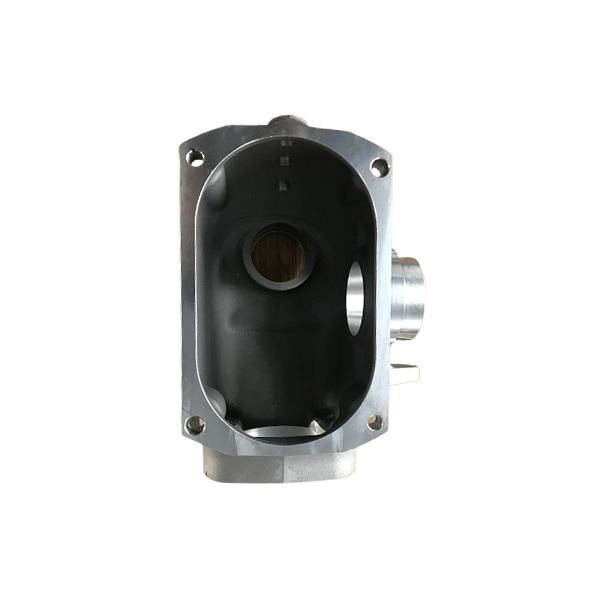
What Is a Pipe Joint and Why Does It Matter?
A Pipe Joint is a connection used to join two pipes, connect a pipe with a fitting, or integrate piping with equipment such as valves and pumps. Its basic purpose is to create a secure and appropriately sealed connection while maintaining the mechanical and hydraulic performance of the piping system.
In marine environments, Pipe Joint performance can affect:
-
Leak prevention and system safety
-
Pressure resistance
-
Piping alignment
-
Vibration and movement tolerance
-
Installation and maintenance efficiency
-
Service life of the overall piping system
-
Compatibility with limited onboard installation space
For example, marine piping can serve bilge, ballast, cooling-water, fire-protection, deck-wash, and other systems. Shipboard piping therefore requires connection methods that are suitable for the specific service and installation environment.
Which Pipe Joint Types Are Commonly Used?
Different connection technologies offer different advantages. The most appropriate choice depends on the pipe material, operating conditions, installation method, and whether future disassembly is required.
| Pipe Joint Type | Main Feature | Typical Advantage |
|---|---|---|
| Threaded Joint | Screw-thread connection | Convenient for suitable small-diameter applications |
| Flanged Joint | Bolted flange and gasket | Easy inspection and disassembly |
| Welded Joint | Direct permanent connection | Strong and compact connection |
| Grooved Joint | Coupling and gasket system | Fast installation and maintenance |
| Expansion Joint | Flexible connection | Accommodates movement and thermal expansion |
Flanged joints, for instance, use bolts and a gasket to create a detachable connection, making them useful around equipment that may require inspection or replacement. Grooved mechanical joints can offer installation and maintenance advantages where the applicable piping specification permits their use.
How Does a Pipe Joint Improve Piping System Performance?
1. Better Sealing
A properly selected Pipe Joint helps create a reliable connection between piping components. Correct joint design, sealing materials, alignment, and installation are important for minimizing leakage.
This is particularly important on vessels because leakage from water, fuel, cooling, or other service lines can lead to operational disruption and additional maintenance requirements.
2. Improved Mechanical Stability
Pipes may experience vibration, thermal expansion, contraction, pressure fluctuations, and movement. A suitable connection helps the piping system respond to these forces without unnecessarily transferring excessive stress to other components.
Flexible mechanical couplings, for example, can accommodate certain axial movement or angular deflection, making them useful in applications where movement needs to be considered.
3. Easier Maintenance
Maintenance is another important consideration when selecting a Pipe Joint. Detachable connections can make it easier to remove sections of piping, inspect components, replace fittings, or access valves and equipment.
Grooved systems, for example, can simplify assembly and disassembly compared with some traditional connection methods, while flanged connections remain useful where regular equipment access is required.
How Does Vessel Customization Change Pipe Joint Requirements?
One of the biggest challenges in marine piping is that not every vessel has the same structure, operating environment, or piping layout.
A cargo vessel may prioritize durability and efficient maintenance. A fishing vessel may require practical connections for seawater-related systems. A passenger vessel can have more complex piping arrangements and tighter space restrictions. Offshore vessels may face higher levels of vibration and demanding operating conditions.
This is why standardized Pipe Joint solutions are not always enough.
Ningbo Yinzhou Kuangda Trading Co., Ltd. supports customized vessel-type solutions, allowing Pipe Joint selection and configuration to be considered according to the customer's vessel design, piping dimensions, connection requirements, installation conditions, and intended application.
Customization can involve factors such as:
-
Vessel type and operating environment
-
Pipe diameter and connection dimensions
-
Connection configuration
-
Required sealing method
-
Available installation space
-
Pipe material
-
Pressure and temperature requirements
-
Maintenance and replacement requirements
-
Special marine equipment interfaces
This customized approach can help customers avoid unnecessary modifications during installation and achieve better compatibility between the Pipe Joint and the vessel's overall piping system.
What Are the Benefits of Customized Pipe Joint Solutions?
Vessel-Specific Compatibility
A customized solution can be developed around the actual piping arrangement instead of forcing a standard component into an unsuitable installation environment.
More Efficient Installation
Correct dimensions and connection configurations can reduce adjustment work during installation. This can be especially valuable when working in confined onboard spaces.
Better Maintenance Planning
A Pipe Joint designed around the vessel's maintenance requirements can provide easier access to critical piping sections and equipment.
Flexible Support for Different Vessel Types
The ability to support different vessel configurations gives shipbuilders and marine equipment buyers greater flexibility when developing new projects or replacing existing components.
More Practical Procurement
For OEM projects and marine equipment distributors, customized specifications can help simplify product matching and reduce the risk of purchasing incompatible components.
Why Is Pipe Joint Selection Important for Marine Applications?
Marine piping systems operate in an environment where space, movement, vibration, corrosion, and maintenance accessibility must all be considered. A connection that performs adequately in a stationary building may not automatically be the best choice for a vessel.
For this reason, buyers should evaluate a Pipe Joint according to the complete application rather than focusing only on price.
A practical evaluation can include:
-
Application: What fluid or service will the piping handle?
-
Pressure: What operating and design pressure is required?
-
Temperature: Will the system experience significant temperature changes?
-
Movement: Is vibration, expansion, contraction, or displacement expected?
-
Space: Is the installation area narrow or difficult to access?
-
Maintenance: Does the connection need to be frequently removed?
-
Vessel Type: What type of ship or marine platform will use the system?
-
Customization: Are special dimensions or configurations required?
These factors help engineers and purchasing teams identify a Pipe Joint that balances reliability, installation convenience, maintenance, and project requirements.
How Can Ningbo Yinzhou Kuangda Trading Co., Ltd. Support Your Project?
Ningbo Yinzhou Kuangda Trading Co., Ltd. focuses on supplying practical connection solutions for customers with different application requirements. For marine projects, the company highlights customized Pipe Joint support for different vessel types, helping customers address the differences between ship structures, piping layouts, dimensions, and installation conditions.
Whether the requirement involves a standard connection or a customized marine solution, project-specific communication is important. Customers can provide information such as pipe dimensions, vessel type, connection requirements, drawings, operating conditions, and expected quantities so that the appropriate solution can be evaluated.
This makes the company a practical partner for:
-
Shipbuilding projects
-
Marine equipment manufacturers
-
Vessel maintenance and repair
-
OEM applications
-
Marine component distributors
-
Customized piping projects
-
Wholesale procurement
Conclusion
A high-quality Pipe Joint plays an essential role in creating safe, stable, and maintainable piping systems. The right connection method can improve sealing, mechanical stability, installation efficiency, and maintenance accessibility, while the wrong choice may create unnecessary installation difficulties or long-term service problems.
For marine applications, customization is particularly valuable because different vessels have different structures, piping layouts, operating conditions, and space limitations. With support for customized Pipe Joint solutions for different vessel types, Ningbo Yinzhou Kuangda Trading Co., Ltd. can help customers move beyond one-size-fits-all products and find connection solutions better suited to their specific marine projects.
If you are sourcing reliable Pipe Joint products or need a customized solution for a specific vessel, contact us today. Share your pipe dimensions, vessel type, drawings, connection requirements, or project specifications with Ningbo Yinzhou Kuangda Trading Co., Ltd., and let our team help you develop a practical solution for your application.