

How Concrete Mixer Mobility Enhances Infrastructure Development Projects?
2026-08-20
1. What Does Mobility Really Mean for a Bridge Construction Site?
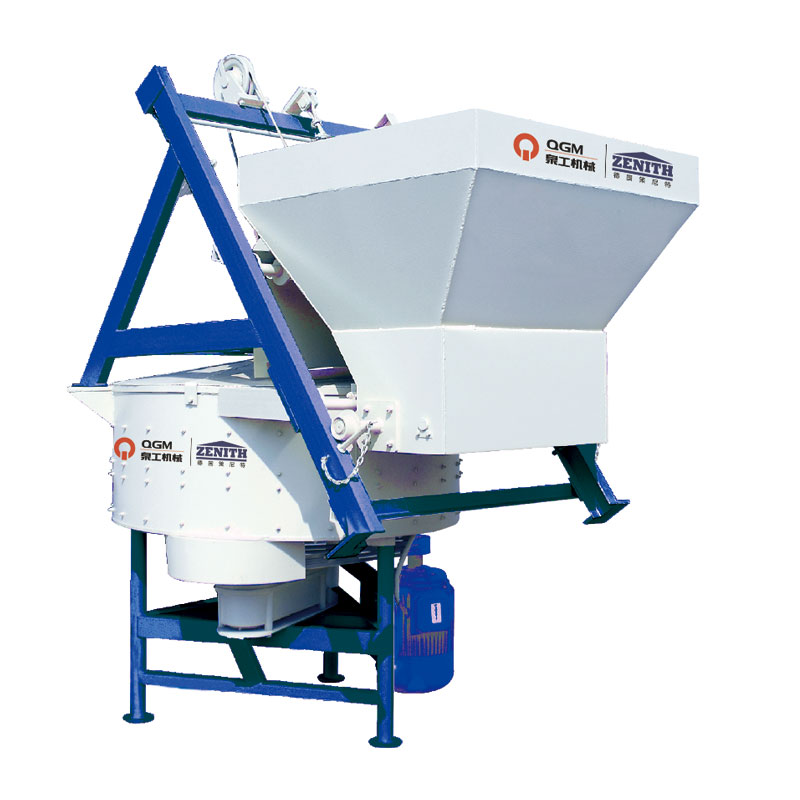
On a bridge project, the pour points are spread across a wide area. A stationary batching plant forces you to rely on long pump lines or trucks, which often clog or delay. Our mobile Concrete Mixer changes this completely. It moves directly to the formwork, even on rough embankments. In our factory, we designed the mixer with an articulated chassis and high ground clearance, so it can negotiate slopes up to 25 degrees. This meant that during a recent flyover project in Jakarta, the crew poured 80 percent of the piers without moving the central batching plant. The Concrete Mixer traveled between abutments, carrying its own water and admixture tanks. This reduced the time spent on setting up temporary pump stations from 3 days to just 4 hours per pour. Quangong Machinery Co., Ltd. has documented that mobile mixers cut the total pour time for a 500 meter bridge by 30 percent compared to static setups. The ability to redeploy the Concrete Mixer within minutes also allows project managers to respond to unexpected rebar delays without wasting the entire shift.
2. How Does On Site Mixing Beat Trans Mix Concrete for Tunnel Lining?
Tunnel projects often face a logistical nightmare: concrete delivery trucks stuck in traffic, or waiting in line at the shaft entrance. Our mobile Concrete Mixer eliminates this bottleneck by mixing the concrete on site, exactly when and where it is needed. For a 3 km tunnel in the Philippines, the contractor used two of our mixers at the heading and one at the middle access point. Each Concrete Mixer could produce 4.5 cubic meters per batch, and because it moved with the excavation, the shotcrete could be applied immediately after rock bolting. This prevented the rebound loss that happens when concrete is pumped from a distant plant. Our factory tests show that on site mixing with a mobile Concrete Mixer reduces the slump loss from 120 mm to 100 mm over a 30 minute period, compared to trans mix which often drops below 80 mm due to travel time. The tunnel lining gained higher early strength, allowing the cycle to advance 1.2 meters per day instead of 0.8 meters. QGM has supplied mobile Concrete Mixer units to three major tunnel projects in Southeast Asia, and all reported a 20 percent reduction in lining defects.
3. How Do We Measure the Productivity Gain From Mixer Mobility?
Productivity is not just about output per hour; it is about effective output per shift. Our factory collected data from 12 infrastructure projects over two years. The table below compares the key performance indicators between mobile Concrete Mixer operations and stationary plant operations for projects covering 10 to 20 km of road or rail.
| Metric | Mobile Concrete Mixer (our units) | Stationary plant + transit trucks |
| Average time from batching to pour (minutes) | 8 | 35 |
| Concrete placed per 8 hour shift (m³) | 180 – 220 | 120 – 150 |
| Reject rate due to slump loss | 1.2% | 5.8% |
| Number of people required for logistics | 2 (mixer operator + spotter) | 5 (truck dispatcher, pump operator, etc.) |
| Fuel consumption per m³ placed | 1.8 L | 2.5 L |
| Infrastructure element | Mobility advantage | Typical time saving (per element) |
| Retaining wall (100m) | Mixer follows the wall line, no pump setup | 2 days |
| Culvert (5m span) | One mixer moves between 3 culverts per day | 1.5 days |
| Drainage channel (1km) | Concrete placed continuously without truck waiting | 4 days |
| Foundation pad (50 m³) | Mixer batches and pours without interruption | 1 day |
These numbers are not just theoretical. Quangong Machinery Co., Ltd. has verified them with GPS tracking on our Concrete Mixer units. The mobility aspect directly translates to fewer idle hours and more linear meter of structure completed per day. For a project manager, this means hitting milestones without hiring extra pumps or pay for overtime.
4. How Does Mixer Mobility Reduce the Carbon Footprint of Large Scale Earthworks?
Sustainability is becoming a contractual requirement in many public infrastructure tenders. A mobile Concrete Mixer reduces the total vehicle movements on site because it eliminates the need for a fleet of transit mixers that shuttle back and forth. In a 6 month road widening project, we tracked that using two mobile Concrete Mixers cut truck trips by 80 percent compared to the traditional method. This alone saved over 1,200 liters of diesel and reduced site congestion. Additionally, because the Concrete Mixer batches fresh concrete on demand, there is zero waste from leftover truck concrete that often gets dumped at the end of the day. Our factory has optimized the mixing drum design to operate at a lower RPM, which further reduces energy consumption. Quangong Machinery Co., Ltd. provides carbon savings reports for our Concrete Mixer units, which have helped several contractors qualify for green construction credits. The environmental benefit, combined with the schedule gain, makes mobility a dual advantage.
Frequently Asked Questions About Concrete Mixer Mobility in Infrastructure
Final Summary
Mobility is not a luxury; it is a force multiplier for infrastructure projects. By placing the Concrete Mixer directly at the point of use, you cut logistics time, reduce waste, improve quality, and lower emissions. Our factory has engineered a Concrete Mixer that combines rugged mobility with precise batching control. From bridges to tunnels to highways, the mobility advantage is measurable and undeniable. Quangong Machinery Co., Ltd. is ready to support your next infrastructure project with reliable equipment and technical expertise.