

How Cork Rubber Gaskets Improve Sealing Performance in Industrial Machinery?
2026-04-17
Why Do Industrial Plants Still Rely on Cork Rubber Gasket Materials?
In modern workshops, maintenance teams often need sealing materials that can handle oil splash, flange pressure, thermal cycling, and vibration at the same time. That is why the Cork Rubber Gasket remains widely used across pumps, gearboxes, compressors, transformers, and diesel equipment. Unlike rigid sheet materials, it combines cork granules with elastomer binders, giving a balance of flexibility and structural stability.
Our engineering team has seen many facilities replace lower-grade fiber sheets after leakage events. In those cases, the right gasket material reduced downtime and improved line reliability. Our factory supplies customized dimensions for OEM and aftermarket needs, helping service crews install replacements without reworking housings or bolt patterns.
Ningbo Kaxite Sealing Materials Co., Ltd has supported industrial buyers who need dependable sealing products with consistent density and clean cut edges. In field service environments, practical performance matters more than theory, and this material continues to prove its value.
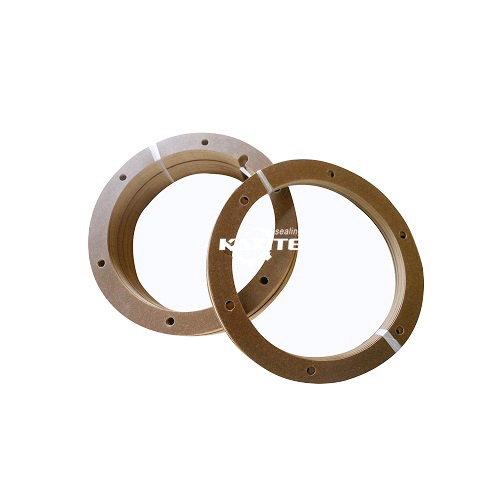
How Does Cork Rubber Gasket Deliver Better Sealing Under Pressure?
The sealing advantage comes from controlled compressibility. When bolts are torqued, the gasket surface conforms to flange irregularities, filling machining marks and minor distortion. This creates a stable barrier against oil seepage and fluid migration. A Cork Rubber Gasket also recovers well after load changes, which is important where machinery cycles between operating and idle states.
Our service experience shows that many leaks begin from uneven flange faces or vibration loosening. This material helps compensate for those real-world conditions. Our factory recommends proper torque sequencing and surface cleaning during installation to maximize sealing life.
Additional benefits include sound damping and vibration absorption. In pump skids and engine covers, reduced micro-movement can slow wear at the joint face. Kaxite works with buyers who require sheet rolls, die-cut rings, and custom profile parts for routine maintenance programs.
| Property | Typical Range |
| Density | 0.85 to 1.20 g/cm3 |
| Hardness | 55 to 75 Shore A |
| Compressibility | 10 to 30 percent |
| Recovery | Minimum 40 percent |
| Temperature Range | Minus 20 C to 120 C |
| Thickness | 1 mm to 25 mm |
Which Industrial Applications Benefit Most from This Material?
Plants using lubricants, light fuels, transformer oil, water service, and general utility systems often specify this material. It is common in stamped covers, access plates, valve housings, and inspection lids. A Cork Rubber Gasket is especially useful where surfaces are not perfectly machined and where quick maintenance turnarounds are required.
Our customers in power generation and manufacturing frequently request sheets for on-site cutting. Others choose finished parts for repeat installations. Our factory can produce metric and inch sizes based on CAD drawings or physical samples.
In North American and European markets, buyers often ask for material traceability, batch consistency, and packing suitable for warehouse storage. Ningbo Kaxite Sealing Materials Co., Ltd supports these requirements with stable production planning and export-ready packaging.
| Application | Recommended Use |
| Gearbox Covers | Oil sealing and vibration control |
| Transformers | Oil resistance and dimensional stability |
| Pumps | Low pressure fluid sealing |
| Compressors | Joint sealing with thermal cycling |
| Inspection Plates | Easy replacement during service |
What Should Buyers Check Before Ordering Industrial Gaskets?
Material selection should start with media type, operating temperature, flange load, and service interval. If the unit handles aggressive chemicals or extreme heat, another material may be more suitable. For oil systems and general machinery, a Cork Rubber Gasket often provides strong cost-performance value.
Our procurement advice is to confirm thickness tolerance, hardness, and cut accuracy before bulk orders. Buyers should also review storage conditions, because exposure to direct sunlight or ozone may shorten shelf life. Our factory supports technical matching when replacing legacy parts with incomplete drawings.
When recurring leaks appear, it is wise to inspect flange flatness and bolt condition rather than blaming the gasket alone. Good sealing is always a combination of material quality and installation practice.
How Can FAQ Answers Help Engineers Solve Real Maintenance Issues?
What makes cork rubber suitable for oil sealing applications?
Cork particles provide compressibility while rubber binders resist swelling better than plain cork. This combination allows the material to seat well under bolt load and maintain a tighter seal in lubricated assemblies.
How long can a Cork Rubber Gasket last in machinery service?
Service life depends on temperature, pressure, fluid type, and bolt load. In stable operating conditions with correct installation, many users achieve long maintenance cycles and fewer emergency replacements.
Can custom sizes be produced for older equipment?
Yes. Many maintenance departments send drawings or samples for obsolete machines. Our team can review dimensions, hole spacing, thickness, and material grade to support retrofit production.
Why Is the Right Supplier Important for Long-Term Sealing Reliability?
Consistent raw materials, controlled curing, and accurate cutting directly affect sealing results. A trusted supplier helps reduce rejects, repeat failures, and maintenance delays. Ningbo Kaxite Sealing Materials Co., Ltd focuses on practical industrial sealing solutions for global buyers needing steady quality and responsive service.
If you are reviewing current gasket costs, leakage frequency, or custom replacement needs, contact our team today. Our factory can recommend the right grade, prepare samples, and support your next project with dependable supply.