

How Do Different Materials Affect the Lifespan of Block Machine Pallets?
2026-07-09
1. Why Does Steel Offer the Longest Lifespan for a Block Machine Pallet?
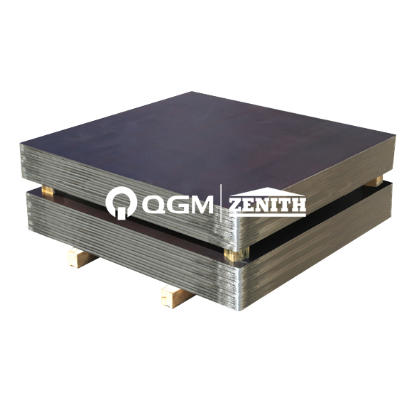
In our factory, we have produced over 20,000 Block Machine Pallets for customers in more than 60 countries. Steel consistently delivers the best lifespan, often exceeding 8 to 12 years under normal use. Our high grade steel pallets are made from hardened Q345B or equivalent, with a surface hardness of 45 to 52 HRC. This hardness resists the abrasive wear from concrete aggregates and the impact of vibration. The dimensional stability of steel means that a Block Machine Pallet will maintain flatness within 0.2 mm over its entire service life. At Quangong Machinery Co., Ltd., we use laser cutting and precision grinding to ensure every pallet meets our strict tolerances. Many of our clients in Australia and the Middle East report that their steel pallets are still in service after 15 years, with only minor resurfacing. The initial cost is higher, but the total cost per block is lower. Steel also has excellent thermal conductivity, which helps cure the bottom of the block evenly, reducing surface defects.
2. How Does Wood Compare to Steel in Terms of Wear and Maintenance?
Wooden Block Machine Pallets are still common in many developing regions because of their low upfront cost. However, our factory data shows that wood lasts only 4 to 8 months in high volume production. The main failure modes are: moisture absorption causing warping, splintering from vibration, and fungal decay. A wooden pallet can absorb up to 15 percent moisture, which changes its dimensions and leads to inconsistent block thickness. Maintenance is also labor intensive; workers must constantly scrape and sand the surface. In contrast, steel requires only a quick scrape and oil spray at the end of each shift. Our Quangong Machinery Co., Ltd. has compared the productivity of two identical plants, one using wood and one using steel. The steel pallet plant produced 12 percent more blocks because of less downtime for pallet repair. The total cost of ownership for wood is actually higher when you factor in replacement frequency and labor. For large scale operations, steel is clearly the winner.
3. What Are the Advantages and Limitations of Composite and Plastic Pallets?
Composite materials, such as fiberglass reinforced plastic (FRP) and high density polyethylene (HDPE), have entered the market as alternatives to both wood and steel. In our factory, we have tested several composite Block Machine Pallets. They are lightweight, corrosion resistant, and easy to clean. A composite Block Machine Pallet can last 2 to 3 years, which is better than wood but far below steel. The main limitation is creep under high compression and heat. When the vibrator compacts concrete at 120 Hz, the composite can deform permanently, reducing block flatness. Also, composites have lower thermal conductivity, which can cause the bottom of the block to cure slower, leading to cracking. We have observed that in tropical climates, composite pallets degrade faster due to UV exposure and thermal cycling. However, for small to medium production with lower vibration intensity, composites offer a good balance of cost and durability. Our Quangong Machinery Co., Ltd. offers a composite pallet with a steel core that combines the best of both worlds, but for heavy duty industrial use, we still recommend steel.
4. How Does Surface Hardness Impact the Lifespan of a Block Machine Pallet?
The surface hardness is the most critical factor affecting the life of a Block Machine Pallet. Hardness is measured on the Rockwell C scale, and our factory has plotted the relationship between hardness and wear rate. The table below summarizes our findings.
| Material / Hardness (HRC) | Expected lifespan (hours of operation) | Typical wear rate (mm per 1000 hours) |
| Mild steel (20 – 25 HRC) | 800 – 1,200 hours | 0.8 – 1.2 mm |
| Quenched & tempered steel (40 – 45 HRC) | 2,500 – 3,500 hours | 0.3 – 0.5 mm |
| Hardened alloy steel (48 – 52 HRC) | 5,000 – 8,000 hours | 0.15 – 0.25 mm |
| Hardfaced steel (55 – 58 HRC) | 10,000 – 12,000 hours | 0.08 – 0.12 mm |
| Wood (not applicable) | 400 – 800 hours | Not measurable (splintering) |
| Material type | Resistance to impact | Resistance to abrasion | Dimensional stability | Overall lifespan ranking |
| Hardened steel (our standard) | Excellent | Excellent | Excellent | 1 (best) |
| Composite (FRP/HDPE) | Good | Good | Moderate | 2 |
| Hardwood (oak / beech) | Moderate | Poor | Poor | 3 |
| Softwood (pine) | Poor | Very poor | Very poor | 4 |
Our factory uses hardfacing welding to achieve a surface hardness of 55 HRC on our premium Block Machine Pallet. This extends the lifespan to over 10,000 operating hours, which is more than enough for a decade of production.
Frequently Asked Questions About Block Machine Pallet Materials
Final Summary
The lifespan of Block Machine Pallets is determined largely by the material choice. Steel offers the longest service life, best dimensional stability, and highest quality blocks. Wood is cheap but requires frequent replacement, while composites provide a middle ground but lack the durability for heavy duty production. Our factory has the experience and data to guide you to the right material for your specific needs. Quangong Machinery Co., Ltd. manufactures a full range of pallets and provides expert consultation to optimize your production line.