

How Do Engineers Select Hydraulic Cylinders for Different Harvester Models?
2026-08-31
Every harvesting season, something breaks. More often than not, it is a hydraulic cylinder that was undersized, poorly sealed, or simply not suited for the application. This is not a manufacturing fault—it is a selection fault. In our factory, we have analyzed over 300 returned cylinders from harvesters across Southeast Asia and South America. The patterns are remarkably consistent. Engineers often select cylinders based on rod diameter or stroke length alone, ignoring the real drivers: cycle frequency, side load, and contamination exposure. This article outlines a selection methodology that our team has developed over 15 years of supplying Hydraulic Cylinder units to original equipment manufacturers in the agricultural sector.
1. Why Does Harvester Type Dictate the First Cut in Cylinder Selection?
A sugar cane harvester operates in a completely different environment than a grain combine. Sugar cane harvesters work in muddy, abrasive conditions with heavy dust from cut cane. Their Hydraulic Cylinder units must have aggressive wiper seals and hardened chrome rods. Grain combines, on the other hand, operate in drier conditions but face high cycle rates—the header raises and lowers dozens of times per hour. Forage harvesters experience the highest shock loads because they encounter rocks and debris when operating close to the ground. Our selection process always begins by classifying the harvester type and its primary operating environment. At Raydafon Technology Group Co.,Limited, we maintain a selection matrix that matches cylinder design features to these operational profiles.
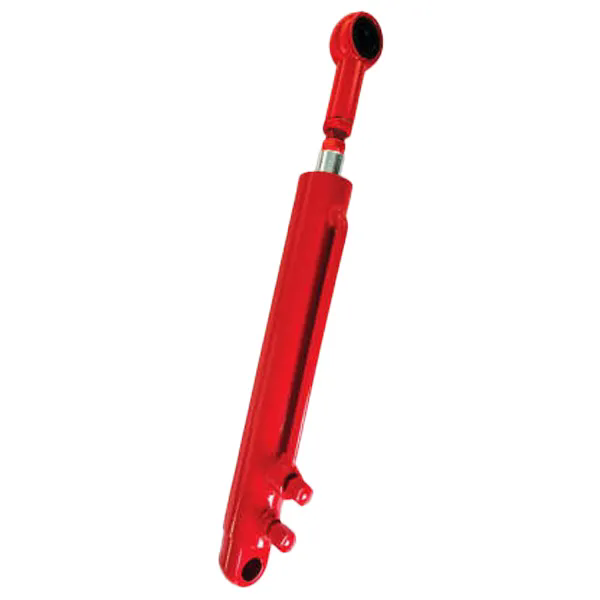
The table below summarizes the primary selection criteria for each harvester category.
| Harvester type | Primary challenge | Critical cylinder feature | Recommended seal type |
| Sugar cane | Abrasive dust and mud | Hard chrome rod, double scraper | Polyurethane + felt wiper |
| Grain combine | High cycle frequency | Low friction piston seal | PTFE ring + O ring |
| Forage / silage | Shock loads from debris | Cushioning at end of stroke | Heavy duty U cup |
| Cotton picker | Chemical exposure (defoliants) | Nitrile seals for chemical resistance | Nitrile double lip |
| Root crop (potato/sugarbeet) | Soil ingress from below | Rod boot protection | Polyurethane with boot |
Each Hydraulic Cylinder we supply is accompanied by a selection datasheet that explains why the chosen design matches the intended harvester. This documentation is often used by our customers to justify their specification to procurement departments.
2. How Do You Calculate the Right Bore Size and Rod Diameter for a Given Application?
This is the part where many engineers make mistakes. The calculation must consider both the required extend force (to lift the header or actuate a folding wing) and the required retract force (to lower the implement against gravity). The bore size determines the extend force, while the rod diameter affects the retract force. The formula is straightforward: Force = Pressure x Area. However, the real challenge is selecting a rod diameter that resists buckling under side loads. In our factory, we use the Euler buckling formula to check if the rod is thick enough for the maximum unsupported length. For example, a typical grain combine header lift cylinder operates at 180 bar. To lift a 4 tonne header, the required bore is about 75 mm. But the rod must be at least 40 mm diameter to avoid buckling when the header is fully raised and the combine is on a slope. The table below shows typical cylinder specifications for common harvester applications, based on our field experience.
| Application on harvester | Typical bore (mm) | Typical rod (mm) | Stroke (mm) | Working pressure (bar) |
| Grain combine header lift | 80 | 45 | 400 | 180 |
| Sugar cane base cutter | 50 | 28 | 150 | 200 |
| Forage harvester reel | 63 | 35 | 600 | 160 |
| Cotton picker spindle lift | 40 | 22 | 200 | 140 |
| Self propelled sprayer boom fold | 50 | 25 | 500 | 120 |
Our factory uses a computer aided selection tool that calculates the required bore and rod diameters based on the load, pressure, and duty cycle. This tool also estimates the cylinder weight, which is important for harvesters where weight distribution affects fuel consumption.
3. What Role Does Mounting Configuration Play in Long Term Reliability?
A Hydraulic Cylinder is only as good as its mounting arrangement. In harvesters, the most common failure mode is side loading, where the cylinder rod is subjected to bending forces because the mounting brackets are not perfectly aligned. Our factory recommends using a clevis mount at both ends for applications where alignment is difficult to maintain. This allows the cylinder to pivot and self align. For applications where space is tight, a flange mount may be used, but this requires precise alignment during installation. We have seen harvesters that went through four cylinders in two seasons because the mounting brackets were welded out of square. The solution was to replace the brackets and use a spherical bearing at the rod end. Our Raydafon provides mounting kits with each Hydraulic Cylinder, including hardened pins and bushings. The mounting configuration also affects the cylinder's ability to absorb shock loads. A cylinder that is over constrained will transmit shock directly to the seals, causing premature failure. We always recommend checking the mounting angles both at full extension and full retraction.
4. How Does Fluid Selection and Filtration Affect Cylinder Life?
This is the most overlooked factor in cylinder selection. The hydraulic oil viscosity, cleanliness level, and additive package directly affect seal compatibility and wear rates. For harvesters operating in tropical climates, we recommend an ISO VG 46 oil with a viscosity index improver. For cold climates, ISO VG 32 is more appropriate. The filtration level should be at least ISO 4406 code 18/16/13 to prevent abrasive wear on the piston and rod seals. In our factory, we have tested cylinders with contaminated oil (code 22/20/18) and found that seal life drops by 70 percent. We include a filtration recommendation sheet with every Hydraulic Cylinder we supply. We also recommend installing a breather filter on the reservoir to prevent dust ingress, especially for sugar cane harvesters that operate in extremely dusty conditions. One of our customers in Thailand reduced their cylinder replacement frequency from 3 per season to 1 per two seasons simply by upgrading their filtration system.
Frequently Asked Questions About Hydraulic Cylinder Selection for Harvesters
Final Summary
Selecting the right Hydraulic Cylinder for a harvester is a multi step process that considers harvester type, load calculations, mounting configuration, and fluid environment. Cutting corners on any of these factors leads to early failure and costly downtime. Our factory has accumulated extensive data from field returns, which we use to refine our selection guides. Whether you are an OEM design engineer or a workshop specialist, we can help you make the right choice. Raydafon Technology Group Co.,Limited supplies hydraulic cylinders that are engineered specifically for agricultural applications.