

How Do Gear Motors Improve Positioning Accuracy in Automated Systems?
2026-01-22
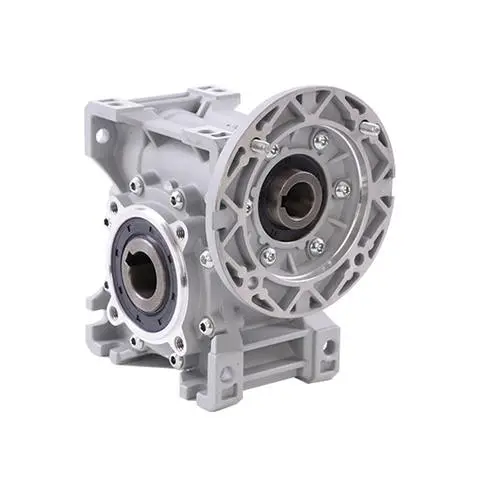
In modern automation across North American manufacturing plants, positioning accuracy is directly linked to how precisely rotational force is controlled and transmitted. A well-engineered Gear Motor integrates a reduction mechanism that stabilizes output speed while amplifying torque, allowing motion systems to stop exactly where commanded by PLC or servo controllers. This controlled torque delivery minimizes overshoot and backlash, which are common causes of positional drift in conveyor indexing, pick-and-place units, and packaging lines.
At Saifu Vietnam Company Limited, design decisions focus on torque smoothness under continuous duty cycles. Our experience in industrial automation shows that consistent torque curves allow sensors and encoders to provide cleaner feedback signals. This directly improves repeatability in automated assembly cells, especially where micron-level alignment is required. By optimizing reduction ratios and gear tooth geometry, our solutions support accurate stopping positions even during frequent start-stop operations.
Why Does Gear Reduction Improve Stability at Low Speeds?
Low-speed stability is a key requirement in automated systems used in material handling, food processing, and electronics assembly. A Gear Motor allows equipment to operate at reduced output speed while maintaining sufficient torque, eliminating the need for complex external braking systems. This results in smoother motion profiles and reduced vibration, both of which contribute to higher positioning accuracy.
From an engineering standpoint, gear reduction lowers the inertia reflected back to the drive, enabling controllers to react faster to command changes. In our factory, testing protocols simulate real production environments to verify that speed fluctuation remains within tight tolerances. Our application engineers frequently observe that stable low-speed motion significantly improves alignment accuracy on automated guided equipment and rotary indexing tables.
How Do Mechanical Parameters Influence Positioning Accuracy?
Mechanical specifications determine how reliably positioning targets can be achieved over long operating hours. Selecting the correct Gear Motor configuration involves evaluating torque rating, backlash level, shaft concentricity, and thermal performance. Each parameter influences how accurately motion commands translate into physical movement.
| Rated Torque | 5 Nm to 300 Nm |
| Reduction Ratio | 5:1 to 150:1 |
| Backlash | Less than 1 degree |
| Operating Voltage | AC 220V or AC 380V |
| Protection Class | IP54 to IP65 |
These parameters ensure consistent output performance under varying loads. Our product development teams place special emphasis on backlash control because even minimal play can accumulate into measurable positioning errors over repeated cycles. Through controlled machining and strict inspection standards, our manufacturing process supports long-term accuracy in automated environments.
How Does System Integration Enhance Positioning Performance?
Positioning accuracy is not achieved by a single component but by how well the drive integrates with the overall control architecture. A Gear Motor must work seamlessly with encoders, limit switches, and industrial controllers commonly used in local automation systems. Proper integration ensures that motion commands are executed precisely and that corrective feedback is applied in real time.
Saifu Vietnam Company Limited supports system integrators by providing detailed interface data and mounting options that simplify installation. Our engineering approach ensures compatibility with widely used fieldbus protocols and control platforms. By reducing installation errors and alignment issues, our solutions help integrators achieve stable positioning results with shorter commissioning time.
| Mounting Type | Foot mount or flange mount |
| Shaft Options | Solid or hollow |
| Cooling Method | Natural air cooling |
| Duty Cycle | S1 continuous operation |
How Do Gear Motors Support Long-Term Accuracy in Harsh Environments?
Industrial automation systems often operate in environments with dust, humidity, and temperature variation. A Gear Motor designed for these conditions maintains consistent performance without degradation that could affect positioning accuracy. Sealed housings, stable lubrication systems, and thermal balance all play critical roles.
Our reliability testing confirms that consistent mechanical performance over time is essential for maintaining precise positioning. By selecting wear-resistant materials and optimized lubrication paths, our solutions reduce internal wear that could otherwise introduce backlash or torque loss. This approach supports stable automation performance across multiple production shifts.
How Do Gear Motors Improve Positioning Accuracy in Automated Systems FAQ
Q1: How Do Gear Motors Improve Positioning Accuracy in Automated Systems?
They provide controlled torque and reduced speed output, allowing automation controllers to stop motion precisely at commanded positions while minimizing vibration and mechanical play.
Q2: How Do Gear Motors Improve Positioning Accuracy in Automated Systems during continuous operation?
By maintaining stable torque and thermal balance over long duty cycles, they prevent drift and ensure consistent encoder feedback even in round-the-clock production environments.
Q3: How Do Gear Motors Improve Positioning Accuracy in Automated Systems compared to direct drive solutions?
They reduce reflected inertia and mechanical shock, enabling smoother motion control and more accurate stopping behavior, particularly in applications requiring frequent starts and stops.
In automated manufacturing, positioning accuracy depends on stable torque delivery, precise mechanical design, and seamless system integration. A properly selected Gear Motor plays a decisive role in achieving repeatable motion and reliable automation performance. Saifu Vietnam Company Limited delivers solutions engineered for accuracy, durability, and integration efficiency. Contact our technical team today to discuss your application requirements and receive a tailored automation solution from our factory.