

How Do Manufacturing Tolerances Shape The Noise Behavior in Spur Gears?
2026-02-03
In mechanical power transmission systems, spur gears remain a preferred solution due to their simplicity, efficiency, and cost effectiveness. However, practical performance is heavily influenced by manufacturing tolerances. Even small deviations during machining can directly affect operating noise and long term wear. In our experience working with OEM buyers across North America and Europe, tolerance control is often the defining line between stable operation and persistent vibration complaints. At Raydafon Technology Group Co.,Limited, our engineering teams understand that tight dimensional control is not an abstract concept but a measurable contributor to acoustic comfort and service life.
When tolerances drift beyond acceptable limits, gear meshing becomes inconsistent. This inconsistency introduces transmission error, which is one of the primary sources of gear noise. Our factory focuses on maintaining controlled backlash, precise tooth thickness, and consistent pitch to ensure every Precision Gear performs predictably in industrial and agricultural applications.
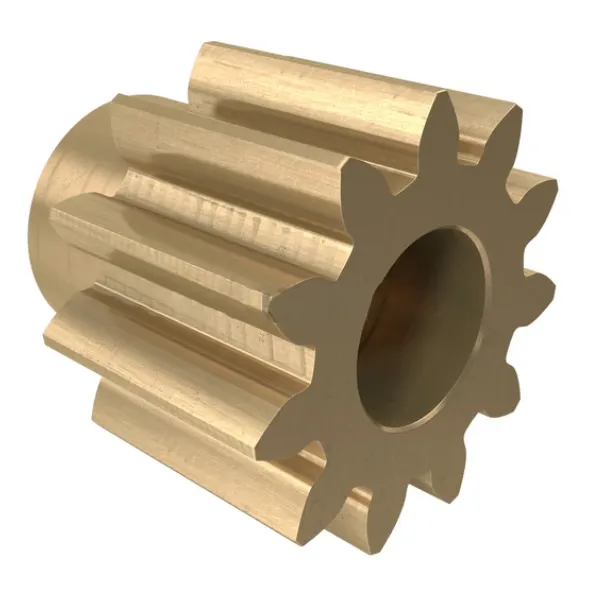
How Do Tooth Profile and Pitch Tolerances Influence Meshing Noise?
Tooth profile accuracy directly governs how smoothly gear teeth engage and disengage. Deviations in involute geometry can lead to uneven load sharing along the tooth face. This uneven contact generates localized stress concentrations, which translate into audible whining or humming during operation. In high speed gearboxes, these effects become even more pronounced.
Pitch errors introduce cyclic speed variation, often perceived as rhythmic noise. Our manufacturing process applies controlled hobbing and grinding strategies to minimize cumulative pitch deviation. This approach allows our Precision Gear solutions to meet demanding requirements in conveyor systems, automation equipment, and compact reducers. By maintaining strict pitch tolerance bands, our factory reduces excitation forces that would otherwise accelerate surface fatigue.
How Does Backlash Control Affect Wear Patterns and Service Life?
Backlash is necessary for lubrication and thermal expansion, but excessive or insufficient backlash can be harmful. Too little backlash increases friction and heat buildup, while too much backlash causes impact loading during direction changes. Both conditions contribute to premature wear and elevated noise levels.
At Raydafon Technology Group Co.,Limited, our design engineers define backlash targets based on operating speed, torque, and lubrication method. Our production inspection process verifies these targets consistently. This disciplined approach allows our Precision Gear products to maintain stable contact conditions throughout their service cycle, even under fluctuating loads.
| Parameter | Typical Control Range | Impact on Noise and Wear |
| Tooth Profile Deviation | Within ISO Grade 6 to 7 |
Ensures smooth load transfer and reduced vibration |
| Pitch Variation | Controlled per gear module | Minimizes cyclic noise and resonance |
| Backlash Range | Application specific | Balances lubrication and impact resistance |
How Do Surface Finish and Material Tolerances Reduce Long Term Wear?
Surface finish quality plays a critical role in wear behavior. Rough tooth flanks increase friction and disrupt lubrication films, accelerating micropitting and scuffing. Our factory employs controlled finishing processes to achieve stable roughness values that support hydrodynamic lubrication.
Material tolerances, including hardness variation and case depth consistency, further influence durability. By maintaining uniform heat treatment parameters, our Precision Gear components demonstrate predictable wear rates across extended duty cycles. Our customers in packaging machinery and material handling often report reduced maintenance intervals as a direct result of these controls.
| Specification Item | Standard Range | Functional Benefit |
| Surface Roughness | Ra 0.8 to 1.6 | Improved lubrication stability |
| Core Hardness | 28 to 35 HRC | Enhanced shock resistance |
| Case Hardness | 58 to 62 HRC | Superior wear resistance |
How Do Process Control and Inspection Safeguard Gear Performance?
Manufacturing tolerances cannot be achieved without robust process control. Our production flow integrates in process measurement, final inspection, and traceability. Each Precision Gear is evaluated for critical dimensions before shipment. This systematic control ensures consistency from batch to batch.
Raydafon invests in calibrated inspection equipment and trained technicians to verify conformity against drawing requirements. Our factory approach reflects a long term view of quality, where noise reduction and wear control are outcomes of disciplined execution rather than corrective action.
How Do Manufacturing Tolerances Affect Noise and Wear in Spur Gears?
Q1: How do tight tolerances reduce operating noise in spur gears?
Tight tolerances ensure consistent tooth engagement and load distribution, which reduces transmission error and vibration. This leads to quieter operation, especially in high speed or continuous duty systems.
Q2: How do tolerance deviations accelerate wear in industrial gear applications?
Tolerance deviations create uneven contact patterns and localized stress, increasing friction and surface fatigue. Over time, this accelerates wear and shortens service life.
Q3: How should buyers evaluate tolerance capability when sourcing spur gears?
Buyers should review inspection standards, process control methods, and historical performance data. Consistent tolerance control is a reliable indicator of long term reliability.
Conclusion
Manufacturing tolerances directly influence how spur gears sound, perform, and endure under load. From tooth profile accuracy to surface finish control, every detail matters. Our experience shows that disciplined tolerance management delivers quieter operation and longer service life across diverse industries. If you are evaluating gear solutions for demanding applications, our team is ready to support your technical requirements and provide customized recommendations. Contact us today to discuss your project and explore how our manufacturing capabilities can support your goals.