

How Do PTFE Gaskets Improve Sealing Performance in Corrosive Environments?
2026-04-17
Why Are Corrosive Media So Difficult to Seal Reliably?
Corrosive service conditions are common in chemical processing, water treatment, pharma production, food plants, refineries, and metal finishing lines. Acids, alkalis, chlorides, solvents, steam cycling, and fluctuating line pressure often attack conventional sealing materials. Once a gasket loses compressibility or chemical stability, leakage risk rises quickly, leading to shutdowns, product loss, safety incidents, and expensive maintenance.
That is why many maintenance engineers now specify PTFE Gaskets for pipelines, pumps, valves, heat exchangers, and storage systems. Their inert molecular structure helps resist aggressive media while maintaining dimensional stability. In our field experience, buyers focus on uptime, bolt load retention, and service life rather than unit price alone. Our engineering team reviews flange class, media concentration, torque values, and temperature cycling before recommending the correct grade.
Ningbo Kaxite Sealing Materials Co., Ltd has supplied sealing solutions to customers who require dependable performance under demanding plant conditions. Our factory supports custom conversion for standard and non-standard flange sizes.
How Does PTFE Material Deliver Better Sealing in Harsh Plants?
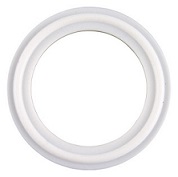
The main reason PTFE Gaskets perform well in corrosive duty is chemical resistance. PTFE remains stable against a broad range of acids, caustics, hydrocarbons, and cleaning chemicals. This makes it a practical option where elastomer sheets or fiber materials may swell, harden, or degrade.
Another key advantage is low friction. During installation, the material seats smoothly against flange faces and helps create uniform contact stress when bolts are tightened correctly. It also handles moisture exposure well, making it suitable for wet process areas and outdoor skids.
Thermal capability is also important. In many plants, line temperatures change during startup and washdown. Properly selected PTFE grades can remain serviceable across wide operating ranges. Our production process controls density, thickness tolerance, and surface finish so sealing consistency remains stable from batch to batch.
| Property | Typical Performance Range |
| Chemical Resistance | Excellent against most industrial chemicals |
| Temperature Capability | Approx. minus 200 C to plus 260 C depending on service |
| Water Absorption | Very low |
| Coefficient of Friction | Low surface friction |
| Aging Resistance | Strong long-term stability |
Which Product Parameters Should Engineers Compare Before Purchase?
Not every application uses the same sheet or expanded grade. Engineers normally compare pressure class, flange surface finish, bolt stress, cycling frequency, and media purity requirements. Our recommendation is to match gasket style to actual operating data rather than choosing only by thickness.
PTFE Gaskets are commonly supplied in virgin PTFE, filled PTFE, expanded PTFE, envelope style, and CNC-machined custom rings. Filled grades may improve creep resistance and load retention. Expanded grades are often selected for irregular flange faces and lower seating stress.
Ningbo Kaxite Sealing Materials Co., Ltd works with distributors, OEM buyers, and MRO contractors that need stable lead times. Our factory can produce metric and inch dimensions with traceable inspection records.
| Parameter | Common Options |
| Thickness | 1 mm to 6 mm standard, custom available |
| Outer Diameter | According to ANSI DIN JIS GB drawings |
| Pressure Service | Depends on flange design and bolt load |
| Material Grade | Virgin, glass filled, carbon filled, expanded |
| Manufacturing Method | Cut sheet, skived sheet, molded, machined |
| Tolerance Control | Based on customer drawing requirement |
Where Are These Sealing Solutions Used Most Often Today?
Across modern industry, PTFE Gaskets are widely used in acid transfer lines, chlorine systems, dosing skids, solvent tanks, CIP lines, plating baths, and laboratory manifolds. They are also common in semiconductor utilities where contamination control matters.
Maintenance teams appreciate materials that reduce unplanned stoppages. Our customers often replace mixed gasket inventories with standardized PTFE-based selections for easier stock control. This helps simplify procurement while improving service reliability.
Kaxite also supports custom profiles for sight glass assemblies, manways, and pump housings where off-the-shelf dimensions do not fit. Our technical service can review drawings and recommend practical alternatives.
What Best Practices Help Extend Service Life After Installation?
Even premium PTFE Gaskets require correct fitting methods. Clean flange faces thoroughly, verify flatness, align pipework, and use calibrated torque tools. Tighten bolts in a star pattern using staged increments to achieve balanced compression.
Avoid over-compression because excessive load may increase cold flow over time. In cycling systems, planned retorque checks may be appropriate depending on plant standards. Store spare gaskets flat, dry, and away from contamination sources. Our service notes always emphasize that installation quality strongly affects sealing outcomes.
FAQ
What chemicals can PTFE gaskets usually resist?
They are widely known for resistance to many acids, alkalis, solvents, and process chemicals. Final compatibility should still be checked against concentration, temperature, and pressure because service conditions can change material behavior.
Are PTFE gaskets suitable for high-temperature pipelines?
Yes, many applications use them in elevated temperature systems. However, flange design, bolt stress, cycling frequency, and media type must be reviewed together. Temperature rating alone should never be the only selection factor.
How do I choose between virgin PTFE and filled PTFE?
Virgin grades are often preferred for purity-sensitive duties. Filled grades may offer better creep resistance, wear resistance, or mechanical stability. The right option depends on pressure load, flange condition, and chemical exposure.
What Final Steps Improve Plant Reliability and Lower Leakage Risk?
Choosing the right sealing material is a maintenance decision that affects safety, compliance, and operating cost. Properly specified PTFE Gaskets can improve chemical resistance, reduce leakage events, and support longer service intervals in demanding plants. If you need standard sizes or engineered custom parts, contact our team for drawings review, material selection advice, and a fast quotation from our factory.