

How Do Serrated Gaskets Work in High Pressure Flange Connections?
2026-07-07
1. How Do the Serrations Create a Positive Seal Under High Bolt Load?
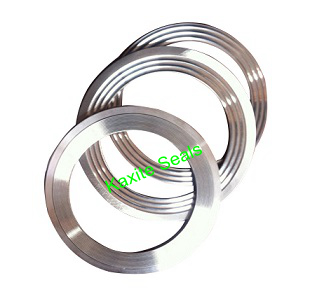
In our factory, we have produced Serrated Gaskets for over 15 years. The working principle is simple yet effective. When you tighten the flange bolts, the raised concentric serrations on the gasket surface bite into the flange face. Unlike flat gaskets that rely solely on friction, Serrated Gaskets create a mechanical interference. The serrations penetrate the oxide layer and minor surface imperfections, forming a labyrinth seal. This multi barrier effect prevents fluid from escaping even at pressures up to 2,500 psi. Our Ningbo Kaxite Sealing Materials Co., Ltd. uses a proprietary profiling process that produces serrations with a specific angle and depth. For a standard 300 lb flange, the serrations are typically 0.5 mm high with a pitch of 1.2 mm. When you apply 200 Nm of torque on M24 bolts, the serrations embed about 0.05 mm into the flange material, which is enough to create a gas tight seal. This is why Serrated Gaskets are preferred in refineries and chemical plants where even a tiny leak can be catastrophic.
2. Why Is the Soft Material Layer Critical for Serrated Gasket Performance?
Many people think that the metal core alone provides the seal. In our factory, we have learned that the soft facing material, such as graphite or PTFE, is equally important. The serrated metal core provides mechanical bite, but the soft layer fills the microscopic valleys between the serrations and the flange. Our Serrated Gaskets are available with a graphite facing that can withstand 450°C, or a PTFE facing for corrosive chemicals. When compressed, the soft layer deforms into the spaces left by the serrations, creating a barrier that blocks both gas and liquid permeation. Our Kaxite tests every batch for compression recovery. We aim for a recovery rate of over 45 percent at 300°C. This ensures that if the flange pressure drops and then rises again, the gasket still seals. Without the soft layer, the metal serrations alone cannot stop capillary leakage along the grain boundaries of the flange. That is why all professional Serrated Gaskets include a facing material.
3. What Technical Parameters Define a Reliable Serrated Gasket for High Pressure?
Performance depends on precise geometry and material selection. Our factory manufactures Serrated Gaskets according to DIN 2697, ASME B16.20, and BS 3381. The table below lists the key parameters we control.
| Parameter | Our standard value (serrated metal core) | Impact on high pressure sealing |
| Serration pitch (distance between peaks) | 1.0 – 1.5 mm (depending on size) | Fine pitch creates more bite points |
| Serration height (from root to peak) | 0.4 – 0.6 mm | Sufficient to penetrate hard flange surfaces |
| Serration angle (included angle) | 90 degrees (standard) | Balances bite and reusability |
| Core thickness (steel base) | 2.0 mm for DN 150 – 600 | Provides rigidity under bolt load |
| Facing thickness (graphite or PTFE) | 0.5 mm per side (minimum) | Compensates for flange surface roughness |
| Property – Facing type | Graphite faced Serrated Gasket | PTFE faced Serrated Gasket |
| Maximum temperature (continuous) | 450°C (oxidizing) / 550°C (inert) | 260°C |
| Pressure class rating | Class 150 to 2500 | Class 150 to 600 |
| Chemical resistance | Excellent for most acids and hydrocarbons | Excellent for strong acids and solvents |
| Creep relaxation at 300°C | ≤ 12% after 100 hours | ≤ 8% at 200°C |
| Typical leak rate (helium) | < 10⁻⁵ mbar·L/s | < 10⁻⁶ mbar·L/s |
Our factory also measures the coefficient of friction between the Serrated Gasket and the flange. This determines how much torque translates into compression force. For lubricated bolts, we recommend a torque reduction factor of 0.9 to avoid over compression. Our Ningbo Kaxite Sealing Materials Co., Ltd. provides detailed installation sheets with every order.
4. How Does the Serrated Gasket Maintain Load Over Thermal Cycles?
High pressure flanges often experience thermal cycling, which causes bolts to elongate and compress. A flat gasket might lose its seal under these conditions. Our Serrated Gaskets, however, retain spring back because the serrations act like small springs. When the flange cools and contracts, the serrated teeth push back against the flange face. This elastic recovery helps maintain gasket stress. Our factory has performed thermal cycle tests from 25°C to 400°C for 500 cycles. The Serrated Gasket maintained over 85 percent of its initial seal stress. We attribute this to the combination of a flexible graphite facing and a resilient stainless steel core. This characteristic is why many power plants use Serrated Gaskets in steam turbine connections. Without this load retention, the flange would require frequent retorquing, which is both unsafe and costly. Our design minimizes that need.
Frequently Asked Questions About Serrated Gaskets in High Pressure Flanges
Final Summary
Serrated Gaskets provide a unique combination of mechanical bite and soft facing seal that is ideal for high pressure flange connections. Their ability to withstand thermal cycling, resist creep, and maintain bolt load makes them the first choice for demanding industrial services. Our factory has refined the design and manufacturing process to ensure consistent quality. From material selection to final inspection, every Serrated Gasket we produce is tested for dimensional accuracy and sealability. Our Ningbo Kaxite Sealing Materials Co., Ltd. is your reliable partner for critical sealing solutions.