

How Do Shaft Collars Affect Torque Transmission and Load Distribution?
2026-05-18
In modern mechanical assemblies, precise torque transfer is essential for maintaining stable rotational performance and preventing premature equipment wear. A properly engineered Shaft Collar plays a critical role in securing components along a shaft while supporting balanced torque transmission across rotating systems. In industrial sectors such as packaging, automation, agricultural equipment, and conveyor manufacturing, engineers rely on shaft retention components to reduce vibration, maintain positioning accuracy, and improve mechanical reliability.
Our production team has observed that poor collar fitment often leads to uneven clamping pressure, resulting in slippage, shaft scoring, and inconsistent torque delivery. To address these challenges, our factory manufactures precision-machined collars with controlled bore tolerance and surface finishing. These design details help maintain concentricity during operation and support long-term mechanical stability.
Raydafon Technology Group Co.,Limited focuses on supplying industrial transmission components for demanding operating environments. Our engineering process emphasizes dimensional accuracy, material consistency, and dependable clamping performance under continuous load conditions.
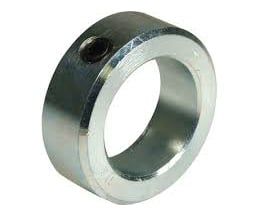
How Does Material Selection Influence Load Distribution Across Rotating Systems?
Material selection directly impacts the performance and durability of a Shaft Collar. In high-load applications, the collar must withstand axial force, radial stress, and repeated vibration cycles without deformation. Carbon steel remains a common choice for general industrial use due to its balanced strength and machining capability, while stainless steel is preferred for corrosive or washdown environments commonly found in food processing and marine systems.
Our factory also supplies aluminum collars for lightweight assemblies where reduced rotational inertia improves system responsiveness. In servo-driven automation lines, engineers often prioritize lower mass to maintain precise motion control and faster acceleration.
Our technical team evaluates shaft hardness, operating speed, environmental exposure, and clamp force requirements before recommending materials. This approach helps our customers reduce maintenance intervals and maintain consistent torque transfer throughout equipment operation.
| Material | Main Characteristics | Typical Applications |
| Carbon Steel | High strength and wear resistance | Industrial machinery and conveyors |
| Stainless Steel | Corrosion resistance and durability | Food processing and marine systems |
| Aluminum Alloy | Lightweight and easy machining | Automation and robotics |
| Engineering Plastic | Electrical insulation and low weight | Light-duty assemblies |
What Structural Features Improve Clamping Stability and Torque Retention?
The structural design of a Shaft Collar significantly affects load distribution efficiency. Set screw collars remain widely used for light and medium-duty assemblies, but split collars generally provide more even clamping force and reduce shaft damage. Double split designs distribute pressure more uniformly across the shaft circumference, helping improve alignment stability during continuous rotation.
Our factory applies CNC machining processes to maintain accurate bore dimensions and smooth internal surfaces. This improves contact consistency between the collar and shaft, minimizing micro-movement during operation. In high-speed machinery, even slight misalignment can create imbalance and accelerated bearing wear.
Raydafon also supports customized bore diameters, keyway configurations, and surface coatings according to customer drawings or operating requirements. Our production capabilities allow flexible adaptation for OEM transmission assemblies and retrofit maintenance projects.
| Specification Item | Standard Range |
| Bore Diameter | 5 mm to 150 mm |
| Outer Diameter | 15 mm to 250 mm |
| Surface Finish | Black oxide, zinc plating, polishing |
| Operating Temperature | -30°C to 220°C depending on material |
| Manufacturing Process | CNC turning and precision milling |
| Installation Types | Set screw, single split, double split |
Why Does Proper Installation Matter for Mechanical Load Balance?
Even a high-quality Shaft Collar can underperform if installation procedures are not properly followed. Uneven tightening torque may create localized stress concentration, leading to shaft indentation or unstable positioning. Our engineers recommend verifying shaft cleanliness, concentricity, and torque specifications before assembly.
Our factory frequently works with maintenance teams that require collars for pumps, reducers, packaging equipment, and power transmission systems. In these applications, balanced load distribution improves bearing life and reduces operational vibration. Properly installed collars help maintain axial positioning and prevent component drift under fluctuating loads.
Raydafon Technology Group Co.,Limited provides installation guidance and technical support to help customers achieve reliable operating performance across different industrial environments. Our experience shows that attention to installation detail often extends equipment service life and reduces unexpected downtime.
What Questions Do Engineers Commonly Ask About Shaft Collars?
Q1: How does a shaft collar improve torque transmission efficiency?
A1: A properly machined collar creates secure clamping contact between the shaft and mounted component, reducing slippage during rotation. Uniform pressure distribution helps maintain stable torque transfer and minimizes shaft wear under repeated mechanical loading.
Q2: Which type of Shaft Collar is best for high-vibration machinery?
A2: Double split collars are generally preferred for high-vibration applications because they provide balanced clamping force around the shaft circumference. This design improves holding power while reducing the risk of shaft deformation.
Q3: What factors should be considered when selecting collar material?
A3: Engineers should evaluate operating load, shaft speed, environmental exposure, temperature range, and corrosion conditions. Material hardness and compatibility with the shaft also influence long-term performance and maintenance intervals.
How Can Reliable Manufacturing Improve Long-Term Mechanical Performance?
Precision manufacturing directly influences the operating stability of industrial transmission systems. Our quality control procedures include dimensional inspection, surface finish verification, and material consistency testing to ensure dependable product performance. A carefully engineered Shaft Collar contributes to smoother power transfer, improved load distribution, and reduced mechanical wear across rotating assemblies.
Our factory continues to optimize machining technology and production efficiency to support evolving industrial requirements. Whether customers require standard metric sizes or customized transmission components, we provide practical manufacturing support based on real operating conditions.
If you are sourcing reliable motion control and shaft retention solutions, contact Raydafon Technology Group Co.,Limited today. Our engineering team can assist with product selection, custom specifications, and technical recommendations tailored to your industrial applications.