

How Do Spiral Bevel Gears Reduce Noise?
2026-02-27
In power transmission systems across North America and Europe, gear noise is one of the primary concerns for OEM engineers and maintenance teams. Whether used in automotive differentials, industrial reducers, or heavy-duty machinery, spiral bevel gears are widely recognized for their superior acoustic behavior compared to straight bevel gears.
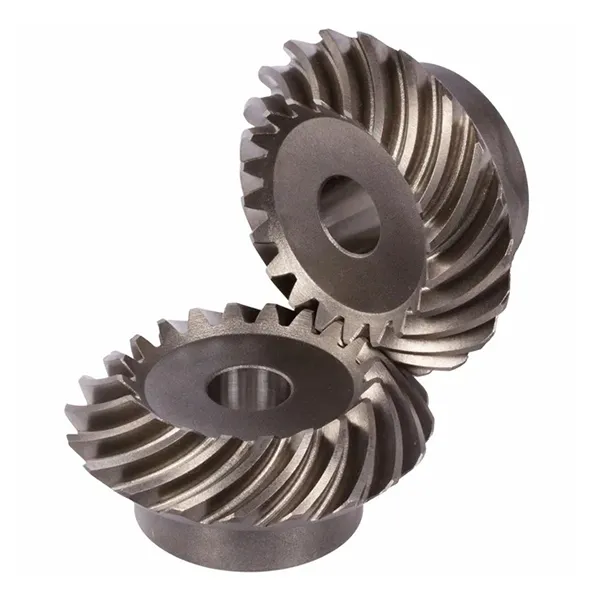
The fundamental reason lies in the curved tooth geometry. Unlike straight teeth that engage abruptly, spiral bevel gears feature angled, curved teeth that allow gradual tooth engagement. This progressive meshing reduces impact load, minimizes vibration, and lowers airborne noise. In practical engineering terms, this means smoother torque transfer and reduced dynamic excitation.
At Raydafon Technology Group Co.,Limited, our design philosophy focuses on controlled tooth contact patterns and optimized spiral angles. Our engineering team carefully calculates overlap ratios to ensure continuous contact between mating teeth. This extended contact time significantly reduces transmission error, which is one of the main contributors to gear whine.
In high-speed applications, especially in automotive axle systems, even minor transmission error can result in noticeable tonal noise. By refining micro-geometry corrections and profile modifications, our factory delivers Precision Gear solutions that maintain stable meshing under load.
How Does Tooth Geometry Influence Contact Ratio and Vibration Control?
Spiral bevel gears reduce noise primarily through improved contact ratio. The helical nature of the tooth allows multiple teeth to be in contact simultaneously. This overlapping contact distributes load more evenly and dampens sudden stress peaks.
In industrial gearbox terminology, this is often described as increased face contact ratio and smoother mesh transition. The larger contact surface reduces localized stress concentration and lowers structure-borne vibration transmitted to the housing.
Our production capabilities allow precise control of:
| Parameter | Typical Range | Engineering Impact |
| Module | 1.5 – 12 mm | Defines load capacity and smoothness |
| Pressure Angle | 20° standard, custom available | Affects contact stability |
| Spiral Angle | 30° – 45° | Controls gradual engagement |
| Accuracy Grade | DIN 5 – DIN 8 | Lower grade number equals lower noise |
| Surface Roughness | Ra 0.8 – 1.6 μm | Reduces friction-induced noise |
By maintaining tight tolerance control and optimized tooth crowning, our Precision Gear production ensures consistent tooth contact under varying torque loads. This minimizes edge contact, which is a common cause of vibration and abnormal acoustic emissions.
Raydafon Technology Group Co.,Limited integrates advanced CNC spiral bevel generators and Gleason-type cutting technology to guarantee repeatability. Our factory continuously monitors tooth contact patterns during trial assembly to verify load distribution before shipment.
How Do Materials and Heat Treatment Contribute to Noise Reduction?
Material selection and thermal processing directly affect damping characteristics and surface durability. Noise reduction is not only about geometry but also about metallurgical performance.
We commonly use alloy steels such as 20CrMnTi and 8620H, which are widely accepted in US and European drivetrain applications. After precision machining, gears undergo carburizing and quenching to achieve a hardened surface layer while maintaining a tough core.
| Material | Surface Hardness | Core Hardness | Application |
| 20CrMnTi | HRC 58 – 62 | HRC 30 – 38 | Automotive differential |
| 8620H | HRC 58 – 62 | HRC 28 – 36 | Industrial gearbox |
| Alloy steel custom grade | Custom | Custom | Heavy-duty machinery |
The hardened surface resists pitting and micro-spalling, both of which generate noise over time. Meanwhile, the tougher core absorbs dynamic loads, preventing structural resonance. Our heat treatment process includes controlled atmosphere carburizing and precision grinding to achieve optimal tooth profile finish.
Through this approach, our Precision Gear solutions maintain stable acoustic performance even after long service cycles. Our factory performs hardness inspection, magnetic particle testing, and gear rolling tests to ensure uniform quality.
How Does Manufacturing Accuracy Affect Gear Whine in Real Applications?
Gear whine is typically caused by transmission error, profile deviation, or improper alignment. Manufacturing precision directly determines how smoothly gears mesh at operational speed.
We apply gear grinding after heat treatment to correct distortion and achieve tight runout control. Typical runout tolerance can be maintained within 0.015 mm depending on size. This level of precision is essential for high-speed reducers and automotive drive systems.
Raydafon emphasizes closed-loop quality control. Our inspection system includes coordinate measuring machines and dedicated gear analyzers to verify lead, profile, and pitch deviation.
Our production line supports customized shaft diameters up to 300 mm and torque capacity exceeding 15,000 Nm for heavy-duty sectors. In each case, our Precision Gear manufacturing ensures that tooth contact remains centralized under load, reducing edge friction and vibration spikes.
Additionally, we optimize backlash settings according to application requirements. Proper backlash prevents tooth interference while avoiding excessive clearance that can generate rattling noise. Our factory works closely with OEM clients to determine ideal tolerance stacks.
How Can Proper Installation and System Design Further Reduce Noise?
Even the best-designed spiral bevel gears require correct installation to maintain quiet operation. Bearing preload, shaft alignment, and housing rigidity all influence final noise levels.
We recommend rigid housing materials and accurate bearing positioning to prevent deflection under load. Misalignment can create uneven contact patterns, which amplify vibration. Our engineering team provides technical guidance to ensure optimal mesh alignment in real-world applications.
Lubrication also plays a critical role. High-quality EP gear oil reduces friction and dampens micro-vibration. In many industrial applications, proper lubrication alone can reduce sound pressure levels by several decibels. Through collaborative engineering, our Precision Gear assemblies are integrated into systems that meet strict NVH requirements in automotive and heavy equipment sectors.
FAQ
Q1: How do spiral bevel gears reduce noise compared to straight bevel gears?
Spiral bevel gears reduce noise because their curved teeth engage gradually rather than abruptly. This progressive engagement increases contact ratio, reduces impact load, and minimizes transmission error. As a result, vibration levels are lower and gear whine is significantly reduced, especially in high-speed applications.
Q2: Does higher gear accuracy always mean lower noise?
Higher accuracy generally reduces noise because tighter tolerances decrease profile deviation and transmission error. However, system-level factors such as bearing quality, shaft alignment, and lubrication must also be optimized. Precision manufacturing combined with correct installation produces the best acoustic results.
Q3: Can material selection influence long-term noise performance?
Yes. Proper alloy steel selection and heat treatment improve surface hardness and fatigue resistance, preventing wear-related defects like pitting. Since surface damage increases vibration over time, durable materials help maintain stable noise performance throughout the service life of the gear system.
Spiral bevel gears achieve lower noise through optimized tooth geometry, increased contact ratio, superior material properties, and high manufacturing accuracy. By combining advanced machining, strict quality control, and application-specific engineering support, Raydafon Technology Group Co.,Limited delivers reliable solutions for demanding industrial and automotive markets. If you are looking for durable and low-noise gear transmission components tailored to your specifications, contact our team today to discuss your project requirements and receive a customized quotation.