
How Do You Select the Right Hydraulic Motor For a Specific Application?
2025-12-18
Selecting the right hydraulic motor is essential for achieving reliable performance in industrial machinery. Different applications demand specific torque, speed, and efficiency characteristics. In our factory, we frequently guide clients through the decision process, helping them choose the motor that best aligns with operational requirements. At Saifu Vietnam Company Limited, our engineering team focuses on matching motors with system parameters to maximize energy efficiency and equipment longevity. When choosing a motor, factors such as load type, pressure requirements, and rotational speed must all be considered carefully to ensure optimal performance and durability.
What Are the Key Performance Parameters to Consider When Selecting a Motor?
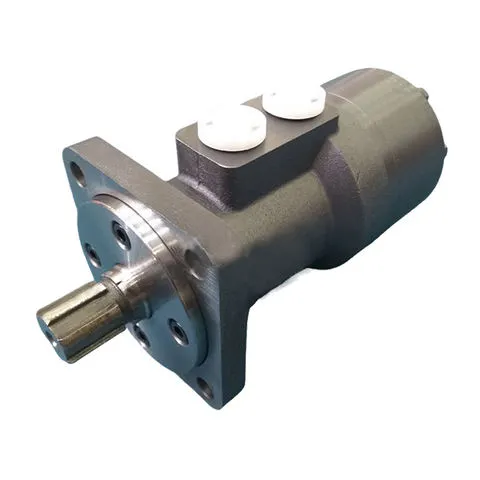
Performance parameters are the foundation for selecting a hydraulic motor. Torque, displacement, pressure rating, and rotational speed directly influence the suitability of a motor for a specific task. Our factory provides a range of motors with adjustable displacement and high-pressure ratings to meet diverse industrial needs. Torque and speed should always be balanced according to the application; excessive torque may lead to inefficiency, while insufficient torque can cause system failure. When evaluating our motor lineup, we also emphasize efficiency curves and energy consumption to help clients make informed decisions.
The table below illustrates typical hydraulic motor parameters and their recommended applications for industrial scenarios.
| Parameter | Range | Recommended Application | Notes |
| Displacement | 10–500 cc/rev | Material handling, conveyors | Choose based on torque and flow requirements |
| Operating Pressure | 150–350 bar | Construction and agricultural machinery | Ensure pressure rating matches system design |
| Maximum Speed | 100–1500 rpm | Rotary applications, mixers | Adjust for load and motor type |
| Torque | 50–2000 Nm | Heavy-duty and high-load applications | Consider continuous and peak torque ratings |
How Do Load Conditions Influence the Motor Choice?
Understanding load characteristics is critical. Constant loads, variable loads, and shock loads each place different demands on a hydraulic motor. Our engineering team evaluates the nature of the load to select motors capable of sustaining consistent performance. At Saifu, we often provide motors with integrated features to handle peak loads without compromising reliability. Matching motor displacement and torque curves to the anticipated load profile ensures minimal wear and longer service life for industrial systems.
Our approach includes reviewing load cycles, duty ratings, and mechanical constraints. This ensures that the selected motor operates efficiently under all conditions. Choosing a motor without considering load behavior can lead to frequent maintenance issues or even unexpected downtime in production lines.
Which Types of Motors Are Suitable for Different Industrial Applications?
Hydraulic motors come in several types including gear, vane, and piston designs. Each type has distinct characteristics that make it more suitable for specific applications. Gear motors offer simplicity and cost-effectiveness, vane motors provide smooth operation, and piston motors handle high pressure and variable loads. Our factory produces all these motor types, giving clients the flexibility to select based on their system requirements. Water-lubricated or oil-lubricated options further allow compatibility with different operating environments.
The following table provides a summary of motor types, their ideal use cases, and key advantages.
| Motor Type | Best Use Case | Key Advantage | Consideration |
| Gear Motor | Material handling, simple drive systems | Cost-effective, robust | Limited high-pressure capacity |
| Vane Motor | Conveyors, mixers, low-noise applications | Smoother operation | Moderate efficiency at high pressure |
| Piston Motor | High-pressure, heavy-duty machinery | Excellent torque and durability | Higher initial cost and complexity |
How Do Environmental and Operating Conditions Affect Motor Selection?
Operating temperature, exposure to contaminants, and hydraulic fluid type all influence motor performance. Motors operating in dusty, wet, or high-temperature environments need additional protection or specialized materials. Our motors are designed with robust seals and surface treatments to handle harsh conditions. At Saifu Vietnam Company Limited, we often advise clients on selecting motors compatible with local environmental requirements, helping them avoid premature wear and unplanned maintenance. Considering fluid compatibility and ambient conditions is essential for achieving stable operation over time.
What Maintenance and Installation Considerations Should Be Taken Into Account?
Proper installation and maintenance are just as important as initial motor selection. Misalignment, improper mounting, or incorrect hydraulic connections can drastically reduce motor lifespan. Our factory provides detailed installation guides and technical support to ensure optimal setup. Routine checks, such as monitoring temperature, pressure, and vibration, help maintain consistent performance. Selecting a motor from our lineup also includes guidance on preventive maintenance practices tailored to specific applications.
FAQ: How Do You Select the Right Hydraulic Motor For a Specific Application?
Q1: How do you match motor displacement to system flow requirements?
Motor displacement must correspond to the system's hydraulic flow rate to achieve the desired speed and torque. Selecting a motor too small results in low performance, while an oversized motor increases energy consumption. Our team evaluates system flow curves to determine optimal displacement for each application.
Q2: What factors determine whether to choose a gear, vane, or piston motor?
The choice depends on load type, pressure, and operational smoothness. Gear motors are suitable for simple, low-pressure systems, vane motors provide smoother operation, and piston motors handle high pressures and heavy-duty tasks. Our factory assists clients in evaluating these factors for reliable selection.
Q3: How does environmental exposure influence motor longevity?
Temperature extremes, dust, moisture, and fluid contaminants can shorten motor life. Motors with reinforced seals and compatible materials withstand harsh environments. At Saifu Vietnam Company Limited, we provide guidance on selecting motors capable of withstanding site-specific conditions.
Conclusion
Selecting the right hydraulic motor requires a thorough evaluation of torque, displacement, pressure, speed, load type, motor design, and operating environment. A properly chosen motor ensures efficiency, reliability, and reduced downtime. Our team at Saifu Vietnam Company Limited works closely with clients to provide tailored motor solutions and technical guidance. If you are planning a system upgrade or need advice on choosing the most suitable motor for your application, contact our technical team today for expert assistance and high-performance motors designed for long-term reliability.