

How Does a Ship Engine Disassembly Plate Heat Exchanger Improve Marine Engine Performance?
2026-07-17
A ship engine operates under extremely demanding conditions, where continuous operation, high temperatures, and heavy loads can affect performance and reliability. Efficient heat management is essential to prevent overheating, reduce energy loss, and extend the service life of marine equipment. A Ship Engine Disassembly Plate Heat Exchanger is an advanced thermal management solution designed to provide efficient heat transfer while allowing convenient maintenance and cleaning. By separating heat exchange plates through a disassembly structure, this equipment helps ship operators maintain stable engine performance and reduce unexpected downtime. As a professional heat exchanger manufacturer, Jiangyin Daniel Cooler Co., Ltd. provides reliable plate heat exchanger solutions designed for marine applications, offering high efficiency, durability, and easy maintenance.
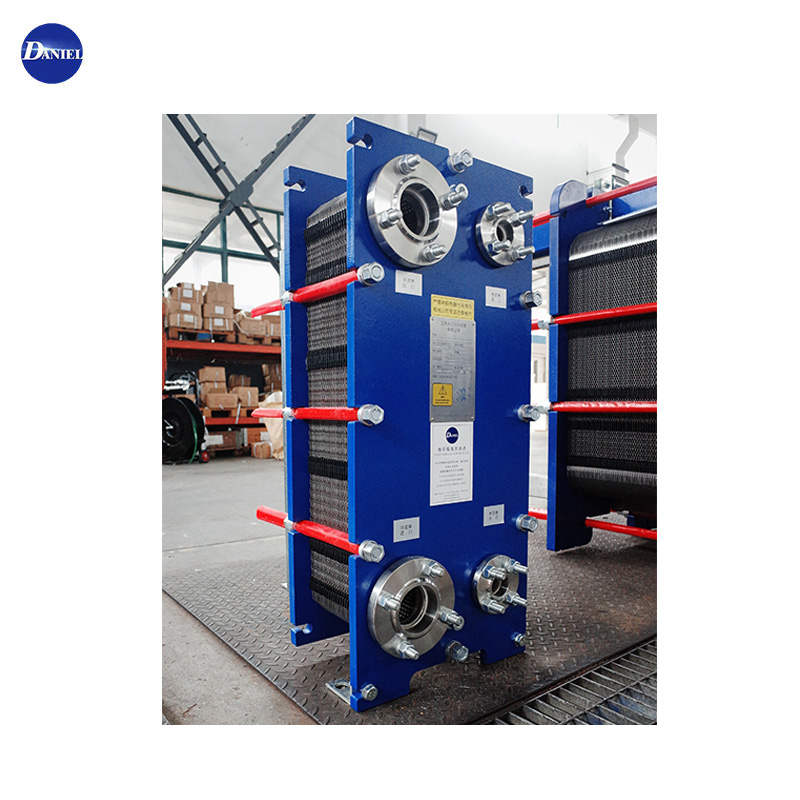
What Is a Ship Engine Disassembly Plate Heat Exchanger?
A Ship Engine Disassembly Plate Heat Exchanger is a mechanical heat transfer device specially designed for marine engine cooling systems. Unlike traditional shell-and-tube heat exchangers, it uses a series of specially designed metal plates arranged together to create multiple channels for fluid flow.
The hot fluid and cooling medium flow through alternating channels without mixing. Heat is transferred through the thin metal plates, allowing the engine system to maintain an ideal operating temperature.
The disassembly design allows operators to open the equipment, remove the plates, inspect components, and clean internal surfaces. This feature is especially valuable for ships because marine environments often contain seawater, impurities, and deposits that may reduce heat transfer efficiency over time.
Main Components of a Plate Heat Exchanger
| Component | Function |
|---|---|
| Heat Transfer Plates | Provide efficient heat exchange surfaces |
| Sealing Gaskets | Prevent fluid leakage between channels |
| Frame Structure | Supports and fixes the plate assembly |
| Clamping Bolts | Allow easy disassembly and maintenance |
| Inlet and Outlet Ports | Control fluid circulation |
Why Is It Important for Marine Engine Systems?
Marine engines must operate reliably for long periods, sometimes under extreme weather and heavy working conditions. Excessive heat can damage engine components, increase fuel consumption, and reduce operational efficiency.
A high-quality Ship Engine Disassembly Plate Heat Exchanger plays an important role in maintaining proper temperature control.
1. Preventing Engine Overheating
During ship operation, engines generate large amounts of heat. Without an effective cooling system, excessive temperatures may cause:
- Engine performance reduction
- Component deformation
- Lubrication failure
- Increased maintenance costs
The plate heat exchanger quickly transfers heat away from the engine system, helping maintain stable operating conditions.
2. Improving Energy Efficiency
Efficient heat transfer reduces unnecessary energy consumption. A well-designed plate structure provides a larger heat transfer area within a compact space, improving overall thermal efficiency.
3. Extending Equipment Service Life
Stable temperature control reduces thermal stress on engine parts. This helps protect critical components and extends the lifespan of marine machinery.
How Does It Work in Ship Engine Cooling Applications?
The working principle of a Ship Engine Disassembly Plate Heat Exchanger is based on indirect heat transfer.
The hot fluid from the engine cooling circuit enters one side of the exchanger, while seawater or another cooling medium enters the opposite side. The two fluids flow through separate channels, and heat moves through the metal plates from the hotter fluid to the cooler fluid.
The process includes:
- Hot engine coolant enters the heat exchanger.
- Cooling water flows through separated channels.
- Heat transfers through the plates.
- The cooled engine fluid returns to the engine system.
- The cooling cycle continues continuously.
This efficient design provides fast heat exchange while minimizing space requirements, making it suitable for ships where installation space is often limited.
Key Advantages and Practical Effects
A Ship Engine Disassembly Plate Heat Exchanger offers several advantages compared with conventional cooling equipment.
High Heat Transfer Efficiency
The corrugated plate design creates turbulence inside the channels, increasing fluid mixing and improving heat transfer performance.
Easy Maintenance and Cleaning
Marine cooling systems frequently face problems caused by salt deposits, corrosion, and impurities. The removable plate structure allows technicians to:
- Open the exchanger quickly
- Inspect internal conditions
- Replace damaged gaskets
- Clean deposits effectively
This reduces maintenance time and improves equipment availability.
Compact Design
Compared with traditional heat exchange equipment, plate heat exchangers provide high performance in a smaller installation area. This makes them ideal for ships with limited engine room space.
Flexible Capacity Adjustment
By adding or removing plates, the heat exchange capacity can be adjusted according to different vessel requirements.
Comparison Between Traditional and Disassembly Plate Heat Exchangers
| Feature | Traditional Heat Exchanger | Disassembly Plate Heat Exchanger |
|---|---|---|
| Maintenance | More complicated | Easy opening and cleaning |
| Heat Transfer Efficiency | Moderate | High efficiency |
| Installation Space | Larger | Compact structure |
| Cleaning Process | Time-consuming | Convenient maintenance |
| Capacity Adjustment | Limited | Flexible expansion |
The comparison shows why many marine equipment manufacturers and ship operators prefer plate heat exchanger technology for modern vessels.
Applications in Marine Industries
The Ship Engine Disassembly Plate Heat Exchanger is widely used in various marine systems, including:
Ship Main Engine Cooling
It helps regulate engine temperature and ensures reliable operation during long-distance voyages.
Generator Cooling Systems
Marine generators require stable cooling performance to maintain continuous electricity supply. Plate heat exchangers provide efficient temperature control.
Hydraulic System Cooling
Many ships use hydraulic equipment for steering, lifting, and other operations. Heat exchangers help prevent hydraulic oil from overheating.
Offshore Equipment
Offshore platforms and working vessels require durable cooling solutions capable of handling harsh environments.
Why Choose Jiangyin Daniel Cooler Co., Ltd.?
Jiangyin Daniel Cooler Co., Ltd. specializes in manufacturing advanced heat exchanger products and providing professional thermal management solutions for industrial and marine applications.
The company focuses on product quality, engineering innovation, and customer requirements. Its plate heat exchanger solutions are designed to meet the demanding conditions of ship engine systems.
Key advantages include:
- Professional heat exchanger manufacturing experience
- Reliable material selection and production technology
- Customized solutions for different marine applications
- Efficient heat transfer performance
- Convenient maintenance design
By combining advanced manufacturing processes with strict quality control, Jiangyin Daniel Cooler Co., Ltd. helps customers improve equipment efficiency and reduce operational costs.
Frequently Asked Questions
1. What is the main purpose of a Ship Engine Disassembly Plate Heat Exchanger?
Its main purpose is to transfer heat between engine coolant and cooling media, maintaining proper engine temperature and improving marine equipment reliability.
2. Why is the disassembly design important?
The disassembly structure allows easier inspection, cleaning, and replacement of internal parts, which is especially important for ships operating in environments with seawater and impurities.
3. How often should a marine plate heat exchanger be maintained?
Maintenance frequency depends on operating conditions, fluid quality, and usage time. Regular inspection helps maintain heat transfer efficiency and prevent unexpected failures.
4. Can plate heat exchangers be customized for different ships?
Yes. Professional manufacturers can customize plate numbers, materials, sizes, and performance parameters according to specific vessel requirements.
Conclusion
A Ship Engine Disassembly Plate Heat Exchanger is an essential component for modern marine cooling systems. With efficient heat transfer, compact structure, and easy maintenance features, it helps ships achieve safer operation, lower energy consumption, and longer equipment life.
As a trusted heat exchanger solution provider, Jiangyin Daniel Cooler Co., Ltd. is committed to delivering high-quality marine heat exchange products that meet diverse industrial needs. For customized solutions, professional technical support, and reliable heat exchanger products, contact us today to discuss your requirements and find the best cooling solution for your ship engine system.