

How Does Automotive Camera LCD Bracket Injection Mold Improve Automotive Display Precision and Manufacturing Efficiency?
2026-06-11
In the rapidly evolving automotive industry, advanced interior and exterior electronic systems have become essential components of modern vehicles. Among them, the display and camera integration systems play a crucial role in safety, navigation, and user experience. At the core of these systems lies a highly specialized manufacturing technology—the Automotive Camera LCD Bracket Injection Mold, which ensures structural precision, durability, and mass production efficiency. Companies such as Cixi Tengrui Mould Manufacturing Co., Ltd. are actively contributing to this field by delivering high-quality mold solutions tailored to automotive-grade requirements.
The Automotive Camera LCD Bracket Injection Mold is not just a tooling component; it is a critical enabler of precision engineering. It determines how well the LCD bracket fits into the vehicle structure, how stable the camera system performs under vibration, and how consistent the final product is across large production volumes. As automotive designs become more compact and intelligent, the demand for high-precision molds continues to grow.
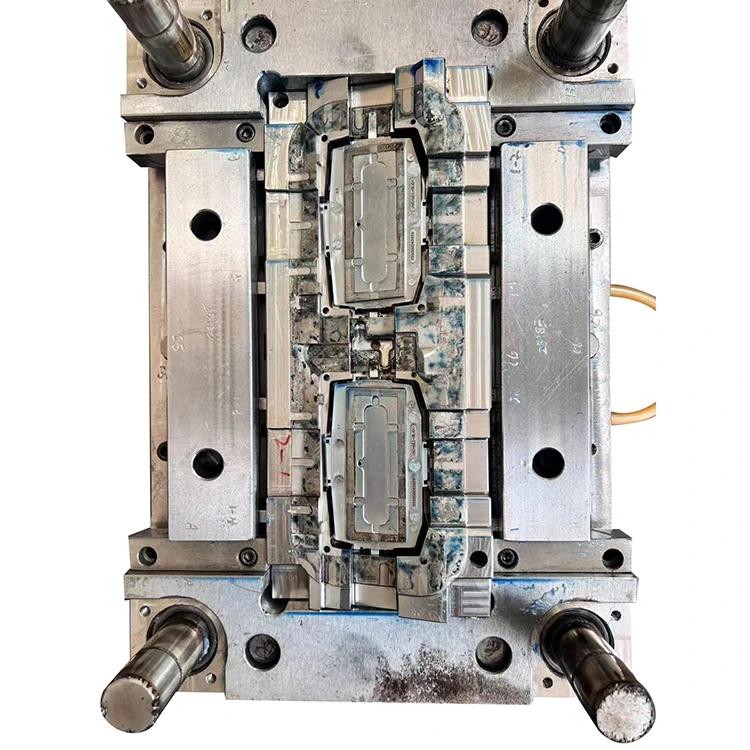
1. What Is an Automotive Camera LCD Bracket Injection Mold?
The Automotive Camera LCD Bracket Injection Mold is a precision mold used to manufacture plastic or composite brackets that support LCD displays and camera modules in vehicles. These brackets must meet strict requirements for:
- Dimensional accuracy
- Heat resistance
- Structural rigidity
- Vibration resistance
- Long-term durability
This mold ensures that each bracket produced is identical, reducing assembly errors and improving production efficiency.
2. Why It Matters in Modern Automotive Design
Automotive camera and display systems are no longer optional—they are essential for:
- Rear-view and 360° camera systems
- Advanced Driver Assistance Systems (ADAS)
- In-vehicle infotainment displays
- Smart dashboard integration
Without a high-quality Automotive Camera LCD Bracket Injection Mold, manufacturers would face issues such as misalignment, instability, and inconsistent product quality.
Key Importance:
- Ensures stable mounting of LCD and camera modules
- Improves safety performance of ADAS systems
- Reduces assembly cost and production errors
- Supports lightweight vehicle design trends
3. Core Functions of the Injection Mold System
The injection mold is responsible for transforming raw polymer materials into high-precision structural components. Its core functions include:
Functional Breakdown:
- Material shaping: Converts molten plastic into precise bracket shapes
- Structural reinforcement: Ensures mechanical strength under stress
- Thermal stability control: Prevents deformation under high temperatures
- Surface quality control: Delivers smooth and assembly-ready surfaces
4. Key Design Features of Automotive Camera LCD Bracket Injection Mold
A high-performance mold requires advanced engineering design and manufacturing expertise. Below are the most important design features:
| Feature | Function | Benefit |
|---|---|---|
| High-precision cavity design | Ensures dimensional accuracy | Perfect fit for LCD and camera modules |
| Cooling system optimization | Controls mold temperature | Reduces cycle time |
| Multi-cavity structure | Produces multiple parts per cycle | Increases productivity |
| High-grade steel material | Enhances durability | Extends mold lifespan |
| Surface polishing treatment | Improves surface finish | Reduces post-processing needs |
These features directly influence production quality and efficiency in automotive manufacturing environments.
5. Automotive Applications and Industry Use Cases
The Automotive Camera LCD Bracket Injection Mold is widely used across various automotive systems, including:
Application Areas:
- Rear-view camera mounting systems
- Dashboard LCD screen support structures
- Side mirror camera integration modules
- Central control display brackets
- ADAS sensor housing components
Industry Benefits:
- Enhances driving safety systems
- Supports intelligent vehicle architecture
- Improves user interface experience
- Enables compact and modular automotive design
6. Material Selection for Injection Molding
Material choice is critical in ensuring durability and performance. Common materials used include:
- ABS (Acrylonitrile Butadiene Styrene): High impact resistance
- PC (Polycarbonate): Excellent transparency and heat resistance
- PA (Nylon): Strong mechanical performance
- PC+ABS blends: Balanced strength and flexibility
Each material is selected based on the specific application of the Automotive Camera LCD Bracket Injection Mold output.
7. Manufacturing Process Overview
The production process involves several key stages:
- Product design and simulation
- Mold structure engineering
- CNC machining and EDM processing
- Mold assembly and fitting
- Trial molding and adjustment
- Mass production validation
Each stage ensures the final mold meets automotive industry standards for precision and reliability.
8. Comparison: Standard Mold vs Automotive Camera LCD Bracket Injection Mold
| Category | Standard Injection Mold | Automotive Camera LCD Bracket Injection Mold |
|---|---|---|
| Precision level | Moderate | Extremely high |
| Material durability | General grade steel | High-performance hardened steel |
| Application | Household products | Automotive electronic systems |
| Tolerance control | ±0.1mm | ±0.01mm or better |
| Lifecycle | Medium | Long-term industrial use |
This comparison highlights why automotive-grade molds require significantly higher engineering standards.
9. Advantages Provided by Cixi Tengrui Mould Manufacturing Co., Ltd.
As a professional mold manufacturer, Cixi Tengrui Mould Manufacturing Co., Ltd. focuses on delivering precision-driven solutions for automotive clients. Its expertise in Automotive Camera LCD Bracket Injection Mold production provides several advantages:
- Advanced CNC machining capabilities
- Strict quality control systems
- Customized mold design services
- High-efficiency production cycles
- Stable long-term mold performance
By combining engineering expertise with industrial experience, the company supports automotive manufacturers in achieving higher production consistency and lower defect rates.
10. Future Trends in Automotive Mold Technology
The future of Automotive Camera LCD Bracket Injection Mold technology is shaped by several industry trends:
- Lightweight vehicle design
- Integration of AI-driven driving systems
- Higher demand for ADAS components
- Increased use of eco-friendly materials
- Smart manufacturing and automation
These trends push mold manufacturers to continuously improve precision, efficiency, and innovation.
11. Key Benefits Summary
- Improves automotive electronic system stability
- Enhances precision in LCD and camera installation
- Reduces production cost and waste
- Supports mass production with consistent quality
- Extends product lifecycle and durability
Conclusion
The Automotive Camera LCD Bracket Injection Mold is a foundational technology in modern automotive manufacturing. It ensures precision, reliability, and efficiency in producing critical components that support vehicle safety and intelligent driving systems. With increasing demand for advanced automotive electronics, high-quality mold solutions are more important than ever.
Cixi Tengrui Mould Manufacturing Co., Ltd. continues to play a significant role in delivering high-performance injection mold solutions that meet global automotive standards, helping clients achieve superior production outcomes and long-term competitiveness.
If you are looking for professional mold solutions tailored to automotive camera and LCD bracket applications, please feel free to contact us for more technical details and customized services.