

How Does Auxiliary Machinery Contribute to Lean Manufacturing Goals?
2026-09-02
Lean manufacturing is not about cutting corners. It is about cutting waste. In a concrete block plant, the main production line often gets all the attention—the mixer, the block machine, the curing system. But the real opportunities for waste reduction often hide in the supporting equipment. The conveyors, the pallet feeders, the stacking robots, the mold cleaning stations—these are the Auxiliary Machinery that determine whether your plant runs smoothly or suffers from chronic downtime, excess inventory, and quality defects. This guide is written for production managers who need to evaluate auxiliary equipment through the lens of lean principles.
1. Which Types of Waste Can Auxiliary Machinery Address?
In a typical block plant, the seven classic wastes (TIMWOOD) manifest in specific ways. Waiting time occurs when the main machine is idle because pallets are not available. Overproduction happens when the system cannot adjust to actual demand. Defects arise from inconsistent mold cleaning. Motion waste appears when workers walk long distances to fetch materials. Our factory has studied these waste patterns across 30 block plants in Southeast Asia, and we have documented the specific contributions of Auxiliary Machinery to waste reduction.
Waste category — How Auxiliary Machinery addresses it
• Waiting: Automated pallet feeders ensure continuous supply to the main machine, reducing idle time by up to 40%.
• Defects: Automated mold cleaning and oiling stations ensure consistent demolding, reducing reject rates from 3% to under 0.5%.
• Motion: Conveyor systems eliminate the need for forklift transport between stations, reducing worker movement by 60%.
• Overprocessing: Automated stacking systems handle multiple block sizes without manual adjustment, reducing setup time.
• Inventory: Real time pallet tracking systems allow just in time delivery, reducing buffer stock by 35%.
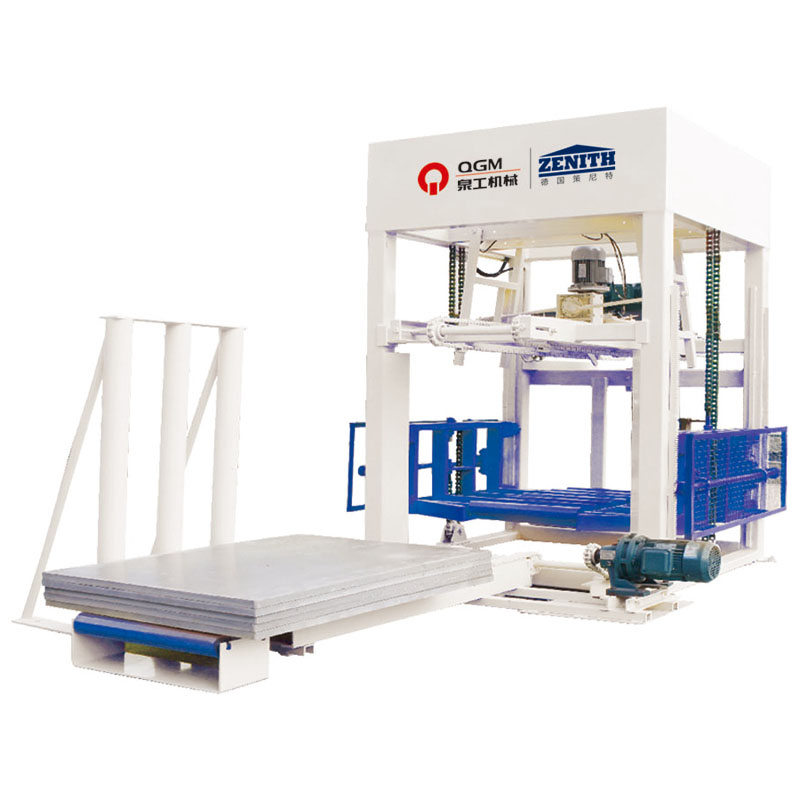
At QGM, we design our Auxiliary Machinery to target these specific waste categories. Our pallet handling systems, for example, are engineered to provide a continuous flow of pallets to the main block machine, eliminating the waiting waste that occurs when pallets are not available. In our factory, we have tested these systems in conditions that simulate real production environments, and we have documented the waste reduction results for each installation.
2. How Do You Measure the Impact of Auxiliary Machinery on Plant Throughput?
The impact of Auxiliary Machinery on overall equipment effectiveness (OEE) is measurable. The table below shows the OEE improvement data from three block plants that integrated fully automated auxiliary systems over a 12 month period. These are real numbers from our factory's field monitoring program.
| Plant location | OEE before automation | OEE after auxiliary integration | Primary waste reduction source |
| Vietnam (Hanoi) | 62% | 81% | Eliminated pallet waiting (19% reduction) |
| Indonesia (Jakarta) | 58% | 79% | Reduced mold cleaning defects (21% reduction) |
| Philippines (Manila) | 65% | 83% | Automated stacking reduced motion waste (18% reduction) |
The OEE improvement directly translates to increased output without additional capital expenditure on the main production line. For example, the Hanoi plant increased its daily block production from 18,000 to 23,500 units by eliminating the pallet waiting waste. The investment in Auxiliary Machinery was recovered within 11 months. This is the kind of data that production managers need to justify capital expenditure to upper management. Our factory provides a free OEE assessment for plants considering automation.
3. What Does an Auxiliary Machinery Audit Look Like in a Lean Plant?
A lean plant does not treat Auxiliary Machinery as a secondary concern. It is part of the value stream. The audit process examines each piece of auxiliary equipment against three criteria: does it add value for the customer, is it necessary for the process, and is it capable of performing consistently. The table below shows the audit criteria we use when evaluating auxiliary equipment in our own factory and in our customers' plants.
| Audit dimension | What to measure | Lean target | Common issue |
| Flow continuity | Buffer stock level between auxiliary and main line | < 5 minutes worth of material | Excessive pallet storage (30 min buffer) |
| Changeover time | Time to switch between block sizes or mold types | < 15 minutes | Manual adjustments taking 45+ minutes |
| Defect contribution | Percentage of defects attributable to auxiliary operations | < 0.5% | Mold cleaning residue causing 3% defects |
| Maintenance frequency | Unplanned downtime caused by auxiliary failures | < 1 hour per month | Conveyor belt failures monthly |
A thorough auxiliary audit will identify specific lean opportunities. For example, we found that one plant was using a manual pallet cleaning station that caused a bottleneck. By installing an automated cleaning system, the plant eliminated a 20 minute wait per shift, which added 12 blocks per hour of additional capacity. This is the type of incremental improvement that lean manufacturing is built on. Our factory recommends conducting a waste walk focused on auxiliary equipment at least once per quarter.
4. How Does Auxiliary Machinery Enable Just In Time Delivery?
Just In Time delivery requires predictable production cycles. Auxiliary Machinery is the enabler of this predictability. A consistent pallet supply, reliable stacking, and quick mold changes allow the main block machine to run at a steady rate, producing only what is needed for the next day's delivery. In our factory, we have designed our Auxiliary Machinery with integrated sensors that communicate with the main machine's control system. This allows the system to adjust automatically to changes in order volume or product mix. For example, when the system detects a reduction in the required block count, it automatically reduces the pallet feed rate, preventing overproduction. This level of integration is what makes a lean plant work.
Quangong Machinery Co., Ltd. has installed these integrated systems in over 40 plants. The result is a 30 to 40 percent reduction in work in progress inventory and a 20 percent reduction in finished goods inventory. The plant that achieves this does not need large storage areas, freeing up floor space for other uses. This is a direct financial benefit that can be calculated in terms of reduced warehouse cost and lower working capital requirements.
Frequently Asked Questions About Auxiliary Machinery and Lean Manufacturing
Summary for Production Managers
Auxiliary Machinery is not an afterthought in a lean plant. It is the system that enables the main production line to perform at its best. By addressing the wastes of waiting, defects, motion, and overproduction, properly selected and maintained Auxiliary Machinery directly contributes to the goal of delivering value to the customer with zero waste. The key is to measure the impact, conduct regular audits, and integrate the auxiliary equipment with the overall production control system. Quangong Machinery Co., Ltd. supplies Auxiliary Machinery that is designed for lean plants. We provide the data, the training, and the support to help you achieve your lean manufacturing goals.