

How Does Hydraulic Pressure Affect Harvester Cylinder Lifting Capacity?
2026-09-09
1. How Does Piston Area Determine the Lifting Capacity of a Harvester Hydraulic Cylinder?
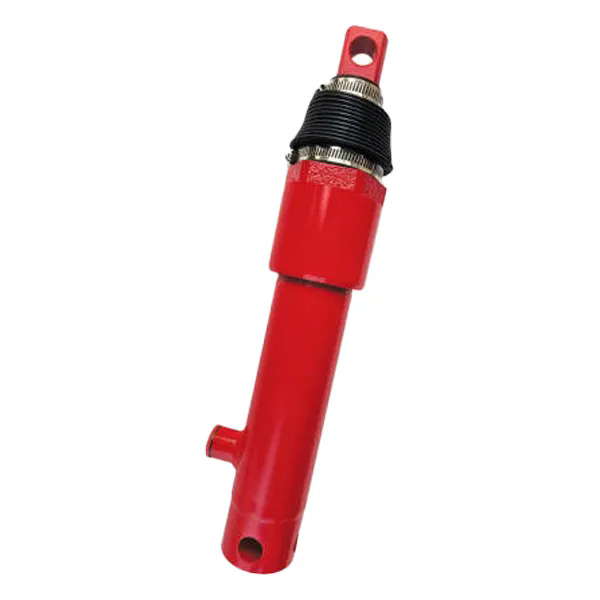
The lifting capacity of a Harvester Hydraulic Cylinder is directly proportional to the effective piston area. The formula is simple: Force (kN) = Pressure (bar) × Area (cm²) / 10. For example, a Harvester Hydraulic Cylinder with a 63 mm bore has a piston area of 31.2 cm². At 180 bar, it produces 56.1 kN of force, which is equivalent to 5.7 tonnes. At 200 bar, the same Harvester Hydraulic Cylinder produces 62.4 kN or 6.4 tonnes. A larger cylinder—say 80 mm bore—has an area of 50.3 cm². The same 180 bar pressure gives 90.5 kN or 9.2 tonnes. This is why heavy harvesters use larger-bore Harvester Hydraulic Cylinder units for the main header lift. In our factory, we manufacture Harvester Hydraulic Cylinder units with bores from 40 mm to 100 mm, covering all standard combine and forage harvester applications. Each cylinder is tested at 1.5 times the rated pressure to verify the burst margin.
2. What Is the Pressure and Capacity Range for Common Harvester Hydraulic Cylinder Units?
Harvester hydraulic systems typically operate between 160 and 210 bar. The table below shows the lifting capacity for standard Harvester Hydraulic Cylinder sizes at typical operating pressures. The values are for the extend stroke (full piston area).
| Bore (mm) | Rod (mm) | Area (cm²) | Lift Capacity at 160 bar (kN) | Lift Capacity at 180 bar (kN) | Lift Capacity at 200 bar (kN) |
| 50 | 25 | 19.6 | 31.4 | 35.3 | 39.2 |
| 63 | 35 | 31.2 | 49.9 | 56.1 | 62.4 |
| 80 | 45 | 50.3 | 80.4 | 90.5 | 100.5 |
| 100 | 56 | 78.5 | 125.6 | 141.3 | 157.0 |
The rod size matters for retract force, but for lifting applications, the bore is the critical number. In our factory, we design Harvester Hydraulic Cylinder units with a rod diameter that is roughly half the bore diameter, which provides a good balance of retract speed and column strength. We have supplied these cylinders to combine manufacturers for models with header weights ranging from 2.5 tonnes to 8 tonnes.
3. How Does Pressure Drop Affect Harvester Hydraulic Cylinder Performance?
Pressure at the pump is not always pressure at the cylinder. The oil must travel through hoses, control valves, and fittings—each creating a pressure drop. In a typical harvester hydraulic circuit, the pressure drop between the pump and the Harvester Hydraulic Cylinder can be 5 to 15 bar, depending on the hose length and the valve condition. This means that a pump pressure of 190 bar may only deliver 175 bar to the cylinder. The consequence is a reduction in lifting capacity of approximately 8 percent. For a Harvester Hydraulic Cylinder with a 63 mm bore, this represents a loss of 4.7 kN or about 480 kg of lifting capacity. This is why we recommend checking the pressure at the cylinder port, not at the pump. In our factory, we provide a test fitting kit that allows you to connect a pressure gauge directly to the cylinder port for accurate diagnostics.
4. What Are the Field Diagnoses for a Harvester Hydraulic Cylinder That Won't Lift the Header?
When a Harvester Hydraulic Cylinder fails to lift the header, the operator faces several possibilities. The cylinder may have a worn piston seal causing internal leakage. The pressure relief valve may be set too low. The pump may be worn and unable to reach system pressure. The cylinder rod may be bent, causing binding. One common test is to deadhead the cylinder—extend it fully and then attempt to extend it further. If the pressure reaches the relief valve setting and holds, the pump and relief valve are working. If the pressure is low, the pump or relief valve is the issue. If the pressure is normal but the header still won't lift, the cylinder is likely leaking internally. In our factory, we rebuild Harvester Hydraulic Cylinder units with genuine seal kits that restore the original performance. We have seen many operators replace the cylinder unnecessarily when a simple seal replacement would have solved the problem.
Frequently Asked Questions About Harvester Hydraulic Cylinders and Lifting Pressure
Summary for Harvester Operators and Maintenance Managers
The relationship between hydraulic pressure and lifting capacity is defined by the piston area of the Harvester Hydraulic Cylinder. Larger bore cylinders produce more lifting force at the same pressure. Pressure drop through the hydraulic circuit reduces the actual force at the cylinder. Regular pressure testing is the most effective way to identify problems before they cause a failure. Our factory has been supplying Harvester Hydraulic Cylinder units to OEMs and aftermarket customers for over 15 years. We offer a range of bore sizes, seal types, and mounting configurations to match any harvester model. Each cylinder is tested for pressure retention and smooth operation before shipment.
Raydafon Technology Group Co.,Limited manufactures Harvester Hydraulic Cylinders with chrome-plated rods, polyurethane seals, and heavy-duty clevis mounts. We provide technical support and field guidance to help you select and maintain the right cylinder for your harvest conditions.