

How Does Material Composition Affect the Performance of Non-Asbestos Sheets?
2026-02-03
Material composition plays a decisive role in determining how industrial sealing sheets perform under real operating conditions. In valve assemblies, pipeline flanges, and heat exchanger joints, engineers focus first on tensile strength, compressibility, and recovery. These properties are directly influenced by fiber selection, elastomer binders, and filler ratios used during sheet formation.
Our engineering team designs material formulations that balance flexibility with structural integrity, ensuring stable performance during bolt tightening and long-term service. At Ningbo Kaxite Sealing Materials Co., Ltd., our factory applies controlled calendaring pressure and curing cycles to maintain consistent density across each production batch. This approach reduces the risk of edge cracking and uneven load distribution, issues commonly encountered in low-grade materials.
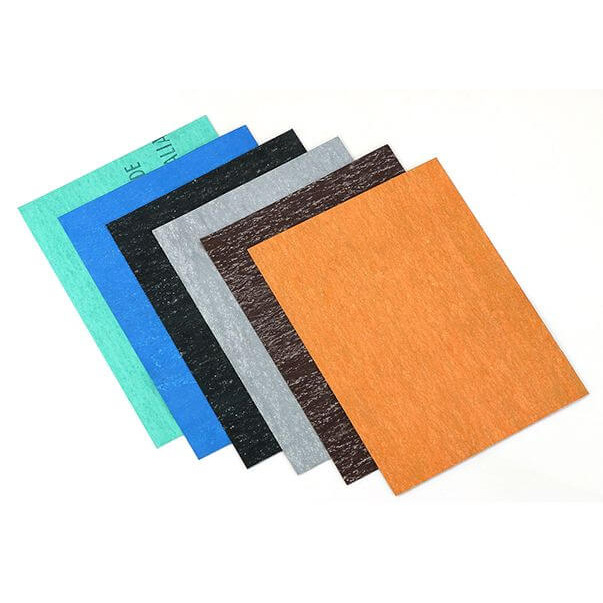
In industrial practice, Non-asbestos Sheet materials must withstand repeated thermal cycling without losing sealing efficiency. Our experience shows that optimized fiber dispersion significantly improves load retention, particularly in ANSI and DIN flange systems used across North American and European process plants.
How Does Fiber Selection Influence Thermal and Pressure Resistance?
Fiber architecture is a critical factor in determining how sealing materials respond to elevated temperatures and internal pressure. Aramid fibers are widely recognized in the sealing industry for their high tensile modulus and thermal stability, while mineral fibers contribute dimensional consistency under compression.
Our formulations integrate hybrid fiber systems that support stable performance in steam lines, oil refineries, and chemical processing units. These systems allow Non-asbestos Sheet products to operate reliably within temperature ranges commonly specified in ASME B16.21 gasket standards. Our factory evaluates fiber alignment during sheet formation to ensure isotropic strength, reducing the risk of blowout under fluctuating pressure.
This material strategy is particularly valued by maintenance engineers who require predictable sealing behavior during shutdowns and restarts. By controlling fiber content, our production process delivers materials suitable for both low-pressure water systems and high-pressure hydrocarbon applications.
How Do Elastomer Binders Affect Chemical Compatibility and Flexibility?
Elastomer binders serve as the matrix that bonds fibers and fillers into a unified structure. Their chemical composition directly impacts resistance to oils, fuels, solvents, and mild acids. NBR and SBR-based binders are commonly selected for industrial sealing applications due to their balanced performance characteristics.
Our research team formulates binder systems that maintain elasticity while minimizing swelling in aggressive media. This ensures consistent flange contact pressure over time. In Non-asbestos Sheet manufacturing, binder quality also affects surface finish, which is essential for proper gasket seating on machined or slightly irregular flange faces.
At Ningbo Kaxite Sealing Materials Co., Ltd., our factory conducts routine immersion testing following ASTM F146 standards. These evaluations allow our materials to meet the chemical resistance expectations of power generation plants, petrochemical facilities, and general industrial users.
How Do Fillers and Density Control Improve Sealing Performance?
Fillers contribute to dimensional stability, heat resistance, and cost efficiency. However, excessive filler content can negatively impact compressibility and recovery. Achieving the correct balance requires precise formulation control and advanced processing techniques.
Our manufacturing process uses carefully graded inorganic fillers to enhance surface conformity while preserving elastic recovery. Density control is achieved through calibrated rolling and curing parameters, allowing our materials to perform consistently across different flange classes. This approach supports reliable sealing even when bolt loads vary due to installation constraints.
Non-asbestos Sheet performance in real-world applications depends heavily on this balance. In refinery maintenance operations, for example, controlled density helps reduce retightening frequency and minimizes unplanned downtime.
How Are Product Parameters Evaluated to Meet Industrial Standards?
Performance parameters provide engineers with measurable criteria for material selection. These parameters are verified through standardized testing protocols and internal quality control procedures.
| Density | 1.6 to 2.0 g/cm3 depending on grade |
| Tensile Strength | Greater than 7 MPa |
| Compressibility | 7 to 12 percent |
| Recovery | Minimum 40 percent |
| Maximum Operating Temperature | Up to 400 degrees Celsius |
Our quality assurance process verifies these values through batch sampling and traceable documentation. Our factory maintains consistent production records, ensuring that customers receive materials aligned with published specifications.
| Standard | Application Scope |
| ASTM F104 | Material classification and performance comparison |
| ASTM F146 | Chemical resistance testing |
| DIN 3535 | Industrial gasket materials in European systems |
Frequently Asked Questions About Material Performance
Q1: How does material formulation influence sealing stability during thermal cycling?
Material formulation affects how sealing sheets respond to repeated heating and cooling cycles. A balanced combination of heat-resistant fibers and elastic binders helps the material maintain compression recovery, preventing stress relaxation and leakage when temperatures fluctuate in industrial piping systems.
Q2: How do different material components impact long-term durability under constant load?
Durability under continuous bolt load depends on fiber reinforcement strength and binder aging resistance. High-quality formulations reduce creep and permanent deformation, allowing sealing sheets to retain thickness and contact pressure over extended service periods.
Q3: How does material composition determine resistance to oils, fuels, and process media?
Chemical resistance is controlled by the interaction between elastomers, fillers, and operating media. Properly selected binders limit swelling and softening, while stable fillers protect structural integrity, enabling reliable sealing performance in contact with hydrocarbons, lubricants, and common industrial fluids.
Conclusion
In summary, material composition is the foundation of sealing reliability in modern industrial systems. Through controlled fiber selection, advanced binder formulations, and precise density management, our solutions deliver dependable performance across demanding applications. At Kaxite Sealing, our factory remains committed to providing engineered sealing materials that support safe, efficient, and long-term operation. Contact our technical team today to discuss specifications, samples, and customized solutions for your sealing requirements.