

How Does Material Quality Influence HDPE Pipe Welding Results?
2026-06-15
1. Why Does Resin Grade Directly Affect Weld Integrity in Our HDPE Pipe Welding Machine?
In our factory, we have performed thousands of butt welding tests. The single biggest factor that determines weld quality is the raw material consistency. When you run a pipe made from virgin PE100 resin through our HDPE Pipe Welding Machine, the melt flow index stays stable within 0.2 grams per ten minutes. But pipes made from recycled or off grade material have varying molecular weight. This causes uneven heating and poor fusion. For a local water main project in Iowa, the contractor used mixed resin pipes and the welds failed pressure testing. Our Ningbo Sunplast Pipe Co., Ltd. always recommends confirming the material certificate before welding. Our HDPE Pipe Welding Machine has an adaptive temperature control that compensates for slight variations, but it cannot fix a bad resin. The ASTM D3350 standard classifies cell classification for HDPE. Only material with class 3 or higher will produce consistent beads. We have seen welds that looked perfect externally but had voids internally because the regrind content exceeded 20 percent. So the direct answer to how does material quality influence HDPE pipe welding results is that poor resin creates invisible defects that lead to brittle failure under pressure.
2. How Does Melt Flow Rate Mismatch Cause Cold Welds and Brittle Joints?
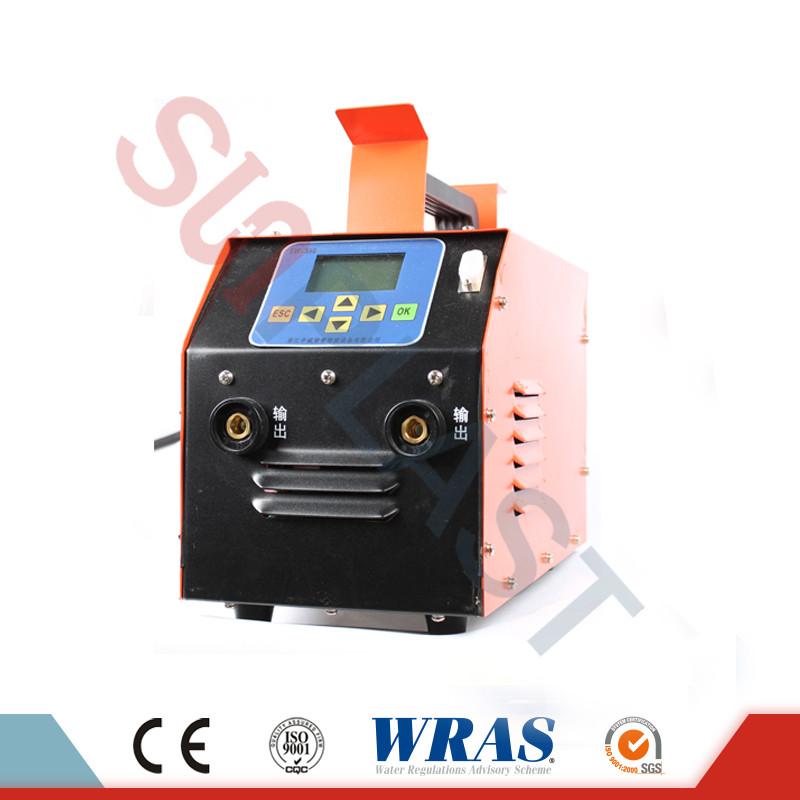
Melt flow rate is the speed at which molten polyethylene flows under pressure. Our factory requires that both pipe ends have MFR within 0.3 grams per ten minutes of each other. If one pipe has MFR 0.8 and the other has 1.4, the faster flowing material will squeeze out of the weld zone during the fusion process. This leaves a weak joint. Our HDPE Pipe Welding Machine monitors the bead formation with a laser sensor. When MFR mismatch occurs, the bead looks asymmetric and lopsided. For a natural gas distribution line, a mismatch caused a leak after only six months of service. Local codes in Texas now mandate MFR verification before welding. Our Ningbo Sunplast Pipe Co., Ltd. supplies pipes with full traceability including MFR batch data. Another problem is that high MFR material often contains degraded polymer chains from multiple reprocessing cycles. During welding, these chains do not entangle properly. The result is a weld that passes visual inspection but fails a peel test. Our factory recommends always using pipes from the same production batch for critical welds. The HDPE Pipe Welding Machine can log MFR values entered manually, but the operator must input correct data. In short, material quality determines the flow consistency, and consistency determines weld strength.
3. What Parameters Define Weldable HDPE According to Our Factory Standards?
To achieve reliable results, the HDPE pipe material must meet specific technical parameters. Our factory uses the following tables to qualify every batch before it goes to our HDPE Pipe Welding Machine. The first table shows the physical property requirements. The second table lists the welding compatibility criteria. We have found that even pipes from the same manufacturer but different color masterbatches can weld differently. Carbon black content above 2.5 percent improves UV resistance but requires higher heat input. Our Sunplast publishes these parameters to help contractors avoid field failures.
| Material Property | Weldable HDPE Specification (Ningbo Sunplast Grade) | Poor Quality Indicator |
| Melt Flow Rate MFR 190 C 5kg | 0.8 to 1.2 g/10 min | Outside this range or batch variation above 0.3 |
| Density | 0.948 to 0.955 g/cm3 | Below 0.945 indicates regrind |
| Oxidation Induction Time OIT | More than 20 minutes at 200 C | Less than 10 minutes means degraded resin |
| Carbon black dispersion | Grade 1 or 2 per ISO 18553 | Grade 4 or 5 with agglomerates |
| Tensile strength at yield | Above 23 MPa | Below 20 MPa |
| Welding Compatibility Parameter | Required Value for Strong Weld | Consequence of Poor Material |
| MFR difference between two pipes | Less than 0.3 g/10 min | Weak interface, brittle peel |
| Moisture content in pipe end | Less than 0.01 percent | Porosity and bubbles in bead |
| Pipe ovality | Less than 1.5 percent of OD | Uneven heating, partial fusion |
| Wall thickness tolerance | Plus or minus 5 percent | Mismatched heating zones |
| Color consistency | Uniform grey or black without streaks | Different absorption of infrared heat |
Our HDPE Pipe Welding Machine includes a data logging system that records all parameters. If the material quality falls outside these ranges, our factory recommends rejecting the pipe batch. For a sewer force main project in Florida, the contractor used off spec pipe and twenty percent of the welds failed hydrostatic testing. That cost 40,000 dollars in rework. So how does material quality influence HDPE pipe welding results? It determines every aspect from bead formation to long term creep resistance. Our Ningbo Sunplast Pipe Co., Ltd. provides a material certificate with every shipment to guarantee these parameters.
4. Why Does Additive Package Consistency Matter for Electrofusion Welding?
Electrofusion welding relies on precise heating from embedded wire coils. The pipe material must have consistent carbon black content and thermal conductivity. Our factory tested two batches from different suppliers. Both met the base MFR spec, but one had higher calcium carbonate filler. That filler changed the thermal response. When welded with the same HDPE Pipe Welding Machine, the filler rich pipe took twenty seconds longer to reach fusion temperature. This resulted in incomplete melting and a weak joint. Local gas utilities in Pennsylvania now require thermal analysis of each pipe lot. Our Sunplast uses only pure PE100 with no fillers. Another additive issue is antioxidant depletion. If the pipe has been stored outdoors for two years, the antioxidants degrade. During welding, the surface oxidizes before fusion occurs. The weld looks shiny but has zero strength. Our HDPE Pipe Welding Machine cannot detect chemical degradation. The only solution is to use fresh pipe from a reputable source. So additive package consistency directly influences the thermal and oxidative behavior during welding, making it a critical material quality factor.
Frequently Asked Questions About Material Quality and HDPE Pipe Welding Results
Final Summary and Direct Call to Action
Material quality directly determines HDPE pipe welding results through resin grade, melt flow consistency, additive package, and storage conditions. Our factory has demonstrated that even the best HDPE Pipe Welding Machine cannot produce a strong joint from poor quality pipe. To achieve reliable, code compliant welds, always use pipe that meets the specifications in our tables. Our Ningbo Sunplast Pipe Co., Ltd. provides fully traceable HDPE pipe with certified material properties.