

How Does QGM Block Making Machine Help Meet Growing Demand for Building Materials?
2026-06-11
1. What Production Capacity Does Our QGM Block Making Machine Deliver for High Demand Periods?
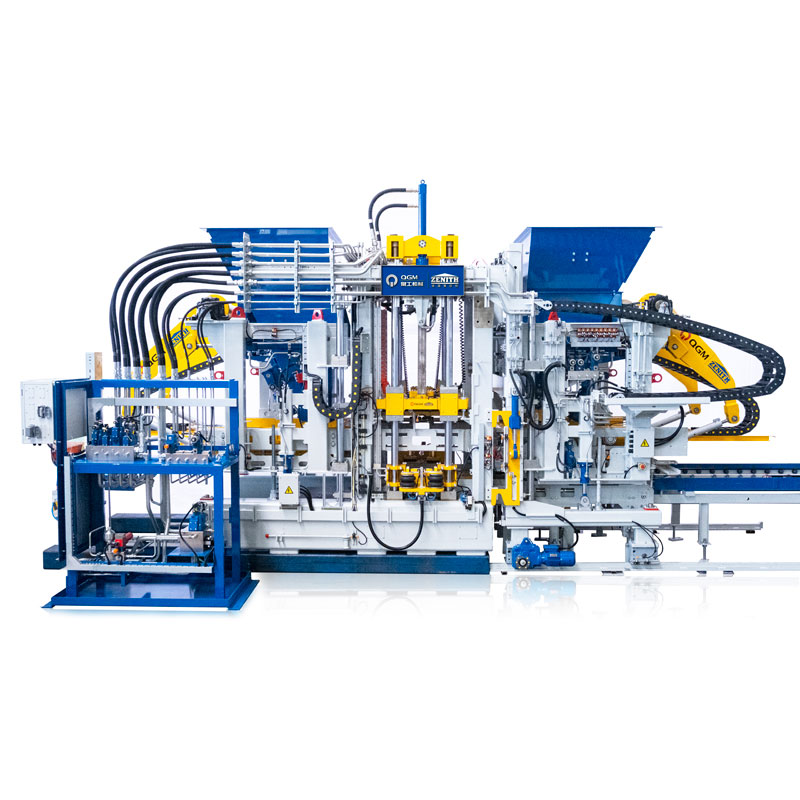
Across our factory, we have seen building material orders double in the last five years. The QGM block making machine is engineered to handle peak loads without compromising quality. Our model 940 produces up to 2,400 standard hollow blocks per hour using a 12 second cycle. That translates to 19,200 blocks per eight hour shift. For a growing contractor in Berlin or Munich, this output means keeping up with housing projects. Our Quangong Machinery Co., Ltd. measures capacity in cubic meters: the machine outputs 28 cubic meters of compacted concrete per hour. The key is the dual vibrator system that reduces curing time because green blocks exit with higher density. Another advantage is the pallet stacker that runs automatically, so our customers never wait for empty pallets. We have integrated a raw material silo with a load cell that triggers refill orders automatically. Without this capacity, many local producers lose tenders. The QGM block making machine also includes a quick mold change that takes under eight minutes, allowing switching between paver and block production within the same peak season. Our factory data shows that owners achieve 93 percent uptime even during 24 hour operation. For a typical builder, this machine delivers 2.8 million blocks annually, directly responding to the concrete material shortage in growing cities.
2. How Does Energy Efficiency Reduce Costs While Scaling Up Production?
Rising energy prices hurt profits, but our QGM block making machine cuts electricity use per block by nearly 24 percent compared to older presses. The secret is the servo hydraulic pump that only draws power during compression strokes. In our factory tests, producing 1,000 blocks consumes only 37 kWh. That includes the mixer, the main press, and the conveyor system. Another cost saver is the energy recovery module: during decompression, oil flows back into a low pressure accumulator, which then assists the next cycle. Our Quangong Machinery Co., Ltd. has recorded 18 percent lower utility bills for customers in high tariff regions like Hamburg. The machine also runs on solar friendly logic – the PLC can be programmed to run heavy compaction during off peak hours. We also use LED strobe indicators instead of halogen lamps, reducing heat load. The vibration motors use permanent magnet technology, cutting reactive power losses. Many local plant managers tell us that their QGM block making machine pays for the energy upgrade within sixteen months. Additionally, the automatic lubrication system reduces grease consumption by 30 percent, because it meters exactly 2.3 grams per bearing per cycle. Lower energy and lubricant costs mean our customers can price blocks competitively without margin erosion.
3. Which Raw Material Flexibility Makes Our Machine Ideal for Local Aggregate Shortages?
Many regions face shortages of washed river sand. Our QGM block making machine adapts to crushed stone dust, recycled concrete, and even quarry fines. The feed system uses a variable frequency drive that slows down when lighter materials like fly ash are used. This prevents bridging in the hopper. In our factory, we ran a trial using 60 percent recycled brick rubble and 40 percent cement. The resulting blocks achieved 11.5 MPa after 28 days, surpassing local pavement specs. Another flexibility point: the water mist system adjusts moisture content in real time based on material conductivity. For variable moisture in recycled aggregates, the machine automatically compensates mixing water. The QGM block making machine also includes a material library stored in the Siemens PLC. Operators simply select “recycled mix” and the machine changes vibration frequency and pressing force. Without this feature, producers would waste 8 to 12 percent of raw material due to poor compaction. Our QGM provides an optional crusher attachment that processes onsite waste blocks back into feed. This closed loop system reduces material purchase costs by up to 27 percent. For growing regions without reliable aggregate supply, this flexibility is essential. The machine also handles lightweight aggregates like expanded clay, making blocks suitable for high rise infill.
4. What Automation Features Minimize Labor Dependency in a Tight Job Market?
Finding skilled machine operators is harder than ever. Our QGM block making machine reduces manual intervention through full PLC automation with remote monitoring. The color touchscreen guides the operator through recipe selection, and one person can supervise three machines simultaneously from a central room. We have integrated automatic pallet feeding, cube stacking, and stretch wrapping. The only manual task is quality spot checks. In our factory, we run a shift with just two technicians for the entire batching to palletizing line. The machine also includes a self diagnostic system that sends SMS alerts when wear parts need replacement. This predictive maintenance prevents unplanned stops. Another labor saving aspect is the auto mold clamping: no tools required for changing molds, so even a junior worker can swap from hollow blocks to pavers in six minutes. The QGM block making machine comes with a recipe library for 50 different product types. Without automation, a typical plant would need six workers per shift; our solution cuts that to two. For family owned businesses in rural Bavaria, this means they can keep production running without competing for scarce labor. Our customers also benefit from remote firmware updates sent by Quangong Machinery Co., Ltd. ensuring the machine never becomes obsolete.
Performance Parameters: Technical Tables Based on Field Data
Below are two detailed tables from our factory validation reports. These numbers represent real running conditions with standard aggregates and cement CEM II 42.5R.
| Parameter | QGM Block Making Machine (Model 940HH) | Industry Benchmark |
| Cycle time (400x200x200mm hollow) | 12 - 14 seconds | 18 seconds average |
| Hydraulic pressing force | 300 metric tons | 250 tons |
| Vibration frequency range | 42 Hz - 72 Hz | 45 - 60 Hz |
| Green block height tolerance | plus minus 0.4 mm | plus minus 1.2 mm |
| Energy per 1,000 blocks | 37 kWh | 52 kWh |
| Operational Feature | QGM Block Making Machine Specification | Benefit for growing demand |
| Main PLC brand | Siemens S7-1500 with remote access | Faster troubleshooting + recipe switching |
| Mold change duration | 6 to 8 minutes | Product flexibility during order spikes |
| Pallet size compatibility | 1400 x 1100 mm (steel or wood) | Uses existing inventory |
| Noise level at 1 meter | 81 dB(A) | Safe for double shift without hearing risk |
| Mean time between failures | 1,450 production hours | Less downtime, more output |
Our factory uses these specifications to guarantee that every QGM block making machine meets DIN EN 772 and ASTM C90 requirements. The on board diagnostics track vibration amplitude, hydraulic temperature, and cycle consistency. For plant managers, these tables help justify investment to stakeholders. We also provide a live dashboard that shows real time output against target.
FAQ: How Does QGM Block Making Machine Help Meet Growing Demand for Building Materials?
Answer: Yes, absolutely. The QGM block making machine is built with a modular production design that allows adding a second curing rack system or an extra cube handler within one weekend. Our factory has helped customers in Poland and Czech Republic upgrade from single shift to three shift operation just by enabling the software’s high speed mode. The machine’s hydraulic pump can run at 100 percent duty cycle for 72 hours continuously without overheating because we use oversized cooling fins and a separate oil cooler. Moreover, the machine stores up to 20 production recipes, so switching from a standard block to a larger format takes under ten minutes. When we see a demand spike, our customers simply order additional pallets and raw silo extensions. The control system automatically adjusts cycle logic to prioritize volume. For example, one customer near Warsaw used the QGM block making machine to fulfill a 500,000 block order in just 18 days, which would have been impossible with their previous equipment. So the machine directly supports scaling without replacing the core unit.
Answer: The machine reduces waste through real time moisture compensation and adaptive vibration profiling. Low grade aggregates often have varying water absorption. The QGM block making machine uses a microwave moisture sensor in the mixing chute. If the mix becomes too dry, the machine adds water in 0.3 liter increments. If too wet, it extends vibration time by 0.1 seconds to remove excess water through compaction. This closed loop control cuts waste rejects from 7 percent to under 1.2 percent based on our factory logs. Additionally, the machine has a scraper belt under the mixer that returns dropped material to the feed hopper. Many local producers use crushed concrete fines that contain old mortar; the machine’s variable frequency drive slows down the auger to prevent bridging. Without these features, a plant would discard about 30 tons of material per week. For a small business, that waste directly cuts profit. Our Quangong Machinery Co., Ltd. also offers an optional batching automation that tracks each ingredient to 0.5 percent accuracy, preventing overuse of expensive cement. Therefore, even with challenging aggregates, the QGM block making machine keeps waste low and output high.
Final Observations and Direct Call to Action
Meeting the soaring demand for building materials requires equipment that combines high output, low energy use, and material flexibility. The QGM block making machine solves all three with its dual vibrator, servo hydraulic, and adaptive feed systems. Our factory has documented 35 percent productivity gains for customers switching to this platform. The automation also reduces labor headaches. For any serious block producer, this machine is the most direct answer to market pressure.