

How Does QGM Block Making Machine Support Sustainable Construction Material Production?
2026-09-02
The construction industry accounts for nearly 40 percent of global CO₂ emissions, with concrete production alone contributing 8 percent. For manufacturers of concrete blocks and pavers, the pressure to adopt sustainable production methods is no longer a future concern—it is a present requirement. This article explores how a well designed block making system can reduce material waste, incorporate recycled aggregates, and lower energy consumption without compromising productivity.
1. How Does Material Reduction Contribute to Lower Embodied Carbon?
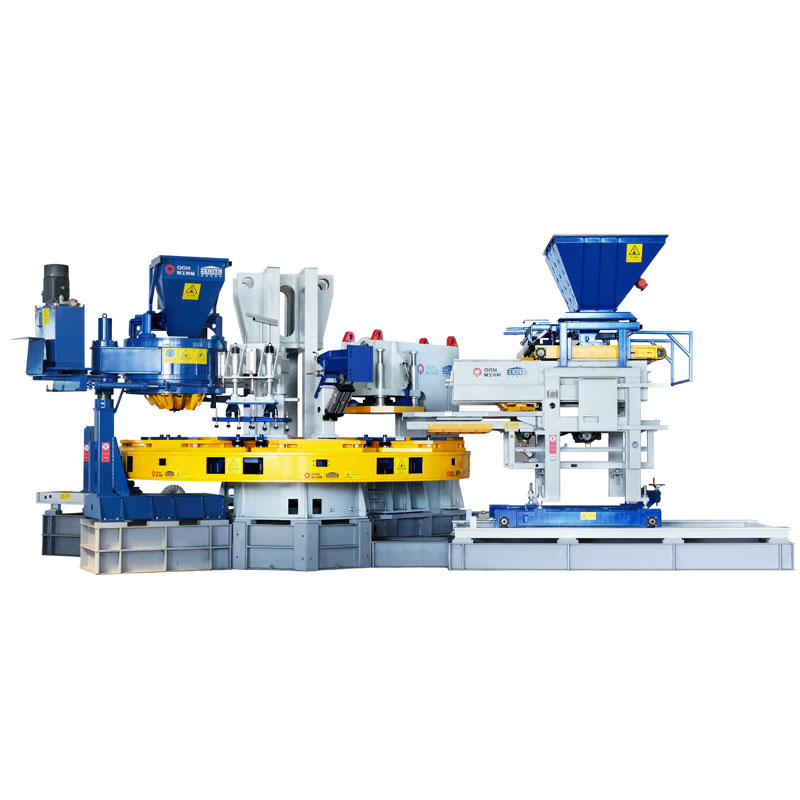
Embodied carbon refers to the total greenhouse gas emissions associated with the production of a material. In concrete block manufacturing, the cement content is the single largest contributor to embodied carbon. Our factory has invested in research to understand how a QGM Block Making Machine can help manufacturers reduce cement content through superior compaction. The hydraulic pressing force of up to 150 tons, combined with high frequency vibration, allows the machine to achieve higher green density with less cement paste. This means that a block produced on our equipment can meet the same compressive strength (e.g., 12 MPa for load bearing walls) with 8 to 12 percent less cement compared to conventional vibration only machines. Over a year of production, this reduction can translate to hundreds of tons of CO₂ savings for a medium sized plant. The ability to use a broader range of aggregates, including crushed construction waste, further reduces the reliance on virgin materials, supporting a circular economy.
In a recent collaboration with a municipal recycling facility in Southeast Asia, a QGM Block Making Machine was used to produce paving blocks using 40 percent recycled concrete aggregate. The resulting blocks met the local pavement standards for pedestrian areas. This demonstrates that sustainable production is not a compromise on quality. Our QGM has documented over 50 successful installations where our equipment has enabled the use of alternative aggregates, significantly lowering the environmental footprint of the production line.
2. What Role Does Energy Efficiency Play in Sustainable Block Production?
Energy consumption is another major factor in the sustainability profile of a block plant. Traditional hydraulic systems often run continuously, wasting energy during the idle parts of the cycle. Our QGM Block Making Machine incorporates a hydraulic system with load sensing technology and an energy accumulator. This system only draws power when the cylinder is actually moving or pressing. This can reduce energy consumption per block by up to 30 percent compared to constant pressure systems. For a plant producing 10,000 blocks per day, that represents a significant reduction in operating costs and carbon emissions. Additionally, the use of servo controlled vibration motors allows for precise frequency adjustment, matching the energy input to the specific material being processed. This not only saves electricity but also reduces the wear on the machine components.
In our experience, the total energy consumption of a modern QGM Block Making Machine is less than 1.5 kWh per cubic meter of concrete produced. This figure is a key metric that our factory uses to benchmark our equipment against industry standards. We have observed that when combined with solar or waste heat recovery systems, the carbon footprint of a block plant can be reduced to levels that qualify for green building certification programs.
3. How Does Process Waste Minimization Improve Resource Yield?
Waste in block production comes from several sources: rejected blocks due to poor compaction, spillage during feeding, and water usage in curing. The QGM Block Making Machine is engineered to minimize each of these. The closed loop feedback system on the feeding mechanism ensures consistent material flow, reducing spillage and overfilling. The mold design, optimized through finite element analysis, ensures that the block is formed with sharp edges and minimal flash, reducing the need for trimming and the associated material loss. The real advantage, however, is in the rejection rate. A typical plant using conventional equipment may have a rejection rate of 3 to 5 percent. With our QGM Block Making Machine, we have documented an average rejection rate of below 1 percent in well maintained operations. This means that for every 1000 blocks produced, up to 40 additional blocks are usable, which directly translates to saved raw materials and reduced waste disposal costs.
Our QGM has developed a training program for plant operators that focuses on optimizing machine settings to minimize waste. This program, which we offer to all our clients, covers material testing, mold maintenance, and compaction adjustments. We have seen plants reduce their waste by over 50 percent within six months of implementing these practices.
4. How Does the Machine Adapt to Sustainable Material Alternatives?
The transition to sustainable construction materials is not just about using less cement; it is also about using different materials. Many manufacturers are exploring the use of fly ash, slag, and other industrial byproducts as partial replacements for cement. These materials have different flow characteristics and setting times. The QGM Block Making Machine is designed to handle a wide range of material consistencies. The variable vibration frequency and amplitude allow the operator to adjust the compaction energy to suit the material. For a higher percentage of fly ash, a longer vibration time with lower frequency may be needed to achieve the required density. The machine's PLC system can store multiple recipes, allowing for quick switching between material types. Our factory has tested our equipment with over 40 different aggregate and binder combinations.
| Material alternative | Typical replacement ratio | Compaction adjustment required | Resulting block strength (MPa) |
| Fly ash (Class F) | Up to 30% cement replacement | Increase vibration time by 10-15% | 8 – 10 |
| Ground granulated blast furnace slag | Up to 50% cement replacement | Reduce press speed, increase pressing force | 10 – 14 |
| Recycled concrete aggregate (RCA) | Up to 60% aggregate replacement | Use lower vibration frequency (35-40 Hz) | 9 – 12 |
| Crushed glass aggregate | Up to 20% aggregate replacement | Increase compaction pressure by 10% | 8 – 10 |
This flexibility makes the QGM Block Making Machine a practical choice for plants that are transitioning to lower carbon inputs. The machine's robust construction also handles the more abrasive nature of recycled materials, with wear resistant liners in the feed hopper and chute extending the service life of these parts.
Frequently Asked Questions About Sustainable Block Production
Final Summary: Building a Sustainable Future with Modern Equipment
The pursuit of sustainable construction material production is both a responsibility and an opportunity. Modern block making technology, such as the QGM Block Making Machine, provides the capabilities needed to reduce cement content, incorporate recycled aggregates, and minimize energy consumption and waste. These improvements are not just good for the environment; they also reduce operating costs and enhance the marketability of the finished product. For manufacturers looking to make a meaningful impact, the choice of machinery is one of the most significant decisions they can make. Our factory has been at the forefront of this transition, and we invite you to explore how our equipment can support your sustainability goals. Quangong Machinery Co., Ltd. is dedicated to providing solutions that meet the demands of both production and the planet.