

How Gear Motors Enhance Torque Output in Heavy-Duty Industrial Applications?
2026-01-20
In heavy-duty industrial environments, torque is not an optional performance feature but a fundamental operating requirement for any industrial motor system. Equipment used in mining, bulk material handling, cement processing, steel production, and automated assembly lines must overcome high inertia at startup, sustain continuous loads, and withstand frequent shock forces during operation. When torque capacity is insufficient, motors struggle to start under load, leading to unstable performance, excessive current draw, and accelerated mechanical wear across connected components.
Our engineering team focuses on ensuring that the motor delivers stable and controllable torque under variable load conditions, allowing industrial equipment to maintain consistent output even during peak demand cycles. In these applications, precision gear engagement combined with reinforced housings supports reliable torque transmission from the motor to the driven equipment over extended operating hours. Our factory develops gear drive solutions based on real-world industrial duty cycles rather than idealized laboratory conditions, helping reduce unplanned downtime and extend overall service life.
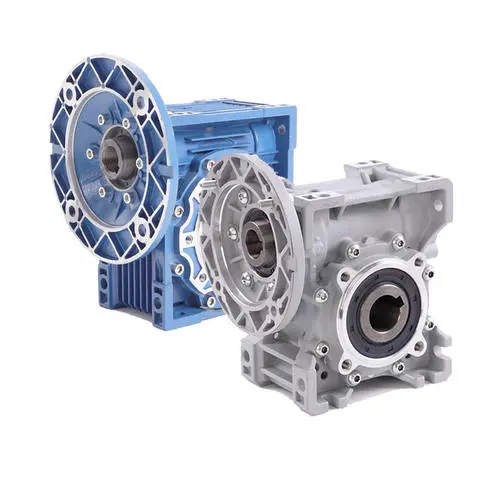
How Do Gear Reduction Mechanisms Multiply Output Torque Efficiently?
Torque multiplication is achieved through gear reduction, where rotational speed is decreased while force is increased at the output shaft. In industrial gear systems, this principle allows compact drive units to deliver high torque without excessive energy consumption. Helical, bevel, and planetary gear stages are selected based on load direction, mounting orientation, and efficiency targets. Our design approach emphasizes optimized gear ratios that balance torque output with mechanical efficiency. By using precision-cut gears and controlled backlash tolerances, power losses are minimized during transmission. Our factory applies load distribution analysis to ensure each gear stage shares stress evenly, preventing localized fatigue. This structural optimization allows the Motor to deliver consistent torque even in applications involving frequent starts, stops, or reversing motion.What Product Parameters Define Torque Performance in Industrial Gear Systems?
Torque capability is determined by a combination of mechanical strength, thermal stability, and dimensional accuracy. Industrial buyers typically evaluate rated torque, service factor, gear material, bearing capacity, and lubrication method before final selection. Our product range is engineered to meet international industrial standards and field-proven performance benchmarks.
| Rated Torque Range | 300 Nm to 120000 Nm |
| Gear Type | Helical, Bevel, Planetary |
| Service Factor | 1.4 to 2.0 |
| Gear Material | Alloy Steel, Case Hardened |
| Bearing Type | Tapered Roller Bearings |
| Lubrication | Oil Bath or Forced Lubrication |
Our production process ensures tight dimensional control across all gear stages, allowing torque to be transmitted smoothly without vibration spikes. Our factory conducts load simulation testing under continuous operation to validate real torque performance before shipment.
How Do Structural Design and Materials Support Long-Term Torque Stability?
High torque output places extreme stress on shafts, bearings, and housings. Structural rigidity is essential to prevent misalignment, which can rapidly degrade gear teeth and seals. Industrial-grade housings are typically cast iron or ductile iron, selected for their vibration damping and load-bearing capabilities. Our engineers reinforce shaft geometry and bearing placement to maintain alignment under sustained loads. Heat-treated alloy gears provide surface hardness while retaining core toughness, allowing them to withstand shock loads without cracking. Our factory integrates thermal expansion analysis into the design phase, ensuring torque stability across wide operating temperature ranges. This approach allows the Motor to maintain rated torque output even in harsh industrial environments.How Does Application Matching Maximize Torque Output in Real-World Use?
Even the highest-rated drive unit can underperform if improperly matched to the application. Torque requirements vary significantly between conveyors, mixers, crushers, and extruders. Factors such as duty cycle, load variation, and installation orientation must be considered during selection. Our technical team works closely with system integrators to analyze actual operating conditions, not just nominal specifications. By aligning gear ratios, mounting styles, and cooling methods with application demands, torque output is fully utilized without overengineering. This application-driven approach has positioned Saifu Vietnam Company Limited as a reliable partner for heavy-duty industrial projects across multiple sectors. Our solutions allow the Motor to operate within its optimal torque range, reducing energy waste and mechanical stress.Frequently Asked Questions
Q1: How Gear Motors Enhance Torque Output in Heavy-Duty Industrial Applications?
They enhance torque output by using gear reduction stages that convert high-speed input into increased mechanical force, allowing equipment to move heavy loads reliably without oversizing the drive system.
Q2: Why Are Gear Motors Preferred Over Direct-Drive Systems in High-Torque Industrial Environments?
Gear motors provide controlled torque multiplication and load distribution across gear teeth, which reduces mechanical stress, improves efficiency, and ensures stable operation under continuous or shock loading conditions.
Q3: What Operational Factors Should Be Considered to Maintain Torque Performance in Heavy-Duty Gear Motor Applications?
Key factors include correct gear ratio selection, proper lubrication, alignment accuracy, thermal management, and matching the gear motor to the actual duty cycle to prevent torque loss and premature wear.