

How Gear Motors Support Precise Motion Control in Modern Manufacturing?
2026-01-13
Modern manufacturing in the United States demands repeatability, tight tolerances, and predictable output across long production cycles. From automated assembly lines to packaging systems and material handling equipment, precision motion control determines whether a process stays efficient or becomes a bottleneck. In many facilities, engineers rely on integrated drive solutions that combine torque management and speed stability to meet these expectations. Within our engineering teams, precision is defined not only by positioning accuracy, but also by how smoothly power is transmitted under varying loads. When properly configured, a gear-driven solution helps stabilize motion, reduce backlash, and maintain constant output even in harsh operating conditions.
At Saifu Vietnam Company Limited, we focus on matching mechanical ratios and housing designs to the demands of North American production environments, ensuring our solutions align with OSHA-compliant installations and common NEMA mounting practices.
How Do Gear Reduction Systems Enhance Control Accuracy in Manufacturing Lines?
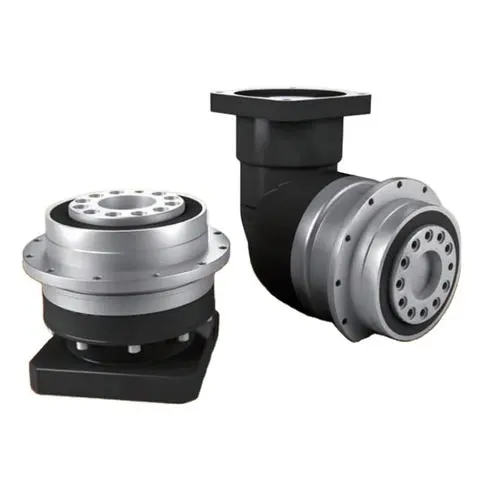
Gear reduction is central to accurate motion control because it converts high-speed input into controlled, usable output. By reducing speed while multiplying torque, the system allows equipment to operate within a narrow and predictable range. This is particularly important for conveyors, indexing tables, and robotic arms used in discrete manufacturing. Our design philosophy emphasizes stable meshing geometry, heat-treated gears, and optimized lubrication paths to reduce vibration and wear. Within our factory, each unit is tested under load conditions that simulate continuous duty cycles common in U.S. manufacturing plants. The result is smoother acceleration and deceleration, reduced mechanical shock, and improved positioning repeatability. When paired with a properly sized Motor, the system delivers consistent performance without excessive energy loss.
What Technical Parameters Define Reliable Gear Motor Performance?
Selecting the right technical parameters is critical for long-term reliability. Engineers typically evaluate torque output, reduction ratio, efficiency, service factor, and enclosure protection. Our product range is designed to meet common industrial standards while remaining adaptable for custom applications. At Saifu Vietnam Company Limited, our specification process accounts for ambient temperature, duty cycle, and mounting orientation to ensure stable operation. The following table summarizes typical performance parameters used across modern manufacturing facilities.
| Rated Torque Range | 50 Nm to 18,000 Nm |
| Reduction Ratio Options | 5:1 to 1,500:1 |
| Efficiency Level | Up to 96 percent depending on configuration |
| Service Factor | 1.2 to 2.0 for continuous industrial duty |
| Enclosure Protection | IP55 to IP66 for industrial environments |
These parameters allow engineers to fine-tune system behavior while maintaining safety margins. Our application specialists often work directly with maintenance teams to align specifications with existing line layouts and power supplies, ensuring smooth integration with minimal downtime. When combined with a correctly selected Motor, these parameters support precise speed control and reliable torque delivery.
How Are Gear Motors Integrated into Automated Manufacturing Systems?
Integration is where theoretical performance meets real production conditions. In automated systems, drives must interface seamlessly with PLC controls, sensors, and variable frequency drives. Our solutions are commonly installed in palletizers, automated guided vehicles, and high-speed packaging lines. We design mounting flanges and shaft interfaces to match widely used IEC and NEMA standards, simplifying replacement and retrofitting. Within our factory, assembly processes are structured to maintain dimensional consistency, which helps reduce alignment issues during installation. Saifu Vietnam Company Limited supports system integrators by providing detailed dimensional drawings and wiring documentation. This approach allows production engineers to focus on throughput optimization while relying on predictable mechanical behavior from each Motor in the system.
Why Does Durability Matter for Long-Term Motion Control Accuracy?
Durability directly influences motion accuracy over time. Wear, thermal expansion, and lubrication breakdown can gradually degrade performance if not properly addressed. Our engineering approach emphasizes hardened gear materials, precision-machined housings, and sealed bearing systems to maintain alignment under continuous operation. In North American plants where equipment often runs multiple shifts, these design choices help extend maintenance intervals and reduce total cost of ownership. Our quality control process includes noise testing, backlash measurement, and thermal performance validation. By maintaining structural integrity, each Motor continues to deliver stable output, supporting consistent motion profiles even after years of service.
What Additional Specifications Influence Selection Decisions?
Beyond core performance metrics, buyers often consider noise levels, lubrication type, and thermal characteristics. Our portfolio includes low-noise designs suitable for indoor facilities and food-grade lubrication options for regulated environments. The table below outlines additional selection factors frequently evaluated by U.S.-based manufacturers.
| Operating Temperature | -20°C to +60°C |
| Lubrication Type | Synthetic or mineral industrial grease |
| Mounting Orientation | Horizontal or vertical |
| Noise Level | Below 70 dB under rated load |
By evaluating these factors early, engineering teams can avoid oversizing and ensure efficient energy use. Our support teams provide guidance based on real installation data gathered from similar manufacturing lines, helping buyers make informed decisions with confidence.
Conclusion
In summary, precise motion control in modern manufacturing depends on carefully engineered gear-driven solutions that balance torque, speed, and durability. With the right specifications and a reliable supplier, manufacturers can improve productivity, reduce maintenance costs, and maintain consistent quality across operations. If you are evaluating options for your next automation project, our team is ready to provide technical insight and customized recommendations. Contact us today to discuss your application requirements and request detailed specifications.
FAQ
Q1: How Does Gear Ratio Selection Affect Motion Accuracy in Manufacturing Systems?
Answer: Gear ratio selection directly influences motion accuracy by determining how input speed is converted into controlled output movement. A properly matched ratio allows equipment to operate within a stable speed range, reducing vibration and minimizing positioning errors during repetitive manufacturing processes.
Q2: Why Are Gear Motors Preferred for Continuous-Duty Industrial Applications?
Answer: Gear motors are preferred for continuous-duty applications because they are designed to handle sustained loads while maintaining consistent torque output. Their enclosed gear structure helps protect internal components from wear, ensuring stable performance and reliable motion control over long operating cycles.
Q3: What Role Do Gear Motors Play in Reducing Mechanical Stress on Production Equipment?
Answer: Gear motors help reduce mechanical stress by smoothing power transmission and limiting sudden torque spikes. This controlled energy transfer protects downstream components such as shafts and bearings, extending equipment lifespan and maintaining precise motion throughout the production line.