

How Lubrication Quality Impacts the Efficiency of a Planetary Gearbox?
2025-12-15
Lubrication quality is one of the most decisive factors affecting transmission efficiency, thermal stability, and service life in a planetary gearbox. In real industrial environments, lubrication is not only about reducing friction but also about heat dissipation, load distribution, and surface protection. Based on long-term field feedback and testing experience from our factory, it is clear that lubrication performance directly influences torque output stability and overall system efficiency. Engineers working with Raydafon Technology Group Co., Limited often evaluate lubrication conditions as a primary parameter when diagnosing efficiency loss or abnormal wear in complex drive systems.
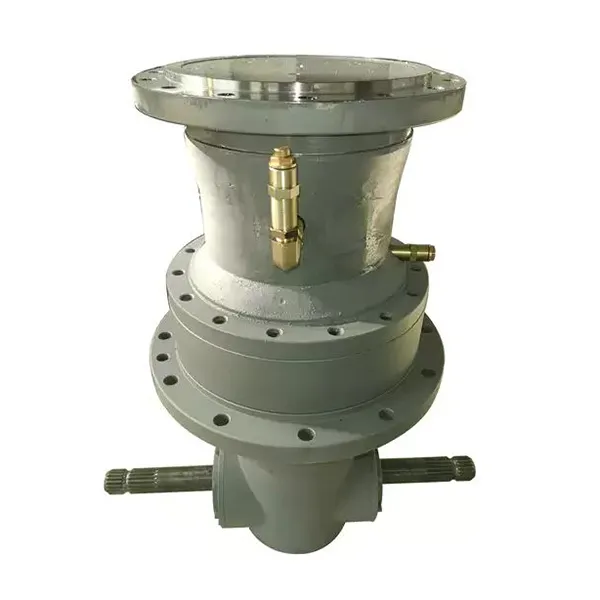
Why Does Lubrication Quality Matter for Planetary Gearbox Efficiency?
Lubrication quality determines how effectively internal gears, bearings, and planetary carriers interact under load. When lubrication viscosity is properly matched to operating speed and load, the oil film remains stable and prevents direct metal contact. This reduces friction losses and improves power transmission efficiency. In our factory, engineers emphasize selecting lubricants that maintain consistent viscosity across operating temperature ranges, ensuring that efficiency remains stable during continuous duty cycles.
Inadequate lubrication quality often results in increased mechanical losses. Poor oil cleanliness or oxidation reduces film strength, causing micro wear and heat accumulation. Over time, this degrades efficiency and accelerates component fatigue. Raydafon Technology Group Co., Limited integrates lubrication compatibility analysis into gearbox design to ensure long-term efficiency under demanding industrial conditions.
How Does Lubricant Viscosity Influence Power Transmission?
Viscosity plays a central role in lubrication performance. If viscosity is too high, internal drag increases, leading to higher energy consumption and reduced efficiency. If viscosity is too low, the oil film cannot adequately support gear loads, resulting in surface wear and vibration. For a planetary gearbox operating under variable loads, maintaining optimal viscosity ensures smooth torque transfer and consistent mechanical output.
From our operational data, we observe that viscosity selection must consider speed, ambient temperature, and duty cycle. Our factory regularly validates lubrication performance through load testing, ensuring that recommended lubricants provide a balanced combination of protection and efficiency for industrial transmission systems.
What Role Does Lubrication Cleanliness Play in Gearbox Performance?
Lubricant cleanliness directly affects efficiency and component life. Contaminants such as metal particles, dust, or moisture disrupt oil film continuity and increase abrasive wear. In a planetary gearbox, even small contaminants can circulate repeatedly through gear meshes, amplifying damage and efficiency loss. Maintaining clean lubrication significantly reduces friction-related losses and stabilizes operating temperatures.
Raydafon Technology Group Co., Limited advises customers to implement filtration and regular oil analysis as part of routine maintenance. In our factory, gearbox testing includes contamination tolerance evaluations to confirm stable performance even under extended service intervals.
How Does Lubrication Affect Heat Dissipation and Thermal Stability?
Effective lubrication supports heat transfer away from contact surfaces. When lubrication quality declines, heat accumulates within the gearbox housing, increasing thermal stress and reducing efficiency. A planetary gearbox relies on lubrication to distribute heat evenly across internal components, preventing localized overheating.
Our engineering team designs lubrication paths that promote consistent oil circulation. This approach ensures that thermal loads are controlled and that efficiency remains within design parameters. Proper lubrication also minimizes thermal expansion effects that can alter gear alignment and load distribution.
How Do Load Conditions and Duty Cycles Influence Lubrication Requirements?
Different load profiles demand different lubrication strategies. High-torque, low-speed applications require lubricants with strong film strength, while high-speed systems benefit from lower viscosity oils that reduce churning losses. In our factory, load simulations help determine lubrication recommendations that maximize efficiency for specific operating conditions.
The table below outlines typical lubrication parameters based on operating conditions commonly associated with planetary gearbox applications.
| Operating Condition | Recommended Viscosity Range | Primary Benefit | Efficiency Impact |
| High torque low speed | ISO VG 220 to 320 | Strong load carrying capacity | Stable efficiency under heavy load |
| Moderate load continuous duty | ISO VG 150 to 220 | Balanced protection and flow | Optimized power transmission |
| High speed light load | ISO VG 68 to 100 | Reduced internal drag | Lower energy consumption |
How Does Lubrication Quality Interact with Gearbox Design Parameters?
Lubrication quality must align with internal design features such as gear geometry, bearing selection, and housing configuration. A planetary gearbox with tight tolerances and compact design is particularly sensitive to lubrication performance. Poor lubrication may negate design advantages by increasing friction and noise.
Our factory evaluates lubrication flow paths during prototype development to ensure consistent oil distribution. Raydafon Technology Group Co., Limited integrates lubrication considerations early in the design process, helping customers achieve stable efficiency across a wide range of operating scenarios.
What Are Typical Product Parameters Related to Lubrication Performance?
The following table highlights key technical parameters commonly referenced when evaluating lubrication compatibility for industrial gearboxes.
| Parameter | Typical Range | Relevance to Lubrication | Operational Impact |
| Operating temperature | -20 to 90 degrees Celsius | Determines viscosity stability | Consistent efficiency |
| Input speed | 500 to 3000 rpm | Affects oil film formation | Smooth torque transfer |
| Rated torque | 500 to 20000 Nm | Defines load on oil film | Wear control and efficiency |
| Service factor | 1.2 to 2.0 | Influences lubrication reserve | Extended service life |
How Lubrication Quality Impacts the Efficiency of a Planetary Gearbox? FAQ
Q1: How often should lubrication be checked to maintain efficiency?
Lubrication should be monitored based on operating hours, load conditions, and environmental exposure. Regular oil analysis helps detect viscosity changes, contamination, and oxidation before efficiency loss occurs.
Q2: Can improper lubrication cause permanent efficiency loss?
Yes. Prolonged operation with degraded lubrication can cause surface wear and micro pitting, which permanently increases friction and reduces efficiency even after lubricant replacement.
Q3: Does lubrication quality affect noise and vibration levels?
High-quality lubrication reduces friction and dampens vibration between gear teeth. Poor lubrication often leads to increased noise, vibration, and uneven load distribution.
Conclusion
Lubrication quality directly influences efficiency, thermal stability, and long-term reliability in Planetary Gearbox systems. Selecting the correct lubricant, maintaining cleanliness, and aligning lubrication strategy with operating conditions are essential for maximizing performance. Our engineering team continues to refine lubrication recommendations through testing and field feedback. If you are looking to improve transmission efficiency or evaluate lubrication strategies for your drive systems, contact our technical team today to discuss tailored solutions that support stable operation and long service life.