

How Material Selection Affects the Performance of Screw Gears?
2026-01-21
Why Does Material Choice Directly Influence Screw Gear Load Capacity?
Material selection determines how a screw gear handles axial loads, surface pressure, and continuous torque transmission under real operating conditions. In industrial applications across North America and Europe, engineers often evaluate load rating, Hertzian contact stress, and fatigue life when specifying gear materials. From our experience working with agricultural machinery, conveyors, and automated equipment, material density and microstructure directly affect load distribution across the tooth flank. When producing Precision Gear components, our design team prioritizes stable grain structure and consistent hardness to ensure predictable load performance. Improper material pairing can lead to premature wear, surface pitting, or tooth deformation, especially under high torque or shock loads encountered in heavy-duty applications.
How Do Different Metals Impact Wear Resistance and Service Life?
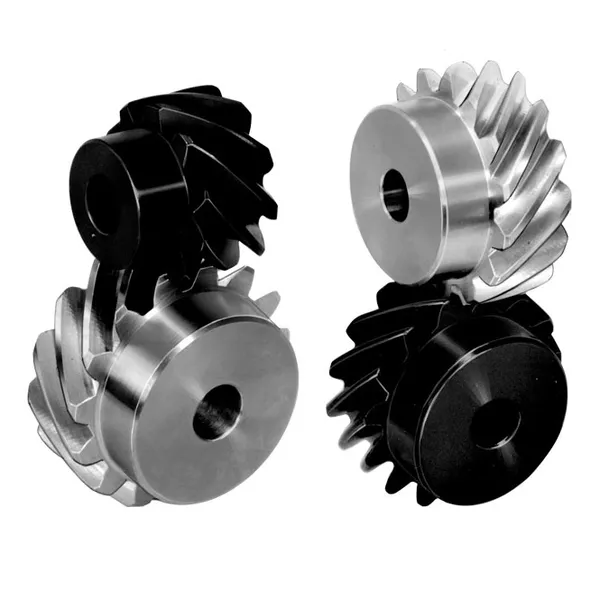
Wear resistance is one of the most critical performance indicators for screw gears operating under sliding contact. Bronze alloys, alloy steels, and case-hardened carbon steels are commonly used depending on speed and load requirements. Bronze offers excellent anti-galling properties and is widely used for worm wheels, while alloy steel provides superior strength for worm shafts. In our factory, controlled heat treatment processes such as carburizing and nitriding are applied to improve surface hardness without compromising core toughness. This balance allows our Precision Gear products to achieve longer service intervals and reduced maintenance costs in industrial gearboxes, packaging lines, and lifting systems where continuous operation is required.What Role Does Thermal Conductivity Play in Screw Gear Performance?
Heat generation is unavoidable in screw gear operation due to sliding friction between mating surfaces. Materials with higher thermal conductivity dissipate heat more efficiently, reducing the risk of lubricant breakdown and thermal expansion. Bronze and aluminum bronze alloys are frequently selected for applications requiring steady temperature control. Our engineering team evaluates operating speed, duty cycle, and ambient conditions to determine optimal material combinations. Through consistent material sourcing and in-house inspection, our factory ensures stable thermal behavior across every Precision Gear assembly, helping customers maintain performance consistency even under prolonged operating cycles.How Does Material Compatibility Affect Noise and Efficiency?
Noise reduction and mechanical efficiency are increasingly important in modern equipment design, especially for indoor industrial environments. Material compatibility between worm and wheel directly influences friction coefficients and vibration levels. Steel-to-bronze pairings are widely adopted due to their smooth meshing characteristics and reduced noise output. Our production standards emphasize precise machining tolerances and surface finishing to complement material selection. By combining optimized materials with accurate tooth geometry, our Precision Gear solutions deliver smoother motion transfer and higher efficiency in automation systems, material handling equipment, and precision drives.Why Are Material Standards Critical for Industrial Compliance?
Compliance with international material standards ensures consistent quality and predictable performance. ASTM, DIN, and ISO specifications are commonly referenced by engineers when selecting screw gear materials. Raydafon integrates these standards into raw material procurement and production workflows to meet the expectations of global OEMs and distributors. Our documentation includes material certificates, hardness reports, and dimensional inspections to support traceability. By aligning material selection with recognized standards, our factory supports reliable integration of Precision Gear products into regulated industrial systems.
| Material Type | Typical Hardness | Common Applications | Key Advantages |
| Alloy Steel | HRC 28–35 | Worm Shafts | High strength, good fatigue resistance |
| Phosphor Bronze | HB 90–120 | Worm Wheels | Low friction, excellent wear resistance |
| Aluminum Bronze | HB 140–170 | Heavy Load Gear Sets | High thermal conductivity, corrosion resistance |
How Do Material Properties Influence Manufacturing Precision?
Machinability and dimensional stability are essential during gear cutting and finishing processes. Materials with uniform composition allow tighter tolerances and smoother tooth profiles. Raydafon Technology Group Co.,Limited applies CNC hobbing and grinding techniques tailored to each material grade. Our production engineers adjust cutting speeds, tool selection, and finishing methods to match material behavior. This approach ensures consistent tooth engagement and reliable backlash control across every Precision Gear unit manufactured in our factory.
| Parameter | Standard Range | Customization Options |
| Module | 1–12 | Custom upon request |
| Gear Ratio | 5:1–80:1 | Engineered per application |
| Surface Finish | Ra 0.8–1.6 | Fine grinding available |
| Heat Treatment | Carburized / Nitrided | Process matched to material |
FAQ: How Material Selection Affects the Performance of Screw Gears?
Q1: How material selection affects the performance of screw gears in high-load environments?
Material selection affects load capacity, wear resistance, and thermal stability. High-strength alloy steels combined with wear-resistant bronze alloys help distribute contact stress evenly and reduce surface fatigue under continuous heavy loads.
Q2: How material selection affects the performance of screw gears in terms of efficiency?
Materials with lower friction coefficients improve meshing efficiency and reduce energy loss. Proper steel and bronze pairings minimize sliding resistance, allowing smoother torque transmission and lower operating temperatures.
Q3: How material selection affects the performance of screw gears over long service cycles?
Durable materials with stable microstructures maintain tooth geometry and surface integrity over time. This reduces maintenance frequency and extends operational life in demanding industrial applications.