

How Mica Sheets Support Reliable Performance in High-Frequency Devices
2026-05-19
Modern high-frequency electronic systems operate under demanding electrical and thermal conditions. Components inside RF modules, microwave systems, induction equipment, power supplies, transformers, and communication hardware are exposed to rapid signal transmission, elevated surface temperatures, and continuous voltage fluctuation. In these environments, insulation failure can directly affect signal integrity, equipment lifespan, and operational safety.
Because of these challenges, manufacturers increasingly rely on Mica Sheet materials for electrical insulation and thermal separation. Mica-based insulation has become widely recognized across industrial electronics due to its stable dielectric behavior and resistance to thermal stress. Our engineering team has seen growing demand from device manufacturers seeking dependable insulation solutions that maintain performance even during long operating cycles.
Our factory supplies industrial insulation materials designed for electronic, electrical, and thermal management applications. Ningbo Kaxite Sealing Materials Co., Ltd. focuses on material consistency, machining precision, and stable production quality for customers requiring dependable insulation systems.
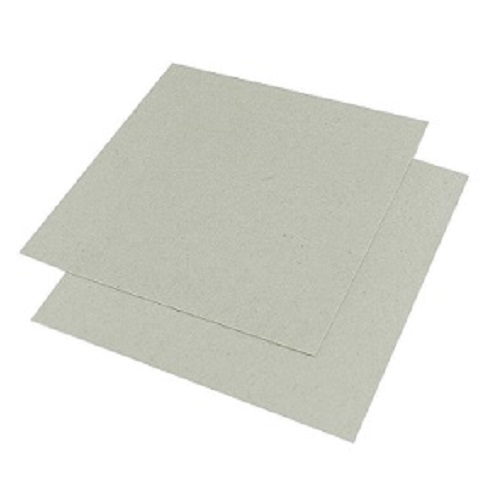
How Does Mica Structure Improve Electrical Reliability in RF and Power Equipment?
The layered crystal structure of mica gives it excellent dielectric properties, low conductivity, and strong resistance to arc penetration. In high-frequency equipment, insulation materials must prevent leakage current while remaining dimensionally stable under heat. This is one reason why Mica Sheet products are widely used in capacitor insulation, inverter systems, heating devices, and electronic assembly structures.
Unlike some synthetic materials that may deform under continuous heat exposure, mica maintains structural stability at elevated temperatures. This helps reduce insulation drift and improves long-term operational consistency. Our technical experience shows that stable dielectric insulation contributes significantly to maintaining predictable device performance in demanding industrial environments.
In many North American and European manufacturing sectors, engineers prioritize insulation materials capable of meeting thermal endurance and dielectric safety standards simultaneously. Our production process supports custom thickness, CNC machining, punching, and fabricated insulation parts according to project requirements.
| Property | Typical Value |
| Temperature Resistance | Up to 500°C to 1000°C depending on grade |
| Dielectric Strength | 18 to 25 KV/mm |
| Volume Resistivity | Greater than 10^12 Ω·cm |
| Thermal Conductivity | Low thermal transfer rate |
| Water Absorption | Very low under controlled conditions |
| Machinability | Suitable for cutting and stamping |
What Makes Thermal Stability Important for High-Frequency Device Manufacturing?
High-frequency assemblies often generate concentrated heat around transformers, semiconductor modules, induction coils, and switching components. If insulation materials expand unevenly or degrade under heat cycling, system reliability may decline over time. That is why many equipment manufacturers choose Mica Sheet materials for applications requiring thermal endurance and dimensional consistency.
Thermal stability becomes especially important in telecom infrastructure, industrial automation, renewable energy equipment, and electric heating systems. Our customers frequently request insulation materials capable of handling continuous operation without cracking, warping, or carbonization. Our factory addresses these demands through controlled material selection and stable lamination processing.
Ningbo Kaxite Sealing Materials Co., Ltd. provides both rigid and flexible mica insulation solutions suitable for electrical panels, induction furnaces, motor insulation structures, and high-temperature assemblies. Our quality team performs routine inspection on thickness tolerance, surface finish, and dielectric integrity before shipment.
| Available Type | Industrial Application |
| Rigid Mica Plate | Electrical insulation barriers |
| Flexible Mica Roll | Cable wrapping and thermal protection |
| Phlogopite Mica | High-temperature electrical systems |
| Muscovite Mica | Precision electronic insulation |
| Punched Components | Custom electrical assemblies |
| CNC Machined Parts | Industrial equipment integration |
Why Are Precision Processing and Material Consistency Essential for Industrial Buyers?
In electronic manufacturing, insulation materials must fit precisely within compact assemblies. Even minor dimensional variation can affect mounting alignment, airflow spacing, or insulation distance. That is why our factory maintains strict production control during pressing, laminating, cutting, and machining operations.
Many industrial buyers request customized Mica Sheet components for transformers, switching cabinets, power modules, and thermal shields. Our manufacturing team supports drawing-based production as well as sample-based development for OEM projects. Consistent quality across production batches helps customers maintain assembly efficiency and reduce field replacement risks.
In practical industrial use, insulation materials are expected to support both electrical protection and long-term durability. Our experience working with equipment manufacturers shows that stable material performance contributes directly to maintenance reduction and operational reliability.
Ningbo Kaxite Sealing Materials Co., Ltd. continues supplying insulation materials for industrial electronics, heating systems, metallurgical equipment, and electrical infrastructure projects across multiple international markets.
What Questions Do Engineers Commonly Ask About Mica Insulation Materials?
Q1: Why is mica widely used in high-frequency electrical equipment?
A1: Mica offers excellent dielectric strength, thermal resistance, and dimensional stability. These properties help prevent electrical leakage and insulation failure in systems operating under high voltage and elevated temperature conditions.
Q2: Can Mica Sheet materials withstand continuous industrial heat exposure?
A2: Yes. Depending on the mica type and binder system, these materials can maintain structural and electrical stability under prolonged exposure to high temperatures. This makes them suitable for industrial heating equipment, transformers, and electrical insulation barriers.
Q3: What factors should buyers consider when selecting mica insulation materials?
A3: Buyers should evaluate operating temperature, dielectric requirements, mechanical strength, thickness tolerance, machining requirements, and application environment. Selecting the proper grade helps improve long-term reliability and equipment safety.
How Can the Right Insulation Supplier Improve Long-Term Equipment Reliability?
Reliable insulation performance depends not only on raw material properties but also on production control, technical support, and consistent quality management. Industrial buyers often require stable lead times, custom fabrication capability, and dependable product documentation for ongoing manufacturing programs.
Our factory focuses on supplying industrial insulation materials that meet practical application requirements in high-frequency systems and thermal protection environments. Whether customers need standard insulation panels or customized Mica Sheet components, our production team supports flexible manufacturing and technical coordination throughout the sourcing process.
If you are evaluating insulation materials for RF systems, induction heating equipment, or industrial electrical assemblies, contact our team for technical support and product recommendations. Ningbo Kaxite Sealing Materials Co., Ltd. can provide customized insulation solutions designed for reliable industrial performance and stable long-term operation.