

How Neoprene Cork Rubber Sheets Enhance Sealing in Industrial Machinery?
2026-02-06
In industrial environments across North America and Europe, sealing performance directly affects operational uptime, worker safety, and compliance with OSHA and ISO standards. Machinery used in power generation, oil and gas processing, HVAC systems, and heavy manufacturing is constantly exposed to vibration, thermal cycling, oils, fuels, and aggressive media. When sealing materials fail, the result is leakage, pressure loss, contamination, and unplanned downtime that increases total cost of ownership.
From our experience supporting OEMs and maintenance contractors, inconsistent gasket compression and material incompatibility remain two of the most common causes of seal failure. Our engineering team has worked closely with customers to address these issues by optimizing material density, compressibility, and oil resistance based on real operating conditions. This practical approach is a key reason why Ningbo Kaxite Sealing Materials Co., Ltd. has built long term partnerships with industrial users who prioritize durability and predictable sealing performance.
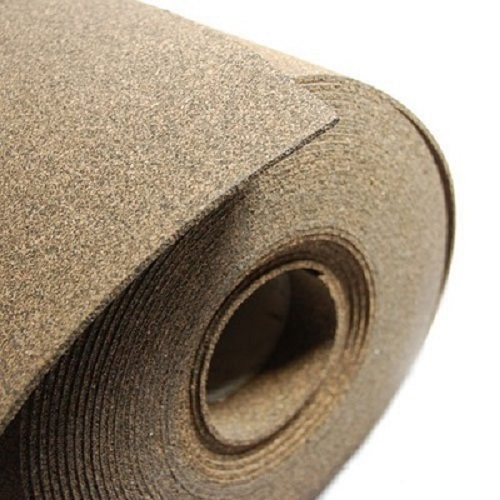
How Do Neoprene Cork Rubber Sheets Improve Compression and Recovery?
Neoprene Cork Rubber Sheet materials combine granulated cork with synthetic neoprene rubber, creating a composite structure that balances flexibility and structural integrity. Under bolt load, the cork component allows controlled compression, while neoprene provides elastic recovery that maintains sealing stress even after repeated load cycles. This characteristic is essential in flanged joints and mechanical housings where vibration and thermal expansion are unavoidable.
Our production process focuses on uniform cork granule dispersion and precise binder ratios to ensure consistent compression set values. In our factory, every batch is tested for thickness tolerance, rebound resilience, and fluid absorption. These parameters allow seals to conform to surface irregularities without extruding or cracking over time. Engineers often select Neoprene Cork Rubber Sheet for gearboxes, compressors, and transformer covers because it maintains dimensional stability while accommodating micro movements between mating surfaces.
What Technical Parameters Define Industrial Grade Sealing Performance?
Industrial buyers typically evaluate sealing materials based on compressibility, recovery, tensile strength, and resistance to oils and fuels. To support transparent specification decisions, we provide detailed technical data that aligns with ASTM and DIN testing methods. Our technical documentation reflects conditions rather than laboratory ideal scenarios, which helps reduce mismatch between design assumptions and field performance.
| Density | 0.9 to 1.2 g per cubic centimeter |
| Compressibility | 35 to 65 percent at 300 psi |
| Recovery | Minimum 70 percent |
| Tensile Strength | Greater than 1.5 MPa |
| Temperature Range | Minus 40 to plus 120 degrees Celsius |
These values make Neoprene Cork Rubber Sheet suitable for both static and semi dynamic sealing applications. Our factory routinely customizes sheet thickness and hardness to meet specific torque requirements requested by equipment manufacturers.
How Does Material Resistance Extend Service Life in Harsh Environments?
Industrial machinery often operates in contact with lubricating oils, diesel fuel, refrigerants, and hydraulic fluids. Neoprene based binders provide inherent resistance to petroleum based media, while cork cells limit fluid migration through the gasket body. This dual protection reduces swelling and loss of sealing stress over extended service intervals.
Our material engineers have optimized formulations to perform reliably in outdoor installations where UV exposure and moisture are additional concerns. In applications such as wind turbine nacelles and agricultural machinery, Neoprene Cork Rubber Sheet maintains sealing integrity despite seasonal temperature fluctuations. Kaxite Sealing continues to refine formulations based on feedback from field installations, ensuring our products remain aligned with evolving industry requirements.
| Oil Resistance | Excellent with minimal volume change |
| Fuel Resistance | Suitable for diesel and mineral oils |
| Water Absorption | Less than 10 percent |
| Aging Resistance | Stable after long term heat exposure |
Why Do OEMs and Maintenance Teams Prefer Proven Composite Sealing Materials?
OEM engineers prioritize repeatability and predictable performance when selecting gasket materials. Composite cork rubber solutions reduce installation variability by providing consistent torque response across large flange surfaces. Maintenance teams benefit from easier removal and reduced flange damage during replacement, which lowers labor time and repair costs.
Our factory supports both standard sheet formats and die cut gaskets to simplify supply chain integration. With decades of manufacturing experience, Ningbo Kaxite Sealing Materials Co., Ltd. works closely with procurement and engineering departments to ensure material traceability and stable long term supply. This collaboration helps customers standardize sealing solutions across multiple equipment platforms while meeting regional compliance expectations.
How Neoprene Cork Rubber Sheets Enhance Sealing in Industrial Machinery?
Q1: How do composite cork rubber materials maintain sealing pressure under vibration?
The combination of compressible cork granules and elastic rubber binder allows the gasket to absorb vibration while continuously recovering its shape. This balance ensures stable sealing pressure even when machinery operates under constant mechanical movement or load fluctuations.
Q2: Why are these sealing materials suitable for oil and fuel exposed environments?
The rubber binder provides strong resistance to petroleum based oils and fuels, while the cork structure limits fluid penetration. This reduces swelling and degradation, helping seals retain their mechanical properties over extended service periods.
Q3: How does material structure help compensate for flange surface irregularities?
The controlled compressibility of the composite material allows it to conform to minor surface imperfections without excessive deformation. This improves contact uniformity across flange faces and significantly reduces the risk of leakage in industrial assemblies.
What Long Term Value Do Advanced Sealing Solutions Deliver?
Selecting the right sealing material is not only about immediate performance but also about lifecycle cost reduction. By reducing leakage, unplanned downtime, and frequent gasket replacement, advanced cork rubber composites deliver measurable operational savings. Our team focuses on providing materials that integrate seamlessly into existing designs while improving reliability under real operating conditions.
If you are evaluating sealing solutions for demanding industrial applications, our engineers are ready to support material selection and customization. Contact our technical team to discuss specifications, samples, and tailored solutions that match your machinery requirements and production goals.