

How Proper Installation Affects the Performance of Spiral Wound Gaskets?
2026-01-23
The long-term reliability and leak-tight integrity of a pressurized flanged connection hinge not only on the quality of the gasket but, more critically, on the correctness of its installation. A spiral wound gasket, a sophisticated sealing component, can only perform its intended function when it is properly seated and compressed within the flange assembly. Even the most premium gasket from a trusted supplier like Ningbo Kaxite Sealing Materials Co., Ltd. can fail prematurely if installation protocols are ignored. This guide delves into the precise relationship between installation practices and the operational performance of spiral wound gaskets, outlining the consequences of improper handling and providing a clear path to achieving a dependable, lasting seal.
The Critical Link Between Installation and Gasket Function
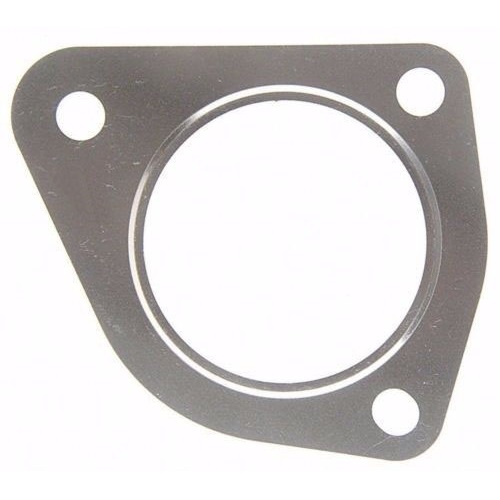
Spiral wound gaskets are engineered for resilience, combining metal windings and filler material to create a seal that accommodates pressure, temperature, and flange rotation. Their performance is directly activated and defined during the bolting process. Correct installation ensures the gasket compresses uniformly, allowing the metal windings to provide spring-like recovery while the filler flows to micro-imperfections. This creates the initial seal. Conversely, misalignment, uneven bolt torque, or poor flange condition can cause asymmetric loading. This leads to localized over-compression, which crushes the gasket's structure, or under-compression, which fails to activate the sealing elements. Both scenarios result in a direct path for leakage. In our factory, we witness that most field failures trace back not to manufacturing defects, but to flaws in the installation procedure.
Essential Product Parameters for Informed Installation
Understanding the key parameters of spiral wound gaskets is the first step toward proper installation. These specifications dictate the gasket's behavior under bolt load and environmental stress. At Kaxite Sealing, our engineering team designs gaskets with precise characteristics to match your application. The table below outlines the fundamental parameters that installers must be aware of before proceeding.
| Parameter | Description & Impact on Installation |
| Density (Plys per Inch) | Higher density provides more resistance to compression, requiring higher initial bolt load. It offers better recovery for cyclic service. |
| Filler Material (e.g., Graphite, PTFE, Mica) | Determines temperature and chemical compatibility. Graphite filler requires careful handling to prevent tearing during placement. |
| Metal Windings (e.g., 304SS, 316SS, Inconel) | Provides structural strength and recovery. Thinner gauges are more flexible but require careful alignment to prevent buckling. |
| Inner and Outer Ring | Control rings prevent over-compression and provide radial stability. They must be oriented correctly (inner ring inside, outer ring outside). |
| Gasket Thickness | Standard thicknesses are 4.5mm and 3.2mm. Thicker gaskets require more bolt stretch and elongation to achieve proper seating stress. |
Our standard spiral wound gaskets are manufactured to meet these precise specifications. For instance, our standard graphite-filled gaskets are engineered for a balanced compression-recovery ratio, which is only fully utilized when the recommended installation stress is applied evenly across the flange face.
Step-by-Step Guide to Correct Installation Procedure
A methodical approach is non-negotiable. First, inspect the flange faces for scratches, warpage, or old gasket material. Clean the surfaces thoroughly. Second, verify the gasket is the correct size, type, and material for the service. Third, align the gasket concentrically within the bolts without using adhesives. Fourth, and most crucial, follow a cross-bolting torque pattern. Tighten bolts in multiple incremental passes (typically at 30%, 60%, and 100% of final torque) to ensure uniform compression of the spiral wound gasket. The final pass should achieve the target seating stress specified by the gasket manufacturer or ASME standards. Our quality assurance process at our factory includes providing detailed data sheets with these target values for every batch of spiral wound gaskets we produce.
Consequences of Common Installation Mistakes
Ignoring proper procedure leads to immediate or eventual failure. Buckling or twisting of the gasket during placement creates a leak path from the start. Uneven bolt torque causes the flange to gap on one side, leading to blowout under pressure. Over-torquing can crush the spiral wound gasket, destroying its resilience and causing it to extrude. Under-torquing fails to compress the filler sufficiently, leaving a porous seal. Reusing old spiral wound gaskets is another critical error; the metallic structure is already work-hardened and will not recover properly. We emphasize that our products are designed for optimal single use under correct conditions.
Ensuring Long-Term Seal Integrity Post-Installation
Proper installation is not the final step. For systems experiencing thermal cycles, a follow-up bolt retorquing after 24 hours of operation is often recommended. This accounts for gasket relaxation and thermal settling, re-establishing the required seating stress. Regular inspection for leaks, especially during startup and shutdown cycles, is essential. The durability of spiral wound gaskets from Ningbo Kaxite Sealing Materials Co., Ltd. is maximized when this full lifecycle protocol is followed. Our technical support team can provide specific retorquing guidelines based on the application parameters of our products.
Expert Answers to Common Installation Queries
Q1: What is the single most important factor during the installation of a spiral wound gasket?
The single most critical factor is achieving uniform bolt load across the entire flange face through a cross-bolting pattern and incremental torque application. Uneven load causes uneven compression on the spiral wound gasket, creating low-stress areas that become primary leakage paths. This practice ensures the gasket's windings and filler compress and seat homogeneously, activating the designed sealing mechanism effectively.
Q2: Can a spiral wound gasket be reused if it was installed but never pressurized?
No, it is strongly advised not to reuse a spiral wound gasket, even if it was never pressurized. The act of bolting and compressing the gasket during installation permanently deforms its structure through a process called seating. This work-hardens the metal windings and compresses the filler. If removed, it will not return to its original height or sealing characteristics, and its performance in a second installation is highly unreliable and likely to lead to leakage.
Q3: How does flange surface finish impact the installation and performance of a spiral wound gasket?
Flange surface finish is a fundamental installation prerequisite. The ideal finish is between 125 and 250 microinches Ra (3.2 to 6.3 micrometres Ra). A finish too smooth prevents the gasket from gripping the surface, increasing the risk of blowout. A finish too rough requires excessive bolt load to force the filler into the grooves, potentially crushing the gasket and leaving a leak path. Always inspect and clean flange faces to the specified finish before installing a new spiral wound gasket.