

How QGM Block Making Machine Improves Quality Control in Block Manufacturing
2026-05-07
In today’s construction market, contractors, developers, and municipal infrastructure buyers expect concrete blocks with consistent density, accurate dimensions, and dependable compressive strength. Even a small variation in curing performance or raw material ratio can lead to rejected pallets, project delays, and additional labor costs on site. That is why many producers are investing in automated production technology that can deliver repeatable manufacturing results.
The QGM Block Making Machine has become a preferred choice among concrete product manufacturers because it supports stable forming pressure, intelligent vibration control, and automated batching coordination. These features help maintain product consistency throughout long production cycles. Our engineering team has seen how production plants improve yield rates after replacing older semi-automatic equipment with advanced systems.
Quangong Machinery Co., Ltd. has developed manufacturing solutions for concrete block, paving stone, and curbstone production based on practical plant operating requirements. Our factory focuses on automation efficiency, mold precision, and long-term operational stability for customers working in competitive construction markets.
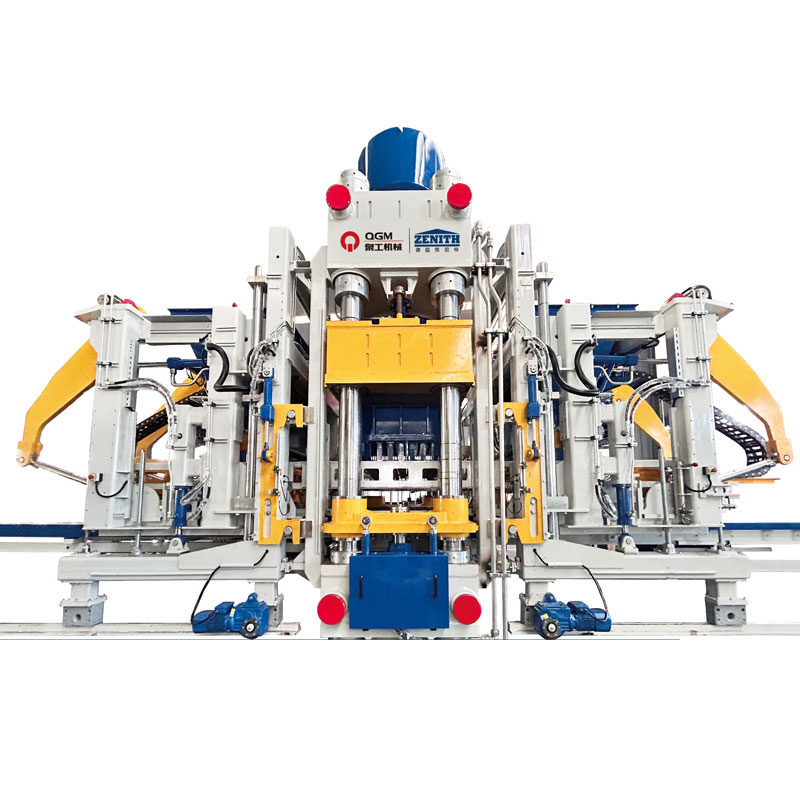
How Does Automated Vibration Technology Improve Block Density and Strength?
Uniform vibration is one of the most important factors in concrete block production. Uneven compaction often creates weak edges, internal air pockets, or surface cracking. In high-volume factories, inconsistent vibration settings may also cause variation between production batches. The QGM Block Making Machine uses synchronized servo vibration systems to improve material distribution and compaction stability.
Our production specialists often explain that vibration frequency directly affects finished block density. A controlled vibration process helps aggregate particles settle more evenly inside the mold cavity, which improves structural integrity and surface finish. This becomes especially important for hollow blocks, paving units, and load-bearing concrete products used in commercial construction projects.
Many manufacturers in North America and Southeast Asia now prioritize automated compaction because labor shortages and rising material costs leave little room for production waste. Our factory continues improving vibration calibration technology to support more reliable daily output performance.
| Technical Item | Performance Range |
| Vibration Frequency | 0 to 4500 RPM adjustable |
| Production Capacity | 5000 to 22000 blocks per shift depending on model |
| Control System | PLC automatic operation |
| Molding Cycle | 12 to 20 seconds |
| Hydraulic Pressure | Up to 25 MPa |
| Applicable Products | Hollow block, solid brick, paver, curbstone |
What Production Features Help Reduce Human Error in Block Manufacturing?
Traditional block production often depends heavily on operator experience. Manual feeding, inconsistent mold cleaning, and unstable curing preparation can affect final product quality. Automated production systems reduce those risks by standardizing key operational steps throughout the manufacturing process.
The QGM Block Making Machine integrates automated material feeding, hydraulic synchronization, and digital parameter control to minimize production fluctuation. These functions allow operators to maintain stable forming conditions even during long shifts or seasonal temperature changes.
Quangong Machinery Co., Ltd. also emphasizes mold precision because dimensional accuracy directly affects stacking performance and masonry alignment at construction sites. Our engineers use advanced machining processes to improve mold durability and edge consistency. This helps customers reduce chipped corners and rejected products during transportation.
Our factory has worked with producers supplying municipal projects, industrial parks, and residential developments where product tolerance requirements are strict. Reliable automation improves compliance with local construction specifications and reduces unnecessary material consumption.
| Quality Control Area | Production Benefit |
| Automatic Feeding | Improves material consistency |
| Servo Vibration | Enhances block density |
| Hydraulic Synchronization | Maintains stable molding pressure |
| Precision Mold System | Improves dimensional accuracy |
| PLC Monitoring | Reduces operator adjustment errors |
| Automated Pallet Handling | Improves production efficiency |
Why Are Consistency and Traceability Important for Large Construction Projects?
Infrastructure contractors and government procurement teams often require concrete products with stable compressive strength and repeatable appearance. Inconsistent batches can create installation problems, inspection failures, or long-term durability concerns. Modern production facilities therefore rely on digital process management to improve quality traceability.
The QGM Block Making Machine supports data-based operation management that helps factories monitor production parameters more efficiently. Operators can track cycle timing, vibration adjustment, and hydraulic performance during active production runs. This allows faster troubleshooting and process optimization when product quality shifts occur.
Our technical service team regularly assists manufacturers upgrading from older equipment that lacks integrated control systems. In many cases, improved monitoring reduces maintenance downtime and helps operators identify production irregularities before large quantities of defective blocks are produced.
QGM continues developing intelligent manufacturing solutions because the construction industry increasingly values automation, labor efficiency, and long-term production reliability. Our customers often report better pallet consistency and lower rejection rates after system upgrades.
What Questions Do Buyers Ask Before Investing in a Block Production Line?
Q1: How does a QGM Block Making Machine improve concrete block consistency?
A1: The system improves consistency through synchronized vibration, automated hydraulic control, and stable material feeding. These features reduce production fluctuation and help maintain uniform density, dimensions, and surface quality across multiple batches.
Q2: Is automated block production suitable for large-scale infrastructure projects?
A2: Yes. Automated systems are widely used for commercial paving, municipal infrastructure, housing developments, and industrial construction because they improve production capacity, dimensional accuracy, and long-term quality stability.
Q3: What factors should buyers evaluate before selecting a concrete block machine?
A3: Buyers should review production capacity, automation level, mold compatibility, hydraulic stability, vibration technology, spare part support, and local service capability. These factors directly affect operational efficiency and product quality over time.
How Can Advanced Manufacturing Equipment Support Long-Term Factory Growth?
Construction material markets continue evolving toward automation, sustainability, and precision manufacturing. Producers that rely on outdated equipment may struggle with inconsistent quality, rising labor costs, and inefficient material usage. Investing in advanced systems helps factories improve competitiveness while supporting stable product standards.
The QGM Block Making Machine combines automated operation, precision engineering, and production flexibility for manufacturers seeking dependable long-term performance. Our team understands that every production plant operates under different conditions, including climate, raw material type, and local market demand.
Our factory provides technical support, installation guidance, and customized production recommendations based on actual manufacturing requirements. Whether customers produce paving blocks, hollow blocks, or landscape concrete products, we focus on helping them improve operational consistency and reduce waste.
If you are planning to upgrade your production line or improve quality control performance, contact Quangong Machinery Co., Ltd. today to discuss a practical solution for your block manufacturing operation.