

How Rubber Gaskets Enhance Corrosion Protection in Metal Assemblies?
2026-04-02
Why Do Metal Assemblies Fail Prematurely Due to Corrosion?
In industrial environments across North America and Europe, corrosion remains one of the leading causes of premature failure in metal assemblies. Whether in HVAC systems, petrochemical pipelines, marine equipment, or automotive housings, exposure to moisture ingress, aggressive chemicals, and temperature cycling accelerates oxidation and galvanic reactions. In many field inspections, engineers identify sealing failure as the root cause rather than material defects.
When two metal flanges are joined without proper sealing, micro-gaps allow water vapor, salt spray, or process fluids to penetrate. Over time, this leads to crevice corrosion, pitting, and eventual leakage. Our engineering team has observed that proper sealing design, especially with high-performance Gaskets, significantly reduces these risks. At Ningbo Kaxite Sealing Materials Co., Ltd., our factory focuses on delivering sealing solutions that meet ASTM, DIN, and EN requirements for corrosion-sensitive applications.
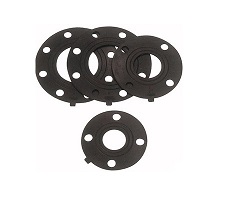
How Do Rubber Materials Act as a Barrier Against Corrosive Media?
Rubber-based sealing materials function as a physical and chemical barrier between metal surfaces and the external environment. Unlike rigid sealing components, elastomers conform to flange irregularities, ensuring tight sealing even under low bolt loads. This is particularly important in systems where surface finish may not meet ideal tolerances.
Our factory uses elastomers such as EPDM, NBR, FKM, and Neoprene, each selected based on media compatibility and operating conditions. For example, EPDM performs well in water and steam systems, while NBR is widely used in oil and fuel environments. These materials prevent electrolyte penetration, which is critical in avoiding galvanic corrosion between dissimilar metals.
In practical applications, properly selected Gaskets help isolate metal interfaces, reducing electrochemical reactions. Ningbo Kaxite Sealing Materials Co., Ltd. continues to refine compound formulations to improve chemical resistance and long-term sealing reliability under dynamic loads.
What Key Parameters Should Be Evaluated for Corrosion Protection Performance?
From an engineering procurement perspective, selecting the right sealing component requires careful evaluation of technical parameters. Buyers in industrial markets often prioritize compression set, tensile strength, elongation, and temperature resistance, as these directly influence sealing longevity and corrosion prevention.
| Material Type | Temperature Range | Chemical Resistance | Typical Application |
| EPDM | -40°C to 150°C | Excellent in water and steam | HVAC systems, water pipelines |
| NBR | -30°C to 120°C | Excellent in oil and fuel | Automotive, hydraulic systems |
| FKM | -20°C to 200°C | Excellent in chemicals and oils | Petrochemical processing |
| Neoprene | -35°C to 130°C | Moderate chemical resistance | Marine and outdoor equipment |
Our engineers recommend matching material properties with actual service conditions rather than relying solely on general specifications. Our factory conducts batch testing to ensure consistency across production runs, which is essential for maintaining sealing integrity over time.
How Do Manufacturing Precision and Design Influence Sealing Effectiveness?
Beyond material selection, manufacturing precision plays a decisive role in corrosion prevention. Poor dimensional control or surface defects can compromise sealing performance, even when high-quality materials are used. This is why our factory integrates CNC die cutting and automated inspection systems to ensure tight tolerances.
In many European industrial standards, flange sealing requires uniform compression distribution. Uneven pressure can create leak paths, allowing corrosive agents to penetrate. Properly engineered Gaskets distribute load evenly across the sealing surface, minimizing stress concentration points.
| Parameter | Standard Range | Impact on Corrosion Protection |
| Compression Set | 10% - 25% | Lower values improve long-term sealing |
| Tensile Strength | 5 - 15 MPa | Higher strength resists deformation |
| Elongation | 150% - 400% | Improves adaptability to flange irregularities |
| Hardness (Shore A) | 50 - 80 | Balances flexibility and durability |
Ningbo Kaxite Sealing Materials Co., Ltd. emphasizes process control from raw material mixing to final inspection. Our production lines are aligned with ISO quality systems, ensuring that each sealing component meets industrial expectations for durability and corrosion resistance.
Why Are Proper Installation and Maintenance Critical for Long-Term Protection?
Even the best-designed sealing solution can fail if installation practices are not followed. In field operations, improper torque application, flange misalignment, or reuse of worn components often leads to early leakage and corrosion issues. Our technical support team advises using calibrated torque tools and following cross-tightening sequences to achieve uniform compression.
Routine inspection is equally important. Over time, exposure to UV, ozone, and thermal cycling can degrade elastomer properties. Replacing worn Gaskets at scheduled intervals helps maintain sealing integrity and prevents costly downtime.
Our factory provides technical documentation and installation guidelines tailored to different industries, ensuring that users achieve optimal performance in real-world conditions. This practical support is one of the reasons Ningbo Kaxite Sealing Materials Co., Ltd. is trusted by global buyers.
FAQ: How Rubber Gaskets Enhance Corrosion Protection in Metal Assemblies?
Q1: What makes rubber sealing components effective in preventing corrosion in metal joints?
Rubber materials create a continuous barrier that blocks moisture, chemicals, and air from reaching metal surfaces. This prevents oxidation and electrochemical reactions, especially in environments where dissimilar metals are present. Their flexibility allows them to maintain sealing under vibration and thermal expansion.
Q2: How should buyers select the right material for corrosion-prone environments?
Material selection should be based on operating temperature, exposure media, and pressure conditions. For water systems, EPDM is typically preferred, while oil-based environments require NBR or FKM. Consulting technical datasheets and conducting compatibility testing ensures long-term reliability.
Q3: Can sealing components fail even if high-quality materials are used?
Yes, failure can occur due to improper installation, excessive compression, or poor flange condition. Even high-grade materials require correct torque application and regular inspection. Ensuring proper installation practices is essential to achieving full corrosion protection performance.
How Can the Right Sealing Strategy Improve System Reliability and Reduce Costs?
Effective sealing design is not just about preventing leaks but also about extending equipment lifespan and reducing maintenance costs. By minimizing corrosion-related failures, industries can avoid unplanned downtime and improve operational efficiency. Our factory continues to develop advanced material formulations and precision manufacturing techniques to support these goals.
If you are looking for reliable sealing solutions tailored to your application, our team is ready to assist with technical recommendations and product customization. Contact our engineers today to discuss your requirements and get a fast quotation.