

How Smart Maintenance Is Reducing Gear Coupling Downtime?
2026-05-06
Why Does Gear Coupling Downtime Still Happen in Modern Industry?
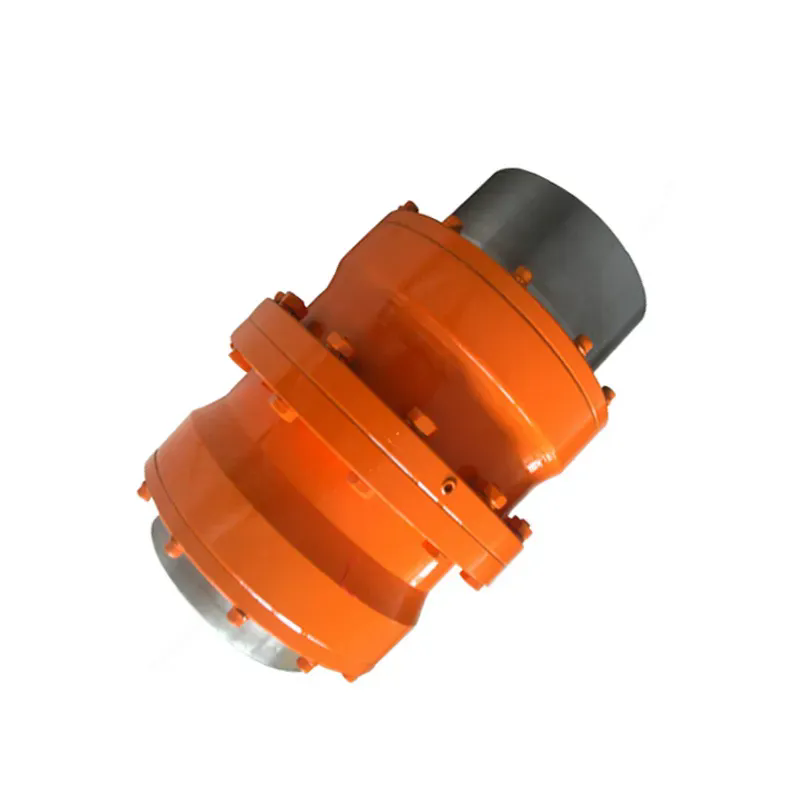
In industrial power transmission systems, mechanical misalignment, lubrication degradation, and torque overload remain the most common causes of unexpected shutdowns. Even with advanced automation, rotating equipment still depends heavily on stable mechanical interfaces. This is where Gear Coupling systems play a critical role in connecting shafts while compensating for minor misalignment under load conditions.
In many field applications such as steel mills, cement plants, marine propulsion, and mining conveyors, our experience shows that downtime is rarely caused by sudden failure alone. Instead, it is usually the result of gradual wear that is not detected early. At Raydafon Technology Group Co.,Limited, our approach focuses on predictive monitoring and structured maintenance cycles to reduce operational interruptions. Our factory design philosophy integrates serviceability into every coupling structure.
Modern maintenance teams are shifting from reactive repair to condition-based planning. This change is significantly improving uptime performance across heavy-duty systems using Gear Coupling assemblies.
How Does Smart Maintenance Change Traditional Coupling Servicing Methods?
Traditional servicing often relies on fixed schedules or failure response, which can lead to unnecessary downtime or unexpected breakdowns. Smart maintenance introduces data-driven inspection intervals, vibration monitoring, and lubrication optimization. These practices help identify early signs of misalignment, wear, or lubrication breakdown.
In our operational model, our factory integrates inspection-friendly design elements such as modular sleeves, accessible fastener points, and standardized lubrication channels. This reduces service time and improves accuracy during field maintenance of Gear Coupling systems.
Raydafon Technology Group Co.,Limited supports customers with technical documentation that aligns with predictive maintenance systems used in modern plants. Our engineering team works closely with maintenance departments to improve lifecycle efficiency and reduce unplanned shutdowns.
| Parameter | Typical Industrial Specification |
| Torque Capacity | Up to 500,000 Nm depending on model |
| Shaft Diameter Range | 20 mm to 600 mm |
| Misalignment Compensation | Angular, parallel, and axial tolerance |
| Material Options | Alloy steel, carbon steel, heat-treated steel |
| Lubrication Type | Grease or oil bath depending on application |
| Operating Temperature | -40°C to 120°C standard range |
What Technical Factors Influence Gear Coupling Reliability in Smart Systems?
The performance of a mechanical transmission system depends on load distribution, tooth contact accuracy, lubrication stability, and alignment precision. When these factors are properly controlled, Gear Coupling units can operate efficiently under continuous heavy loads without frequent intervention.
Our factory applies precision machining on tooth profiles and hub interfaces to ensure stable torque transmission. In addition, surface hardness treatment improves resistance to wear under fluctuating load conditions. These engineering improvements are part of our long-term reliability strategy.
Raydafon Technology Group Co.,Limited has developed internal inspection procedures that simulate real-world torque stress cycles. This allows us to evaluate service behavior before deployment, ensuring that our products maintain consistent performance in industrial environments.
| Inspection Item | Control Standard |
| Tooth Profile Accuracy | High precision CNC machining tolerance |
| Surface Hardness | HRC 50 to 60 depending on treatment |
| Runout Control | Within industrial alignment limits |
| Assembly Fit | Controlled interference or clearance fit |
| Dynamic Balance | Verified for high-speed applications |
How Can Predictive Maintenance Reduce Unplanned Shutdowns in Coupling Systems?
Predictive maintenance uses vibration analysis, temperature tracking, and lubrication condition monitoring to detect early warning signs. This allows maintenance teams to intervene before functional failure occurs. In rotating equipment systems, this method significantly improves uptime efficiency and extends component life cycles.
In our field experience, Gear Coupling failures are often preceded by subtle changes in noise patterns or temperature rise. Our factory supports maintenance teams by providing technical guidelines for monitoring these indicators effectively in industrial environments.
Raydafon Technology Group Co.,Limited emphasizes lifecycle optimization rather than simple replacement. This approach helps customers reduce spare part consumption and improve total cost efficiency over long-term operation.
What Do Engineers Commonly Ask About Smart Maintenance and Gear Coupling Downtime?
Q1: How does smart maintenance specifically reduce Gear Coupling downtime in industrial applications?
A1: Smart maintenance reduces downtime by identifying early wear conditions through vibration monitoring, lubrication checks, and alignment tracking. This allows corrective action before mechanical failure occurs, minimizing unexpected shutdowns and improving production continuity.
Q2: What are the most common failure signs before a Gear Coupling stops working?
A2: Typical early indicators include abnormal vibration, increased operating temperature, lubricant leakage, and audible noise changes. Recognizing these signs early helps maintenance teams schedule intervention before serious damage develops.
Q3: How often should Gear Coupling maintenance be performed in heavy industry?
A3: Maintenance frequency depends on load conditions, operating speed, and environmental factors. In heavy-duty applications, inspection is typically recommended every few months, with lubrication checks performed more frequently depending on duty cycle intensity.
Why Is Maintenance Strategy Now as Important as Mechanical Design?
In modern industrial operations, mechanical reliability is no longer determined only by product strength but also by how effectively it is maintained. Even the most robust Gear Coupling systems require structured inspection routines to maintain long-term performance under dynamic load conditions.
Our factory design approach integrates maintenance efficiency into product structure, reducing downtime during servicing. Raydafon works closely with engineering teams to ensure compatibility between equipment design and maintenance systems.
For industries seeking stable production output, our technical support helps optimize both installation and lifecycle management. We continue to improve engineering standards to meet evolving industrial automation requirements.
Conclusion
Smart maintenance is reshaping how industrial facilities manage rotating equipment reliability. By combining predictive monitoring, precision engineering, and structured servicing strategies, companies can significantly reduce downtime and improve operational efficiency. The use of advanced Gear Coupling systems supported by data-driven maintenance practices ensures stable performance in demanding environments.
Raydafon Technology Group Co.,Limited provides engineering support, customization, and technical consultation for industrial transmission systems. Contact our team to evaluate your application requirements and develop a maintenance-optimized solution for your operation.