

How Spiral Wound Gaskets Handle Thermal Cycling in Process Equipment?
2026-02-27
In refineries, petrochemical plants, LNG terminals, and upstream gathering systems, process equipment rarely operates at a constant temperature. Heat-up and cool-down sequences during start-up, shutdown, turnaround, and load fluctuations create repeated expansion and contraction across flanges, bolting, and sealing components. This phenomenon, known in the industry as thermal cycling, is one of the leading causes of fugitive emissions and flange leakage.
When temperature swings occur in heat exchangers, pressure vessels, reactors, and piping spools, differential expansion between carbon steel flanges and stainless steel internals generates fluctuating bolt loads. Over time, conventional sheet gaskets may experience compression set, creep relaxation, and loss of seating stress. In severe service applications such as hydrocrackers or delayed cokers, the risk is even greater due to rapid temperature ramps and high system pressure.
Spiral Wound Gaskets are widely specified in ASME B16.5 and B16.47 flanged joints because their elastic construction compensates for these thermal movements. Our engineering team has seen that proper gasket selection significantly reduces leak paths in high-cycle environments. In many refinery projects supported by Ningbo Kaxite Sealing Materials Co., Ltd., we analyze the expected temperature gradient and bolt stress variation before recommending a sealing solution from our factory.
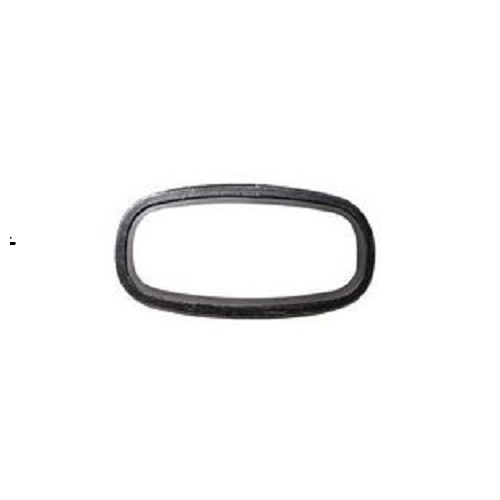
How Does the Structural Design Absorb Expansion and Contraction?
The performance advantage of Spiral Wound Gaskets comes from the combination of a V-shaped metal winding strip and a soft filler material such as graphite or PTFE. The metal provides resilience and spring-back, while the filler ensures tight sealing by conforming to flange surface irregularities. During thermal cycling, the metallic winding acts like a spring element, maintaining residual load even when bolt tension fluctuates.
In elevated temperature service, graphite-filled constructions are commonly used because they maintain integrity above 450°C in steam lines and above 500°C in certain hydrocarbon systems. For aggressive chemical processing, PTFE fillers offer corrosion resistance and chemical compatibility. Our factory controls winding density and compression characteristics to ensure consistent recovery after each thermal cycle.
Spiral Wound Gaskets also incorporate inner rings and outer guide rings. The inner ring prevents inward buckling under high pressure and protects the filler from media erosion. The outer ring centers the gasket within the bolt circle, improving installation accuracy and maintaining even compression. This structural configuration allows the gasket to accommodate radial and axial movement without losing sealing stress.
What Technical Parameters Ensure Reliable Performance Under Thermal Cycling?
Material selection and dimensional control are critical in high-temperature and high-pressure environments. Our production follows relevant ASME, ASTM, and API requirements to ensure predictable sealing performance. Below are representative product parameters typically supplied by Ningbo Kaxite Sealing Materials Co., Ltd. for refinery and chemical plant applications.
| Parameter | Specification Range | Applicable Standards |
| Nominal Size | 1/2 inch to 60 inch | ASME B16.5, B16.47 |
| Pressure Class | Class 150 to Class 2500 | ASME |
| Metal Winding Material | SS304, SS316L, 321, 347, Monel | ASTM A240 |
| Filler Material | Flexible Graphite, PTFE | API 601 |
| Temperature Range | -200°C to 550°C depending on filler | Project Specification |
| Maximum Operating Pressure | Up to 25 MPa | Design Condition Dependent |
To further enhance thermal fatigue resistance, our winding density is calibrated to provide optimal seating stress without overstressing the flange. Our quality control includes dimensional inspection, compression recovery testing, and PMI verification for alloy materials. This ensures that Spiral Wound Gaskets supplied from our factory meet the mechanical resilience required for repeated thermal cycles.
How Do Installation Practices and Bolt Load Management Affect Thermal Cycling Performance?
Even the most advanced gasket design can fail if installation procedures are not properly followed. In turnaround projects across North American and Middle Eastern refineries, correct bolt torque sequencing and flange surface preparation have proven decisive.
Before installation, flange faces should be inspected for pitting, warpage, or radial scoring. Surface finish typically falls within 125 to 250 AARH for raised face flanges. Our field feedback shows that uniform cross-pattern tightening helps distribute seating stress evenly across the gasket body.
Below is a practical reference for installation control parameters commonly recommended by our technical team.
| Installation Factor | Recommended Practice | Purpose |
| Flange Surface Finish | 125 to 250 AARH | Improves gasket bite and sealing |
| Bolt Lubrication | Apply approved anti-seize | Reduces friction scatter |
| Tightening Sequence | Star or cross pattern | Ensures even compression |
| Torque Steps | Incremental 30%, 60%, 100% | Prevents overloading |
| Hot Retorque | Project specific | Compensates for relaxation |
Spiral Wound Gaskets maintain sealing stress through elastic recovery, but proper bolt load control ensures that this resilience is fully utilized. Our engineering support from Kaxite Sealing frequently assists EPC contractors in reviewing torque calculations for high-temperature service.
Why Are These Gaskets Preferred in High-Cycle Process Equipment?
Compared with compressed fiber or solid sheet gaskets, Spiral Wound Gaskets demonstrate superior recovery after repeated expansion and contraction. In FCC units, steam headers, and thermal oxidizers, temperature swings can occur daily. The metal winding absorbs mechanical stress while the filler maintains intimate flange contact.
Our long-term supply experience confirms that properly selected gaskets reduce unplanned shutdowns caused by leakage. Clients value predictable performance during seasonal temperature changes and batch process variations. Our factory has continuously optimized winding geometry and ring concentricity to improve performance stability under dynamic load conditions.
Spiral Wound Gaskets are therefore specified in critical hydrocarbon processing lines, superheated steam systems, and high-pressure reactors where sealing reliability directly impacts plant safety and environmental compliance.
FAQ
Q1: How Spiral Wound Gaskets Handle Thermal Cycling in Process Equipment?
They handle thermal cycling by combining metallic elasticity with compressible filler materials. The metal winding provides spring-back when flange load fluctuates due to temperature changes, while the filler maintains surface conformity. This dual structure prevents loss of seating stress and reduces the likelihood of leakage during repeated heating and cooling cycles.
Q2: How does filler selection influence performance in high-temperature cycling service?
Graphite filler performs well in steam and hydrocarbon services at elevated temperatures because it maintains structural stability and resists oxidation within defined limits. PTFE filler is preferred in corrosive chemical applications due to its chemical inertness, though its upper temperature limit is lower than graphite. Selecting the correct filler ensures durability and long-term sealing reliability under cycling conditions.
Q3: Can improper bolt torque reduce gasket life during thermal cycling?
Yes. Under-torqued bolts may allow joint separation during temperature spikes, while over-torqued bolts can crush the gasket and reduce recovery capability. Controlled torque application, uniform tightening patterns, and periodic inspection help maintain consistent seating stress and extend service life in cycling environments.
Thermal cycling remains one of the most demanding conditions in modern process equipment, especially in refineries and chemical plants operating under variable loads. A resilient sealing solution that balances elasticity, strength, and chemical compatibility is essential for long-term operational stability. Ningbo Kaxite Sealing Materials Co., Ltd. supplies engineered sealing products tailored to specific pressure classes, media types, and temperature profiles. Contact our technical team today to discuss your project requirements and receive a detailed quotation from our factory for your next turnaround or new construction project.