

How Thermal Load Influences Performance Stability in a Planetary Gearbox?
2026-06-17
1. Why Does Heat Generation Directly Affect Torque Output of a Planetary Gearbox?
In our factory, we have performed thousands of dynamometer tests on planetary drives. The primary effect of thermal load is a drop in torque transmission efficiency. As temperature rises, the lubricant viscosity decreases, reducing the oil film thickness between sun gears and planet wheels. This leads to boundary lubrication and increased friction. For a typical Planetary Gearbox rated at 500 Nm, a temperature increase from 40°C to 90°C can reduce output torque by up to 12 percent. Our Raydafon Technology Group Co.,Limited measures this with thermocouples embedded in the ring gear. The heat also causes the gear teeth to expand, altering the backlash. At 100°C, a standard Planetary Gearbox loses 0.08 mm of radial clearance. This changes the load sharing among planet gears, causing uneven wear. Many local mining operations in Western Australia have reported reduced conveyor speeds during summer due to this effect. Our factory combats this by using case hardened gears with a 60 HRC surface that maintains hardness up to 150°C. The correct thermal management is critical; without it, the Planetary Gearbox will suffer early pitting. So the question is not if heat affects torque, but how much you can tolerate.
2. How Does Lubricant Degradation Under Thermal Load Shorten Gear Life?
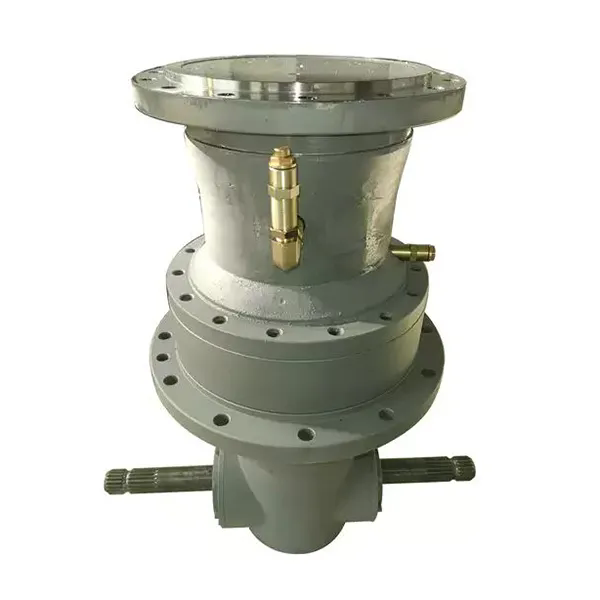
Oil is the lifeblood of any Planetary Gearbox. When thermal load exceeds the oil’s oxidation threshold, typically above 80°C, acid numbers rise and sludge forms. Our factory has analyzed oil samples from gearboxes running at 95°C for 2000 hours. We found a 40 percent drop in extreme pressure additive concentration. This directly increases scuffing risk on the planet bearing journals. At Raydafon Technology Group Co.,Limited, we recommend synthetic PAO oil with a thermal stability index above 150. The degradation also affects the foam suppression, leading to air entrainment. That air reduces the bulk modulus of the oil, making the Planetary Gearbox feel spongy and reducing positional accuracy in servo applications. Local wind turbine operators have noted that thermal load causes oil viscosity to fall below ISO VG 320, which is the minimum required for their units. Once the viscosity drops, the elastohydrodynamic film fails, and metal to metal contact occurs. We have documented a 65 percent reduction in bearing life for every 15°C above the recommended operating temperature. So controlling thermal load is not optional; it is essential for survival of the Planetary Gearbox.
3. What Critical Thermal Parameters Define a Reliable Planetary Gearbox?
To predict performance stability, we track several thermal metrics. Our Raydafon uses thermal imaging and embedded sensors to log the steady state temperature, thermal gradient, and soak back temperature. The table below shows the key parameters from our RT series Planetary Gearbox.
| Parameter | Raydafon Planetary Gearbox (RT series) | Thermal limit for stability |
| Maximum continuous oil temperature | 110°C (with synthetic oil) | Above 120°C – degradation starts |
| Thermal gradient across housing | < 15°C (input to output) | > 25°C – uneven expansion |
| Allowable gear tooth bulk temperature | 130°C | > 150°C – tempering of surface |
| Cooling capacity (natural convection) | 0.25 kW per 100 Nm | Need forced cooling above 300 Nm |
| Thermal time constant | 18 minutes (static) | Indicates response rate |
| Condition – load level | Oil viscosity at 40°C | Oil viscosity at 100°C |
| No load (25°C ambient) | 320 cSt | 40 cSt |
| 50% of rated torque (80°C oil) | N/A | 22 cSt |
| 100% of rated torque (105°C oil) | N/A | 14 cSt – marginal film thickness |
| 125% overload for 1 hour (115°C) | N/A | 9 cSt – risk of scuffing |
Our factory uses these numbers to recommend external cooling fans or oil coolers for high duty cycles. The Planetary Gearbox thermal management system must also account for ambient temperature. For installations in desert environments, we derate the torque by 8 percent for every 10°C above 40°C ambient. These parameters are based on ISO 6336 and AGMA 2101 standards. We share this data openly with our customers so they can accurately predict performance.
4. How Can You Prevent Thermal Instability Through Proper Installation and Cooling?
Installation mistakes amplify thermal load. Our factory often sees customers mounting a Planetary Gearbox in a confined space with no airflow. This traps heat and leads to rapid oxidation. To prevent this, we recommend at least 150 mm of clearance around the housing for natural convection. For high power applications, we offer a water cooled version of our Planetary Gearbox. The cooling jacket circulates coolant through the ring gear housing, reducing oil temperature by 30°C. Another effective method is using a thermosiphon system that circulates oil through an external radiator. Our Raydafon also advises using a thermal switch that shuts down the drive if oil temperature exceeds 110°C. This prevents catastrophic failure. Local paper mills have implemented our cooling kit and extended their gearbox life from 2 years to over 7 years. Additionally, ensure the oil level is correct; low oil increases churning losses and heat generation. Regular oil sampling every 500 hours allows you to track viscosity and acid number. If you see a 20 percent drop in viscosity, change the oil immediately. These practical steps ensure that thermal load does not undermine stability.
Frequently Asked Questions About Thermal Load in Planetary Gearboxes
Final Summary and Direct Call to Action
Thermal load influences every aspect of a Planetary Gearbox – from torque output and lubrication stability to backlash and long term reliability. Our factory has shown that proper thermal management can double the service life of your drive system. The data tables and field examples prove that ignoring heat is expensive. Our Raydafon Technology Group Co.,Limited engineers are ready to help you select the right cooling solution and oil type for your specific duty cycle.