

How to Avoid the Common Failure Modes of Plastic Gears?
2026-01-28
At Raydafon Technology Group Co.,Limited, our engineering team frequently evaluates failed gear systems sent back from overseas clients. The most common root issue is not material weakness but a mismatch between application requirements and gear parameters. Our factory focuses on application-driven gear design, ensuring tooth geometry, module, and pressure angle align with actual load profiles rather than theoretical values.
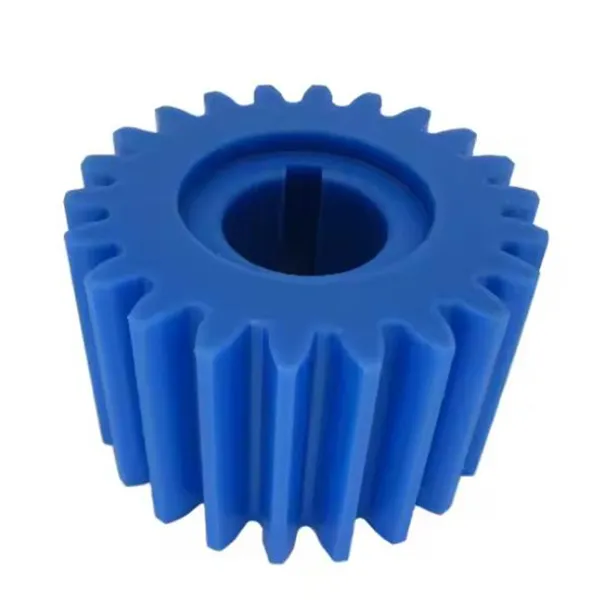
How Can Proper Material Selection Prevent Premature Gear Wear?
Material choice directly determines wear resistance, fatigue life, and dimensional stability. In Western industrial markets, engineering plastics such as POM, PA6, PA66, and reinforced nylon are commonly specified. Each material behaves differently under load and temperature. For example, POM offers excellent dimensional stability and low friction, while glass-filled nylon provides higher strength but requires careful control of mating surfaces.
Our product portfolio includes customized Precision Gear solutions using virgin and reinforced polymers. Our engineers evaluate tensile strength, heat deflection temperature, and moisture absorption before finalizing material selection. This approach significantly reduces abrasive wear and tooth deformation, particularly in continuous-duty equipment such as conveyor drives and packaging machines.
| Material Type | Operating Temperature Range | Key Advantage | Typical Application |
| POM | -40°C to 100°C | Low friction, high precision | Office automation, small motors |
| PA66 | -30°C to 120°C | High strength, impact resistance | Industrial drives, actuators |
| Glass-Filled Nylon | -30°C to 140°C | Enhanced load capacity | Heavy-duty equipment |
How Does Gear Design Influence Load Distribution and Fatigue Life?
Improper tooth geometry is a major contributor to gear failure. Uneven load distribution leads to localized stress concentration, accelerating pitting and cracking. Western OEMs increasingly demand optimized involute profiles and controlled backlash to improve efficiency and noise performance.
Our design process emphasizes finite element analysis and endurance simulation. By adjusting module size, face width, and pressure angle, our factory ensures uniform stress distribution across the tooth flank. Each Precision Gear is validated for bending fatigue and surface durability, allowing it to maintain stable performance even under intermittent overload conditions.
| Design Parameter | Standard Range | Impact on Performance |
| Module | 0.3 – 3.0 | Determines load capacity |
| Pressure Angle | 20° or 25° | Affects efficiency and noise |
| Face Width | Customizable | Improves torque transmission |
How Can Installation Accuracy and Alignment Reduce Gear Failure Risks?
Even the best-designed gear will fail if installation accuracy is ignored. Shaft misalignment, excessive runout, and improper center distance are common issues in field assembly. These errors lead to edge loading and abnormal wear patterns.
Raydafon works closely with overseas system integrators to define installation tolerances. Our factory provides dimensional inspection reports and recommends mating gear specifications to ensure smooth meshing. By maintaining proper alignment, our clients achieve longer service life and lower maintenance costs when using Precision Gear components in integrated assemblies.
How Do Lubrication and Operating Environment Affect Gear Longevity?
Although plastic gears are often marketed as self-lubricating, real operating environments tell a different story. High-speed applications, dusty environments, and elevated temperatures can still generate excessive friction and heat. Lack of lubrication accelerates wear and can cause thermal softening of gear teeth.
Our engineering guidelines recommend appropriate grease selection based on polymer compatibility and operating speed. In enclosed gearboxes, controlled lubrication significantly reduces friction and noise. Our Precision Gear designs also account for environmental exposure, ensuring stable performance in humid or contaminated conditions common in food processing and logistics equipment.
How to Avoid the Common Failure Modes of Plastic Gears? FAQ
Q1: How to Avoid the Common Failure Modes of Plastic Gears caused by overloading?
Overloading can be avoided by accurately calculating transmitted torque and applying a suitable safety factor. Selecting gears with sufficient module and face width, combined with proper material reinforcement, ensures the gear can handle peak loads without deformation.
Q2: How to Avoid the Common Failure Modes of Plastic Gears related to thermal deformation?
Thermal deformation is minimized by choosing materials with high heat deflection temperature and by improving heat dissipation through proper ventilation or lubrication. Maintaining stable operating temperatures prevents tooth softening and loss of accuracy.
Q3: How to Avoid the Common Failure Modes of Plastic Gears in long-term continuous operation?
For continuous-duty applications, fatigue resistance is critical. Optimized tooth geometry, controlled backlash, and regular inspection schedules help extend service life and prevent unexpected downtime.
What Makes a Reliable Plastic Gear Solution for Global OEMs?
Avoiding gear failure is not about a single factor but a systematic approach covering material, design, manufacturing, and application support. Raydafon Technology Group Co.,Limited integrates these elements into every project. Our factory follows strict quality control standards, from raw material inspection to final dimensional verification.
By partnering with experienced manufacturers, OEMs can significantly reduce failure risks and improve product reliability. If you are seeking durable, application-specific Precision Gear solutions for your equipment, our technical team is ready to support your project. Contact us today to discuss your requirements and receive a tailored quotation.